Around the World in 80 Bakes: Stop #36 — Semla
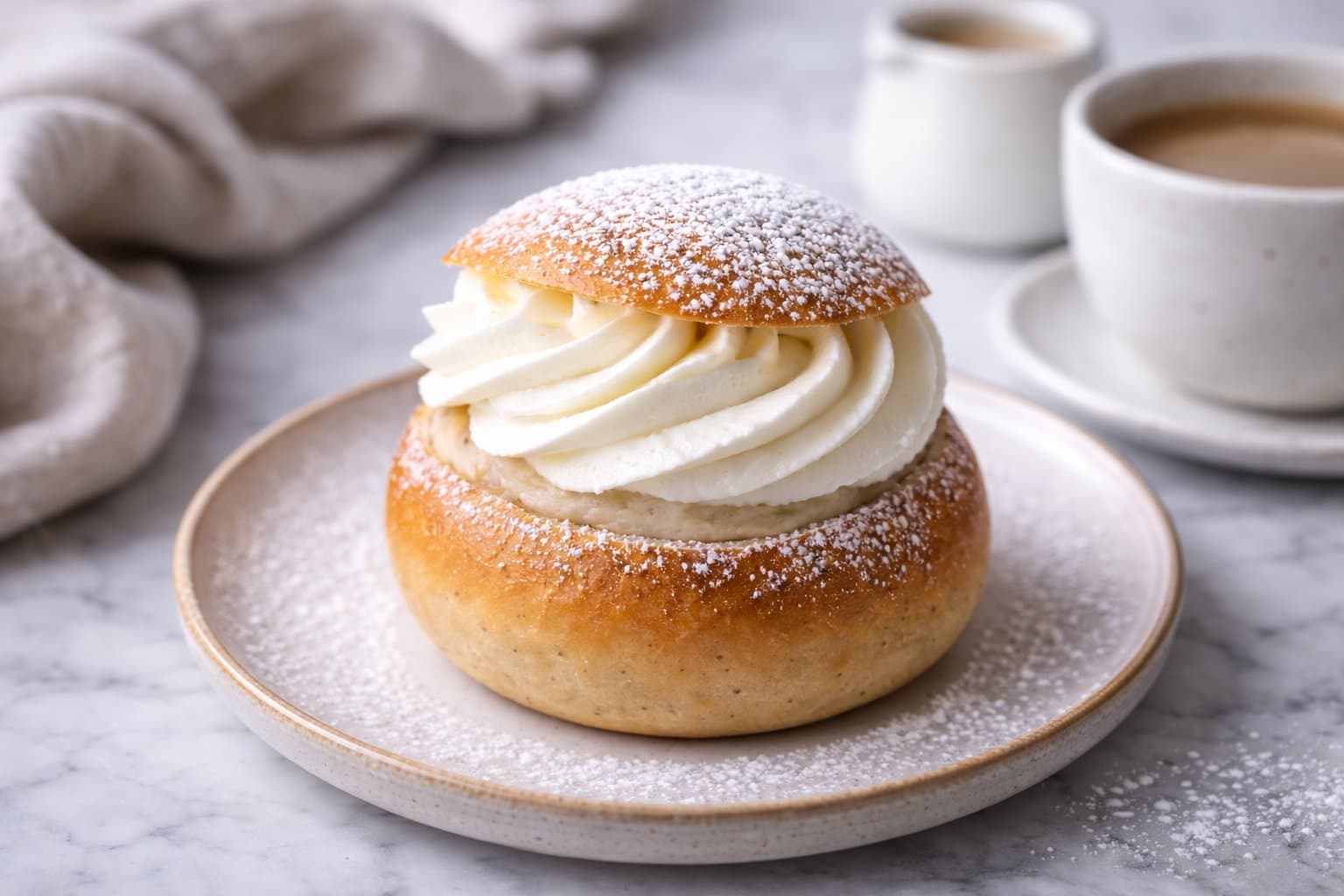
If there’s one thing that makes mid-winter in the Nordics sweeter, it’s a cardamom-scented bun piled high with whipped cream and filled with something delicious. In Sweden, this iconic treat is called semla (plural semlor), and in Finland you’ll know it as laskiaispulla.
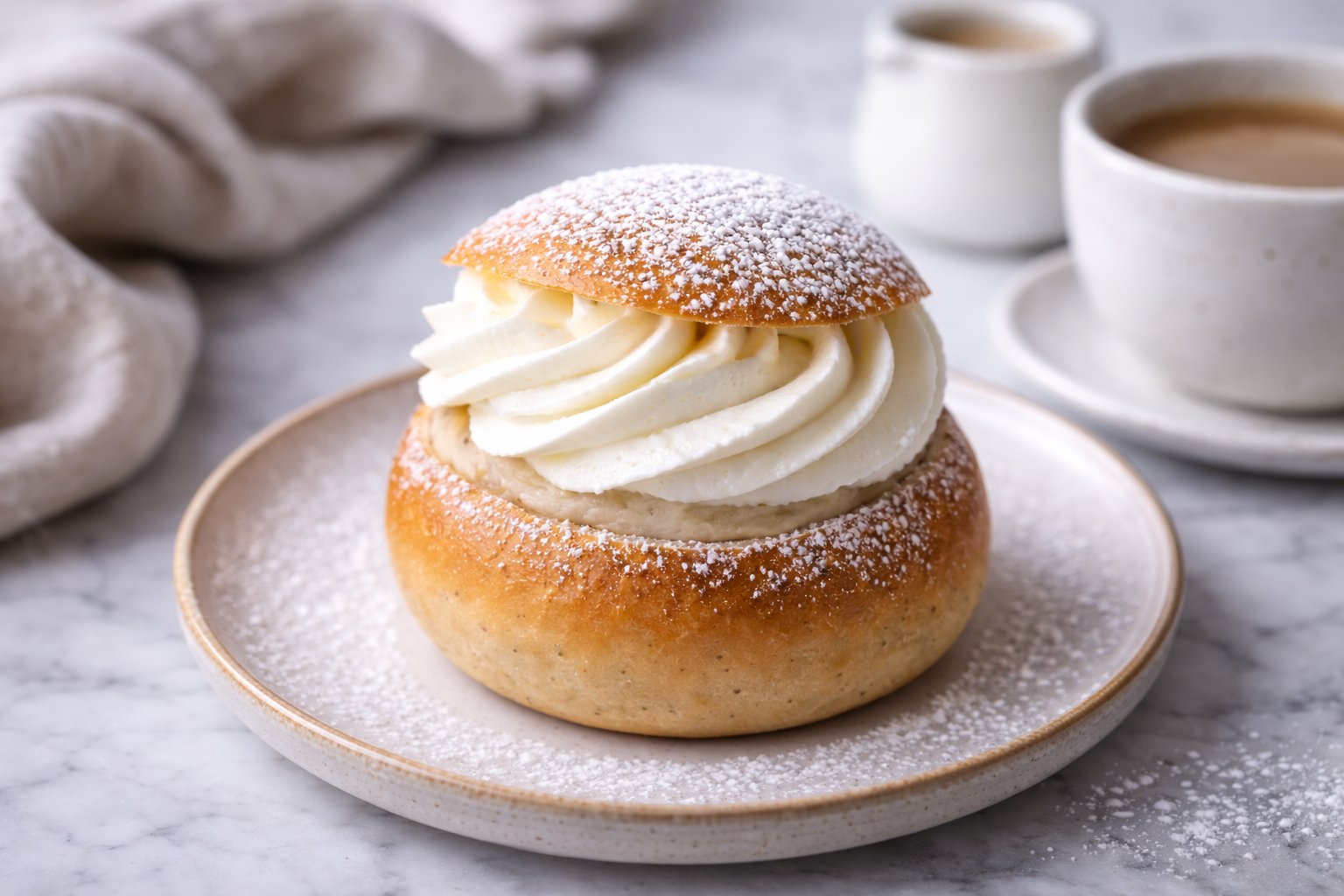
Living in Finland, I’ve eaten quite a few laskiaispulla, and they really are very similar to Swedish semlor. I love both versions – whether filled with rich almond paste or fruity jam. If you’re curious about the Finnish take, I’ve written separately about the History of Laskiaispulla and also shared my Laskiaispulla go-to recipe if you’d like to bake your own.
From Shrove Tuesday to Year-Long Indulgence
The semla has deep historic roots in the Christian calendar. Traditionally eaten on Shrove Tuesday, the last feast before the Lenten fast, it was originally a simple wheat bun served in a bowl of hot milk, known as hetvägg. As observance of Lent eased over time, the semla evolved into a luxurious indulgence: a cardamom-flavoured bun with its top cut off, the centre scooped out and filled with almond paste and fluffy whipped cream, then crowned with its “hat” and a dusting of powdered sugar.
In Sweden today, semlor appear in bakery windows not just on Shrove Tuesday, but from shortly after Christmas right up until Easter. They are a seasonal obsession. Each Swede consumes on average four to five bakery-produced semlor each year, in addition to any that are homemade (source: Wikipedia and Sweden.se).
And yes, while you might expect this to be all about moderation and tradition, there’s even a legendary tale that in 1771, Sweden’s King Adolf Frederick died of indigestion after a banquet that ended with a hefty serving of hetvägg.
Laskiaispulla: Finland’s Velvety Version
Cross the border into Finland – where I now live and savour many a laskiaispulla over the snowy months – and you’ll find the Finnish take on this Nordic classic. The Finnish laskiaispulla is essentially the same kind of bun: cardamom-spiced dough, whipped cream and a sweet filling. But here, the filling can vary. Many Finns enjoy it with jam (often raspberry) instead of almond paste – a variation that became especially popular when almond paste was expensive or hard to find.
In Sweden, the filling has traditionally been almond paste, but in Finland the jam version has become so beloved that most bakeries offer both options during the laskiainen season.
Semla vs Laskiaispulla: Same but Different
So what really sets semla and laskiaispulla apart? At face value, the differences are subtle. In Sweden it’s semla; in Finland it’s laskiaispulla. Both are tied to the pre-Lenten carnival and winter celebrations.
In terms of filling, Swedes have long favoured almond paste, while in Finland jam is a firmly established alternative (especially outside Swedish-speaking regions).
Today, both semlor and laskiaispulla are enjoyed well beyond Shrove Tuesday. Bakeries across Sweden and Finland begin offering them not long after Christmas, and they remain a staple of café counters and home kitchens right through to early spring.
In Sweden, semlor are a popular choice for fika, the cherished coffee break that invites something sweet alongside. Most people enjoy them as-is: soft, cardamom-scented, and filled with almond paste and whipped cream. But there’s also a nod to tradition: hetvägg, where the bun is served in a bowl of warm milk. Though rarely eaten this way today, the memory of it still lingers, especially in nostalgic stories or retro recipe features.
In Finland, laskiaispulla appears over the same winter stretch. While it’s loosely associated with Laskiainen, Finland’s version of Shrove Tuesday, the buns are available for weeks before the date, and few people limit themselves to just one. Here too, they’re typically eaten with coffee, and the big question is not how to serve them, but what filling to choose: almond or jam?
For me, this similarity is part of the delight: they feel like cousins at the same family table. Some days I reach for the rich almond paste, relishing its smooth, almost marzipan-like depth; other days a dollop of fruity jam feels like bright sunshine on a grey Finnish afternoon. Both versions tell the same story of winter, tradition and simple pleasures.
A Nordic Tradition with Local Flourishes
Whether you’re in Sweden, Finland or beyond, these buns are more than just a seasonal treat. They’re a shared heritage, a momentary pause with coffee and cream in hand that connects us to centuries-old rituals, changing tastes, and the comfort of baking culture. And if you’re in Finland like me, you can enjoy the beautiful debate at every cafe counter about which filling reigns supreme.