Around the World in 80 Bakes: Stop #37 — Pancake
Pancakes have been with us for thousands of years. From hot stones in the Neolithic era to the griddles of medieval Europe, from Japanese street stalls to Finnish family tables, pancakes have always been more than just breakfast. They’re a window into heritage, season, and ritual. And once a year, on Pancake Day, they take centre stage.
Across cultures, pancakes emerged from the same simple idea: a batter of flour and liquid, poured onto heat. But how each community made them, what was added, when they were eaten, and why, turned this humble food into something meaningful.

Ancient Origins
The oldest known pancakes date back to prehistoric times. When scientists examined the stomach contents of Ötzi the Iceman (c. 3300 BCE), they found traces of ground einkorn wheat and cooked grain, likely eaten in flat, griddle-cooked form.
The Ancient Greeks made tagenites, using flour, olive oil, honey, and milk. The Romans followed with sweet pancakes in Apicius, the oldest surviving Roman cookbook, flavoured with spices, honey, and wine.
Simple batter-based cakes were a logical way to cook and eat grains, especially before ovens became widespread. A hot stone or pan, a ladle of batter, and a bit of fat were all that was needed.
A Global Family of Pancakes
As cultures flourished, pancakes evolved in every direction:
– United Kingdom & Ireland: Thin, crepe-like pancakes are made for Shrove Tuesday, served with lemon and sugar to use up rich ingredients before Lent.
– France & Belgium: Crepes and galettes, some sweet, some made with buckwheat, are eaten on La Chandeleur and Mardi Gras, often symbolising the sun and return of light.
– Germany: Pfannkuchen are enjoyed both sweet and savoury, while Fasching celebrations bring fried doughnuts to the table.
– Eastern Europe: Blini, served during Maslenitsa (Butter Week), are round and golden, symbolising warmth, light, and the sun’s return.
– Netherlands: Pannenkoeken are large, thin pancakes served with apples, cheese, bacon or syrup.
– Japan: From sweet dorayaki (sandwiches with red bean paste) to savoury okonomiyaki, Japanese pancakes show just how varied the form can be.
– Ethiopia: Injera, made from fermented teff flour, is spongy, tangy, and often doubles as both plate and utensil.
– United States: Thick, fluffy pancakes (often leavened with baking powder) became popular in the 19th century, usually served stacked with butter and syrup.
Pancake Day: A Feast Before Fasting
In many English-speaking countries, pancakes are strongly associated with Pancake Day, also known as Shrove Tuesday, the day before Lent begins. The tradition dates back to medieval Europe, when households would use up rich ingredients like eggs, butter, and milk before the fasting season. Pancakes were a deliciously practical solution, and they remain a beloved part of this pre-Lenten ritual to this day.
From religious ritual to joyful races (like those still held in Olney, England), Pancake Day is now a celebration of comfort, nostalgia, and the joy of flipping batter on a cold February day.
A Finnish Favourite: Pannukakku
Living in Finland, I’ve grown fond of the country’s own pancake: pannukakku.
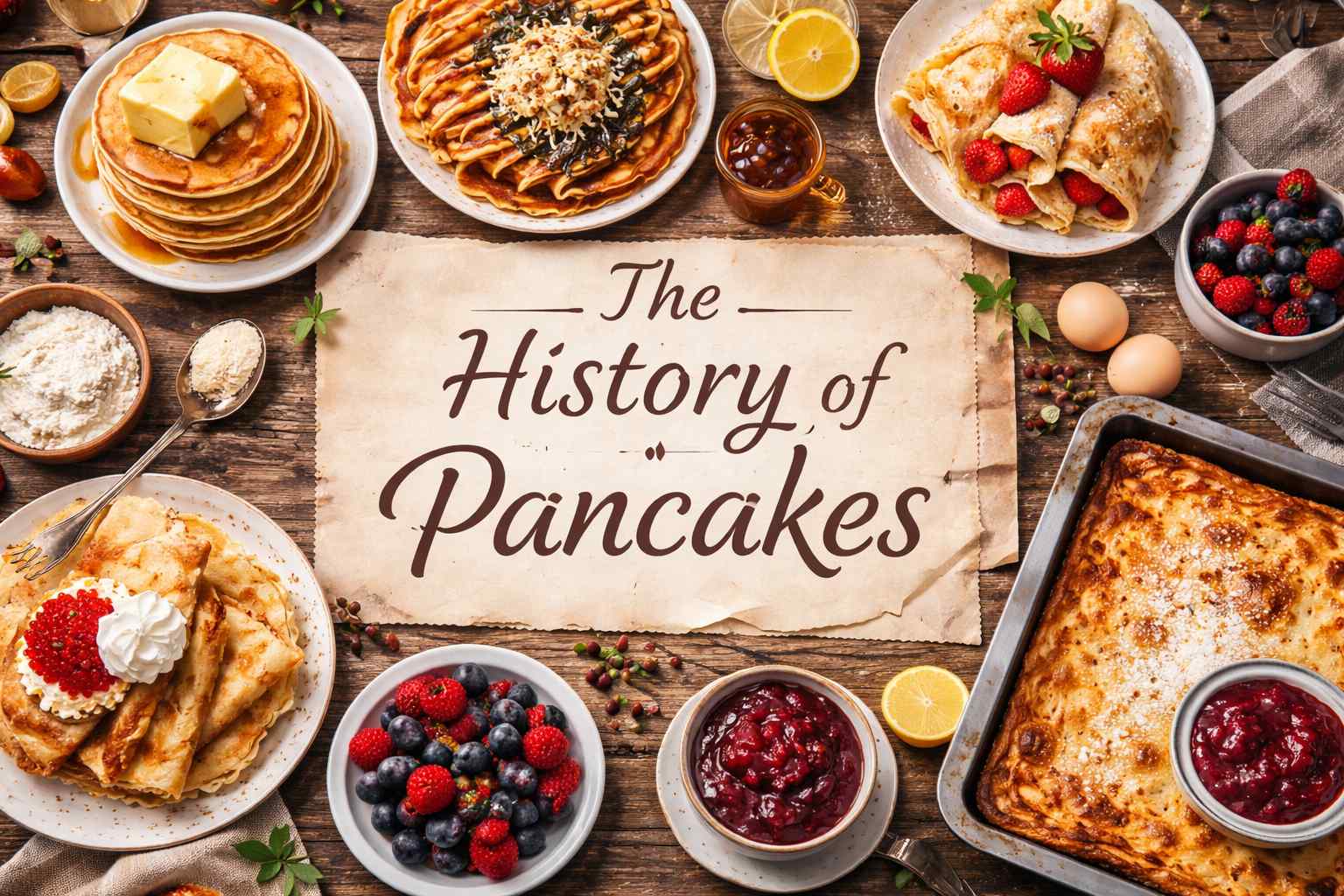
Unlike the flipped variety, this pancake is baked in the oven. It puffs up around the edges and sets in the centre, resulting in a custardy texture with golden, caramelised sides. It’s served warm, in slices, with jam or berries, and it’s especially loved by children.
In our home, we bake it in a square Nordic Ware pan, usually dusted with sugar and spooned with raspberry jam. It’s one of those comforting dishes that needs no occasion, though it’s especially welcome in February, when both Laskiainen and Pancake Day arrive.
A Dish That Spans Time and Place
From hot stones to non-stick pans, pancakes have stood the test of time. They cross borders, blur categories, and carry more meaning than their simple ingredients suggest.
They are weekday food, feast day food, festival food. And whether you serve them thin or thick, sweet or savoury, flipped or oven-baked, they always invite sharing.
Curious to try it?