
Around the World in 80 Bakes: Stop #24 — Apple Bakes
When the air turns crisp and the days shorten, something stirs in bakers around the world. We reach instinctively for apples — tart, sweet, fragrant — and the recipes that have shaped our autumns for generations.
Apples have long held a special place in both kitchen and culture. They store well, bake beautifully, and absorb the warmth of spices like cinnamon, clove, and nutmeg. But what’s most magical is how differently each culture uses them — layering them into flaky pastry, grating them into soft cakes, folding them into crumbles and pies.
Here’s how apples are transformed into beloved bakes across the world — from Vienna to Istanbul, and beyond.
🇦🇹 Austria: Apfelstrudel (Apple Strudel)
Delicate, layered, and beautifully spiced, Apfelstrudel is one of Austria’s most iconic desserts. Though its origins trace back to the Ottoman Empire and the influence of Turkish baklava, the dish took root in Austrian kitchens in the 17th century and became a staple of Habsburg courtly cuisine.
The pastry is stretched by hand until paper-thin — so thin you can read a newspaper through it, as tradition says. A buttery breadcrumb layer keeps the dough crisp, while the filling of tart apples, sultanas, cinnamon, and sometimes walnuts offers a sweet, warming contrast.
What makes it special:
It’s a showcase of technique and texture — crisp on the outside, tender and juicy within.
👉 Try the recipe: Traditional Austrian Apple Strudel
🇸🇪 Sweden: Äppelkaka (Swedish Apple Cake)
The Swedish äppelkaka is less of a formal dessert and more of a cosy family bake — a staple of fika, the cherished Swedish coffee break. It’s usually made with a simple batter scented with cinnamon or cardamom, layered with sliced apples and sometimes topped with a sugary crust or almond flakes.
Older recipes occasionally use breadcrumbs instead of flour, especially during times of rationing or in rural areas. Some versions include custard or vanilla sauce (vaniljsås), which adds creaminess to each bite.
What makes it special:
Soft and gently spiced, it’s a humble bake that feels like home.
👉 Try our recipe: Äppelkaka – The Swedish Apple Cake That Welcomes Autumn
🇫🇷 France: Tarte Tatin
France’s most famous apple tart was reportedly born from a kitchen accident in the 1880s. According to legend, the Tatin sisters were running a hotel in the Loire Valley when one of them left the apples cooking too long. In a rush, she covered them with pastry and baked the dish upside-down — the result was a caramelised masterpiece.
In a tarte Tatin, apples are cooked in butter and sugar until golden, then topped with puff pastry and baked. Once flipped, the glossy apples sit proudly atop the flaky crust, rich with deep caramel flavour.
What makes it special:
The deep golden caramelisation and dramatic upside-down reveal.
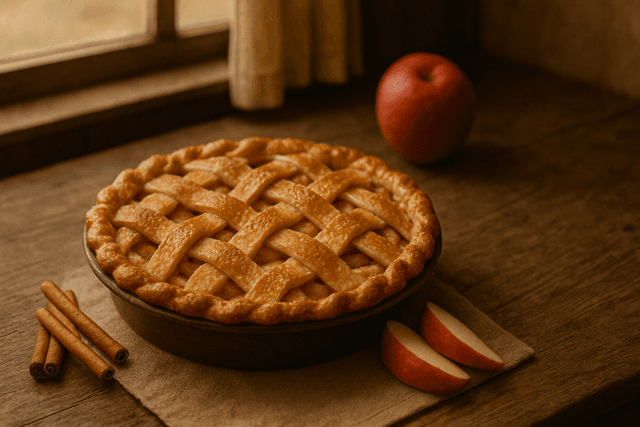
🇺🇸 United States: Apple Pie
Few desserts carry as much national pride as American apple pie. Its roots lie in British and Dutch pie-making traditions, but it evolved in the New World with local apple varieties and the abundance of spices from transatlantic trade.
A proper American apple pie is double-crusted — golden, flaky, and filled with spiced apple slices that are just tender, never mushy. It’s especially popular during Thanksgiving, often served with vanilla ice cream or cheddar cheese (a regional twist in New England).
What makes it special:
A nostalgic classic that evokes gatherings, gratitude, and the warmth of home.
👉 Try our version: Classic Apple Pie with Interlaced Pastry
🇵🇱 Poland: Szarlotka (Polish Apple Cake)
Szarlotka is Poland’s answer to apple pie — a shortcrust pastry base, spiced apple filling, and either a crumbly streusel or lattice top. The name comes from “Charlotte,” a dessert popularised across Europe in the 19th century, though the Polish version is simpler and more rustic.
It’s often made with tart apples like Antonówka, grated or sliced, and mixed with sugar and cinnamon. Many families enjoy it warm with whipped cream or a dusting of icing sugar.
What makes it special:
Less sweet and more apple-forward than many Western cakes, with a soft, buttery bite.
🇩🇪 Germany: Apfelkuchen
Germany boasts a wide family of Apfelkuchen, ranging from sheet cakes (Blechkuchen) to sponge-based versions, and yeast-leavened pastries to streusel-topped crumbles. It’s a common fixture at afternoon Kaffee und Kuchen, and like many German bakes, it balances richness with restraint.
Some versions, like Versunkener Apfelkuchen (sunken apple cake), arrange apple wedges in concentric circles atop a batter that rises around them. Others feature custard fillings or nut toppings.
What makes it special:
Its versatility — there’s a version for every region, family, and occasion.
🇹🇷 Turkey: Elmalı Kurabiye (Apple-Filled Cookies)
In Turkey, apples are often baked into soft, crescent-shaped cookies known as elmalı kurabiye. The dough is lightly sweetened and leavened, wrapped around a mixture of grated apple, cinnamon, and walnuts, then dusted with powdered sugar.
These are everyday treats, often served with strong Turkish tea, and sometimes made in large batches to share with guests or give as gifts.
What makes it special:
Small, fragrant, and beautifully spiced — the perfect bite-sized comfort.
🍁 A Shared Season, A Shared Ingredient
It’s striking how one fruit — the apple — takes on so many identities depending on where it’s baked. In each culture, apples become a symbol of season, memory, and heritage. And yet, whether in a castle kitchen or a farmhouse hearth, the comfort they bring remains the same.
If you’re ready to celebrate autumn through baking, try one of the classics above — or let SuperBaker suggest a personalised apple bake based on what you have at home.
Let the scent of cinnamon and apple fill your kitchen. It’s the scent of the season.