As a seasoned baker, I’ve always been fascinated by the subtle yet significant differences between two beloved banana bakes: banana bread and banana cake.
At first glance, they may seem interchangeable — but once you’ve tasted both, their personalities couldn’t be more distinct. Understanding their origins, textures, and baking techniques can elevate your home baking and deepen your appreciation of how recipes evolve with time.
Let’s explore their stories — and the pans that bring out their best.
The Sweet History of Banana Bread and Banana Cake
Bananas were first introduced to the United States in the 1870s, but they didn’t immediately find their way into baked goods. It wasn’t until the 1930s, when baking powder became a common pantry item, that banana recipes — especially quick breads — began appearing widely in North American cookbooks.
Some food historians believe banana bread emerged as a response to the Great Depression, when home cooks sought frugal ways to avoid food waste. Overripe bananas, once destined for the bin, became the star ingredient in simple yet satisfying loaves. Others argue that banana bread originated in corporate test kitchens, designed to promote newly popularised products like flour and baking soda.
In more recent years, banana bread experienced a remarkable resurgence during the 2020 COVID-19 pandemic lockdowns, as home baking provided both comfort and distraction in uncertain times.
Meanwhile, in the Philippines, what is internationally known as banana bread is more commonly called “banana cake.” It was introduced during the American colonial period, when the Philippines became a major banana exporter. The Filipino version is often slightly sweeter and softer, sitting somewhere between the Western-style banana bread and banana cake — yet it has firmly established itself as a local classic.
Beyond the Philippines, banana cake has long had a presence in countries like Malaysia, Vietnam, and Indonesia, where local banana varieties are incorporated into steamed or baked cakes with coconut milk and rice flour — resulting in very different textures, but the same comforting flavour base.
Banana Bread: The Comfort of Home Baking
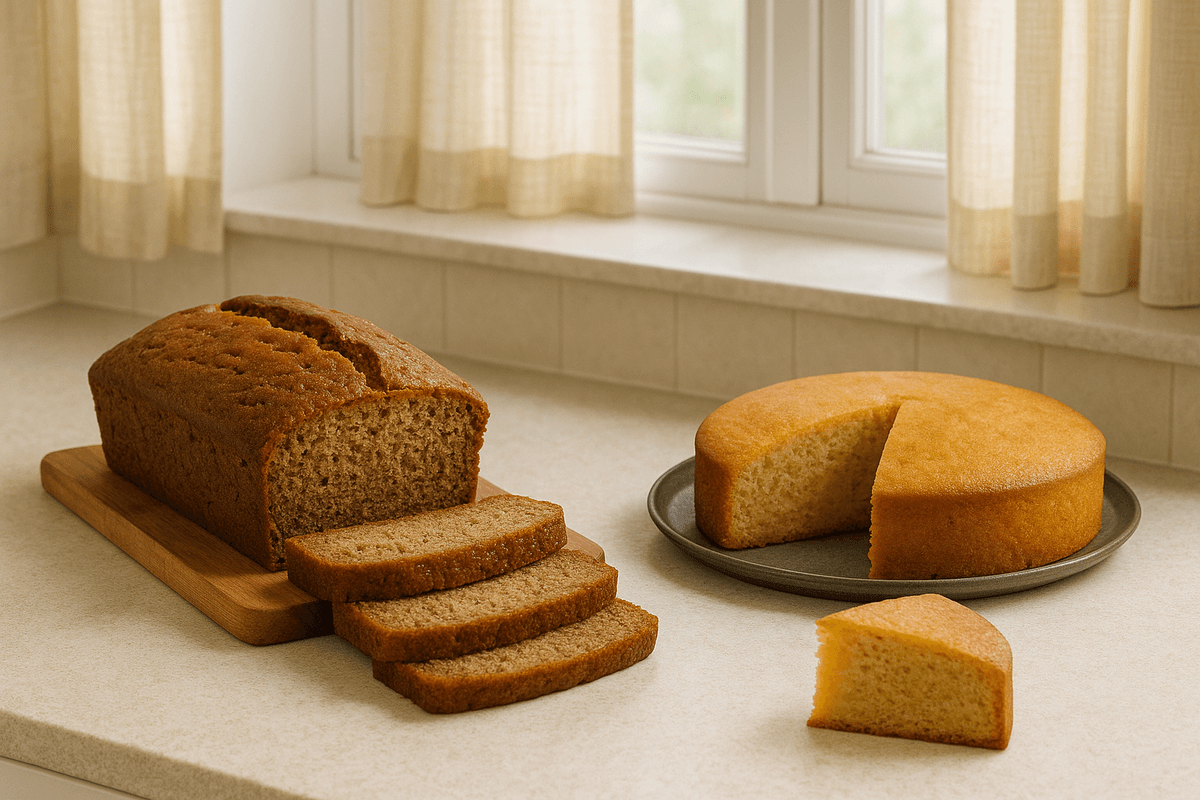
Banana bread is known for its dense, moist texture and deep banana flavour. It’s often less sweet than cake, and has a slightly chewy, hearty crumb. The batter comes together with a straightforward method: mixing dry and wet ingredients separately, then combining them with minimal stirring. A few lumps are perfectly fine — in fact, they help retain that homemade charm.
Best pan: For banana bread, I use a 9x5-inch heavy-duty loaf pan. A darker pan helps build a beautiful crust, while the solid structure ensures even baking.
Baking time: Bake at 175°C (350°F) for 50–60 minutes, or until a skewer comes out clean.
Optional add-ins: Walnuts, pecans, dark chocolate chips, or a dash of cinnamon — each adds a lovely twist to the classic loaf.
Banana Cake: The Delicate Delight
Banana cake is all about lightness and softness. It begins with creaming butter and sugar until fluffy, then adding eggs one at a time to trap air in the batter. Mashed bananas and a touch of milk or buttermilk are added last, resulting in a smooth, pourable batter.
Best pan: Banana cake bakes beautifully in round or square tins, ideally 20 or 23 cm (8 or 9 inch). Use a light-coloured pan to prevent over-browning.
Baking time: Bake at 175°C (350°F) for 25–35 minutes, or until lightly golden and springy to the touch.
For a finishing touch: Frost with cream cheese icing or a light whipped buttercream for a bakery-worthy result.
Choosing the Right Pan
Your pan truly matters when it comes to banana-based bakes:
Banana bread loves a sturdy, dark loaf pan. It promotes even baking and a rich, golden crust.
Banana cake prefers a light-coloured, shallow cake tin, allowing a gentler bake and a lighter crumb.
Always remember to grease and line your pans — especially for banana cake, which has a delicate texture and can stick.
Whether you’re drawn to the hearty warmth of banana bread or the soft elegance of banana cake, both bakes carry a beautiful history — shaped by time, place, and necessity. They’re not just a way to use up overripe fruit. They’re a reminder that even the most ordinary ingredients, treated with care and creativity, can become something unforgettable.
So the next time you find bananas browning on the counter, don’t toss them. Instead, pick your pan, preheat the oven, and bake a little piece of history into your kitchen.
Ready to bake? Try my go-to recipes for Classic Banana Bread and Light & Fluffy Banana Cake — both simple, delicious, and perfect for home bakers.