Around the World in 80 Bakes: Stop #31 — Biscotti (Cantuccini) from Italy
Biscotti are a study in simplicity. Firm, golden fingers of crisp almond-scented dough, twice-baked to achieve their signature crunch. Dunked into coffee, tea, or sweet wine, they transform into something tender and deeply comforting.
Biscotti’s long shelf life and elegant shape make them ideal for gifting. You can even find made-in-Italy Genuine Cantucci Cookies in beautiful pre-packed gift tins that bring a taste of Italy to your Christmas table.
Though they’ve found a home in cafés and Christmas hampers around the world, biscotti’s story begins in a much humbler setting, one more tied to soldiers, sailors, and survival than sweets and celebration.
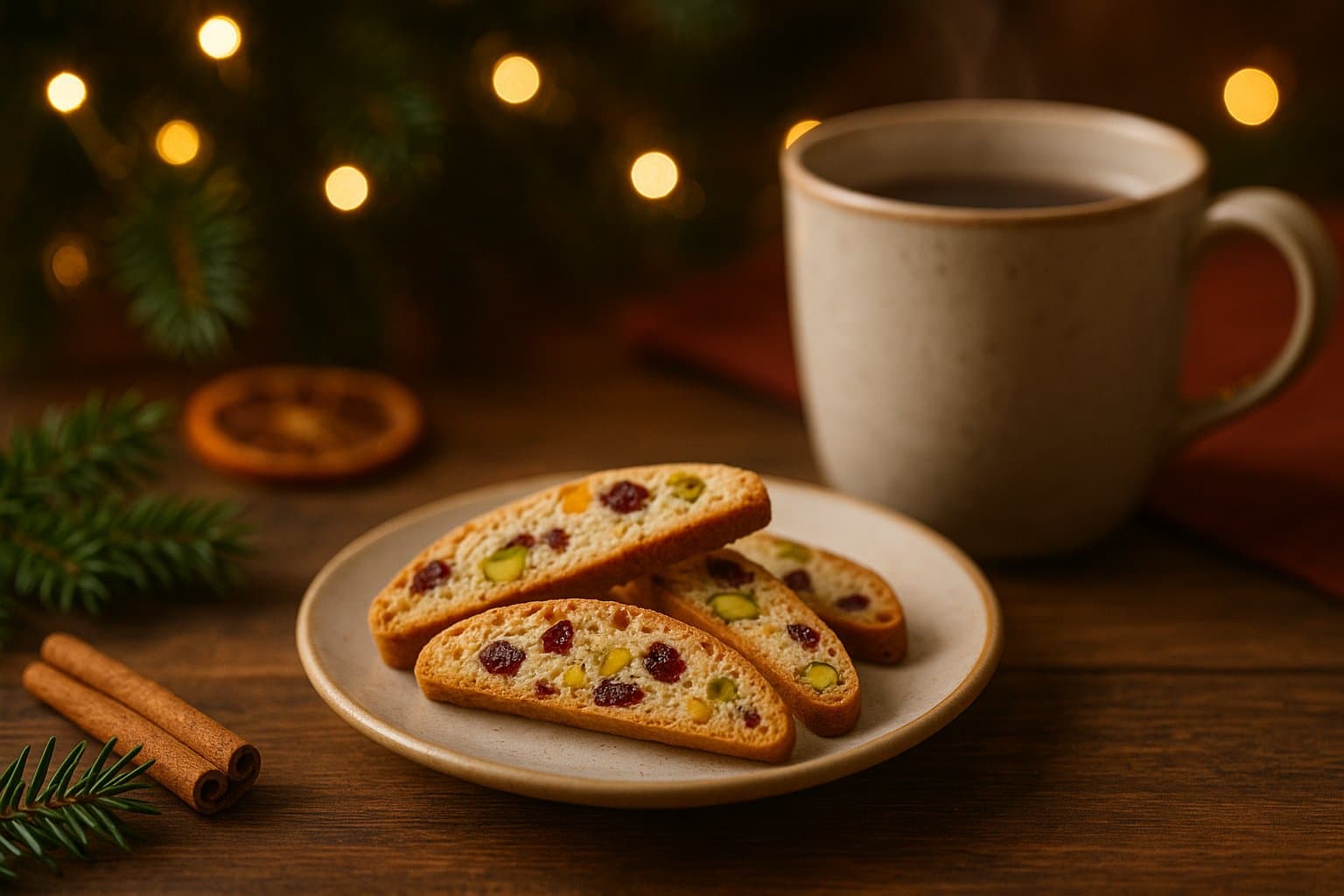
Cranberry pistachio biscotti – twice-baked, lightly spiced, and perfect for Christmas gifting with a cup of coffee or tea.
From Roman Legions to Renaissance Bakers
The word biscotti comes from Latin: bis (twice) and coctus (cooked). This double-baking method was common in Roman times for producing hard, dry rations that could last without spoiling.
These early “biscuits” were practical rather than pleasurable, being portable food for Roman legions on the move.
It wasn’t until the 14th or 15th century in Prato, Tuscany, that biscotti began their transformation into something sweet. A Tuscan baker named Antonio Mattei is often credited with refining the modern biscotti recipe in the 19th century; one made with flour, sugar, eggs, and almonds, but no butter or oil. This gave the cookies an impressively long shelf life without refrigeration.
Mattei’s cantuccini became so beloved he received awards at international fairs. His family’s original blue-paper-wrapped biscotti are still sold today under the brand Biscottificio Mattei.
In Tuscany, biscotti are traditionally dipped into Vin Santo, a sweet dessert wine. While bottles of Vin Santo may not be easy to find everywhere, a set of elegant Dessert Wine Glasses can elevate the experience — perfect alongside homemade biscotti in a Christmas gift box.
Cantuccini vs. Biscotti: What’s the Difference?
In Italy, biscotti simply means cookies or biscuits. What many of us call biscotti outside of Italy are more accurately known as cantucci or cantuccini — the almond cookies from Prato that are twice-baked, sliced diagonally, and famously crisp.
Traditional cantuccini are:
Dry and crisp
Made without butter
Flavoured with whole, unblanched almonds
Served with Vin Santo for dipping
Over time, regional and global variations emerged — featuring spices, dried fruits, chocolate, and even butter for a softer bite.
From Tuscan Tables to Global Christmastime Favourites
Biscotti weren’t originally tied to Christmas, but their durability, versatility, and festive adaptability have made them a favourite December bake — especially for gifting.
In modern kitchens, they appear in flavours like:
– Cranberry and pistachio (classic red and green)
– Chocolate almond or white chocolate-dipped
– Gingerbread spice
– Orange zest and aniseed, echoing Tuscan tradition
They’re easy to package, don’t crumble easily, and pair beautifully with warm drinks — a thoughtful, elegant homemade gift that friends and neighbours truly appreciate.
Not in the mood to bake? Biscotti Gift Boxes are a lovely alternative, especially when paired with a good coffee or tea.
Biscotti as a Symbol of Care
In a season that can often feel rushed or overwhelming, biscotti is a reminder that not every gift needs to be extravagant. A small bag of homemade cookies, thoughtfully wrapped and given with love, carries the same message:
I thought of you. I made this with my hands.
👉 Ready to bake your own? Try our festive Cranberry Pistachio Biscotti Recipe – perfect for gifting this Christmas.
👉 Want to explore more Italian classics? This Baking Book is one I keep coming back to for inspiration.