Autumn’s favourite flavours were once fought over, hoarded, and hidden. Here’s how they ended up in your cake tin.
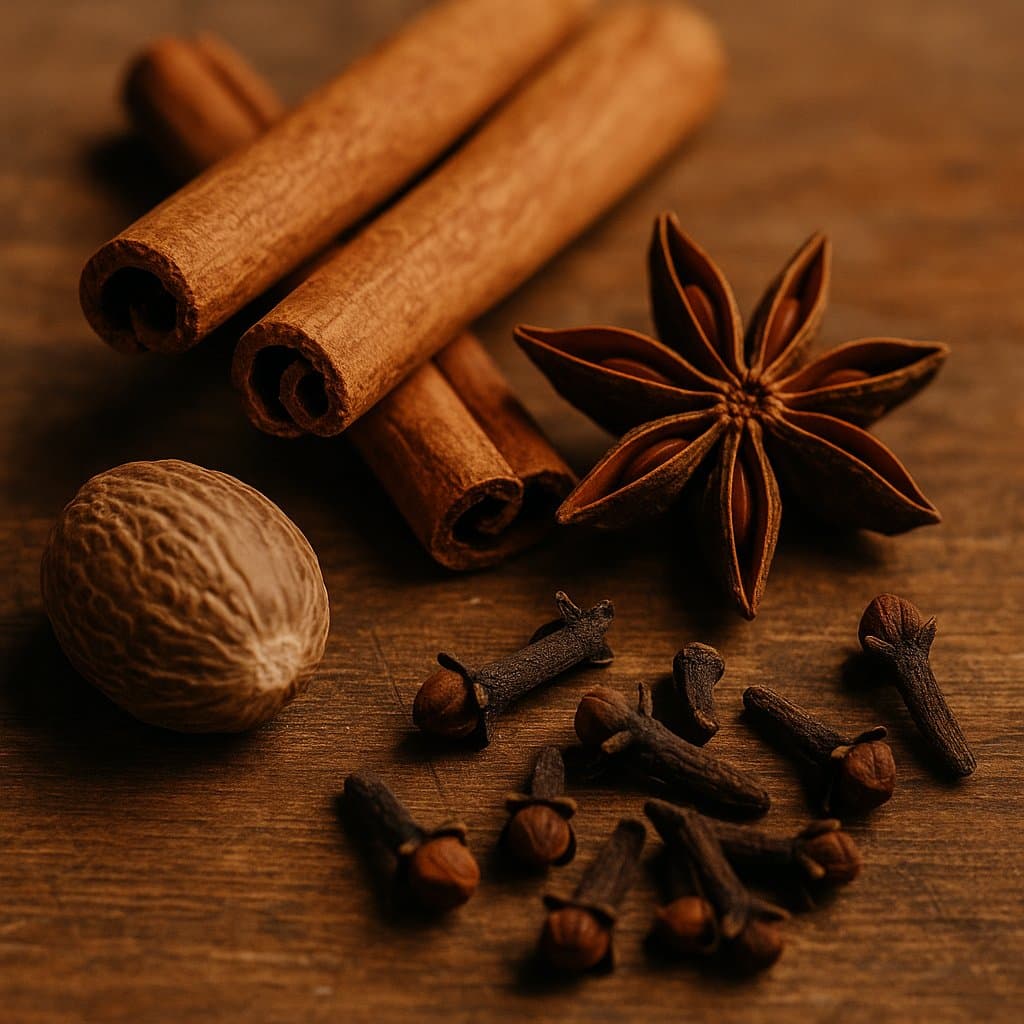
There’s something unmistakable about the scent of autumn in the kitchen. The moment the air turns crisp, many of us instinctively reach for cinnamon, cloves, nutmeg, and ginger. Whether we’re baking spiced apple cake, pumpkin pie, or warm gingerbread, it’s almost as though autumn has a flavour — and it’s deeply tied to spice.
But why is that?
The link between baking spices and the autumn season isn’t just about taste. These comforting flavours carry a far older story — one that winds through ancient trade routes, secret empires, fragrant myths, and the human desire for warmth, even in the coldest months.
History of Autumn Spices: Power, Trade, and Global Shifts
The story of autumn spices is not just about comfort — it’s also about conquest.
Centuries ago, cinnamon, nutmeg, cloves, and pepper were among the world’s most valuable commodities. Entire empires were built on their trade. Wars were fought. People were enslaved. The desire to control the global spice supply shaped maps and history.
Nutmeg, for instance, was so prized in 16th-century Europe that it was believed to cure the plague. At the time, it grew only on a handful of small Indonesian islands — the Banda Islands, part of the fabled “Spice Islands.” In 1621, Dutch traders from the VOC (Dutch East India Company) seized control of the Banda Islands through a violent campaign that decimated the native Bandanese population in order to monopolise the nutmeg trade.
Cinnamon has an even older story. It was traded as early as 2000BC in ancient Egypt, where it was used for embalming and temple offerings. So rare and coveted was it in Europe that cinnamon was, at times, worth more than gold by weight. For centuries, Arab traders brought it westward while fiercely guarding its origins — Sri Lanka and South India — spinning elaborate myths of giant birds and perilous valleys to protect their monopoly. The mystique only heightened its value, turning this fragrant bark into a luxury reserved for royalty, priests, and the wealthy elite.
Cloves followed a similar path, grown in the Maluku Islands in Indonesia and fought over by European powers. The Portuguese, Dutch, and British all battled for control of the clove trade, leading to centuries of conflict and colonisation across Southeast Asia and the Indian Ocean.
It wasn’t until the 18th and 19th centuries, when spice trees were successfully transplanted to other colonial outposts — Mauritius, Réunion, Zanzibar, and the Caribbean — that spices became more accessible. Slowly, these once-elite ingredients began appearing in ordinary households, especially in festive bakes during the colder months.
A little cinnamon in a cake or nutmeg in a custard was no longer just about flavour. It was a trace of a global story — of power, survival, and celebration.
Why Autumn?
Part of the reason we turn to spice in autumn is practical. Spices are shelf-stable. They don’t spoil like fruit or herbs. In earlier times, as summer faded and fresh ingredients dwindled, households relied more on dried goods and pantry staples. Spices brought those humble ingredients to life.
But the deeper reason is sensory and emotional.
Spices like cinnamon and cloves contain aromatic compounds (such as cinnamaldehyde and eugenol) that trigger both taste and smell receptors. These scents create a sense of warmth and familiarity. When we bake with them, they evoke comfort—even safety—on a biological level.
In short, spices are emotional. We don’t just taste them. We feel them.
Spiced Bakes Across Cultures
Nearly every culture with a baking tradition has autumn or winter treats centred around spice:
Germany – Lebkuchen and other honey-spiced cakes fill Christmas markets.
United Kingdom – Fruitcakes, sticky toffee pudding, and mince pies bring deep spice to cold days.
United States – Pumpkin spice, a blend of cinnamon, nutmeg, clove, and ginger, dominates autumn baking.
Scandinavia – Cardamom buns and gingerbread are baked as daylight wanes.
India – While spice is year-round, autumn festivals like Diwali often feature sweets flavoured with cardamom and saffron.
Middle East – Bakes and confections flavoured with cinnamon, cardamom, and rosewater are staples of both daily and festive life.
These aren’t just flavour traditions. They’re cultural rituals. Spice connects us — across time, geography, and memory.
Baking with the Senses
There’s something profoundly instinctive about baking with spice as the seasons shift.
Autumn marks a turning inward. We cocoon. The days grow shorter. The light fades. In our kitchens, we seek warmth—not just from the oven, but from the past.
Perhaps you remember the scent of cinnamon buns after school. Or a gingerbread cake in your grandmother’s kitchen. Or the way nutmeg makes warm milk taste like bedtime.
This connection between smell and memory is not just poetic — it’s physiological. The limbic system in our brain, responsible for memory and emotion, is closely linked to our sense of smell. That’s why the aroma of spice can instantly bring back a forgotten moment — or a forgotten feeling.
From Heritage to Home
Today, we reach for cinnamon, nutmeg, and cloves with ease. But they still carry the echoes of ancient trade routes, of empire and resistance, of rituals and homecomings. They link us to the women (and men) who baked before us — who stirred spices into cakes not just for flavour, but to mark the turn of the seasons.
So the next time you lift the lid on your spice tin, take a moment. There’s history in your hand. And warmth on the way.