
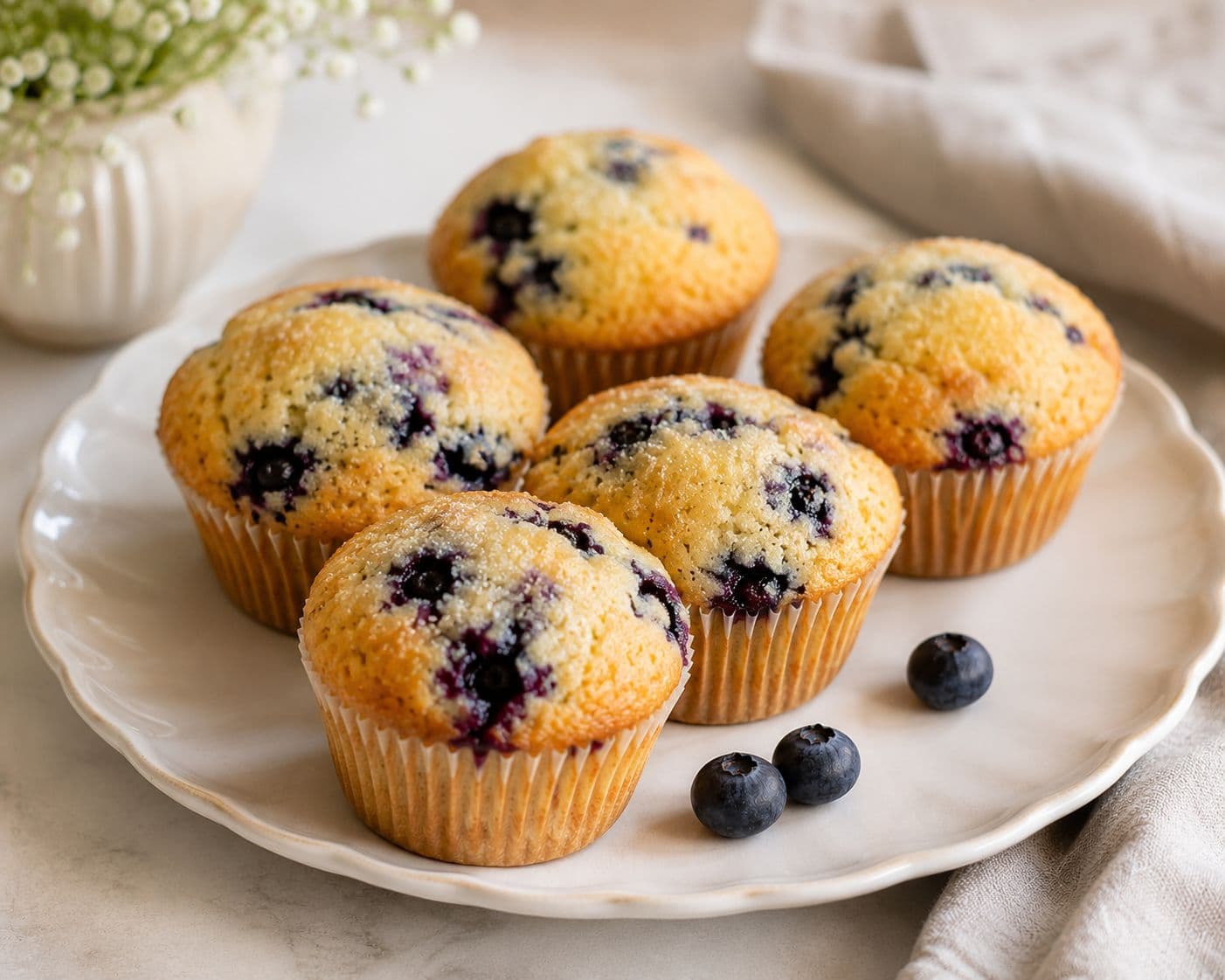
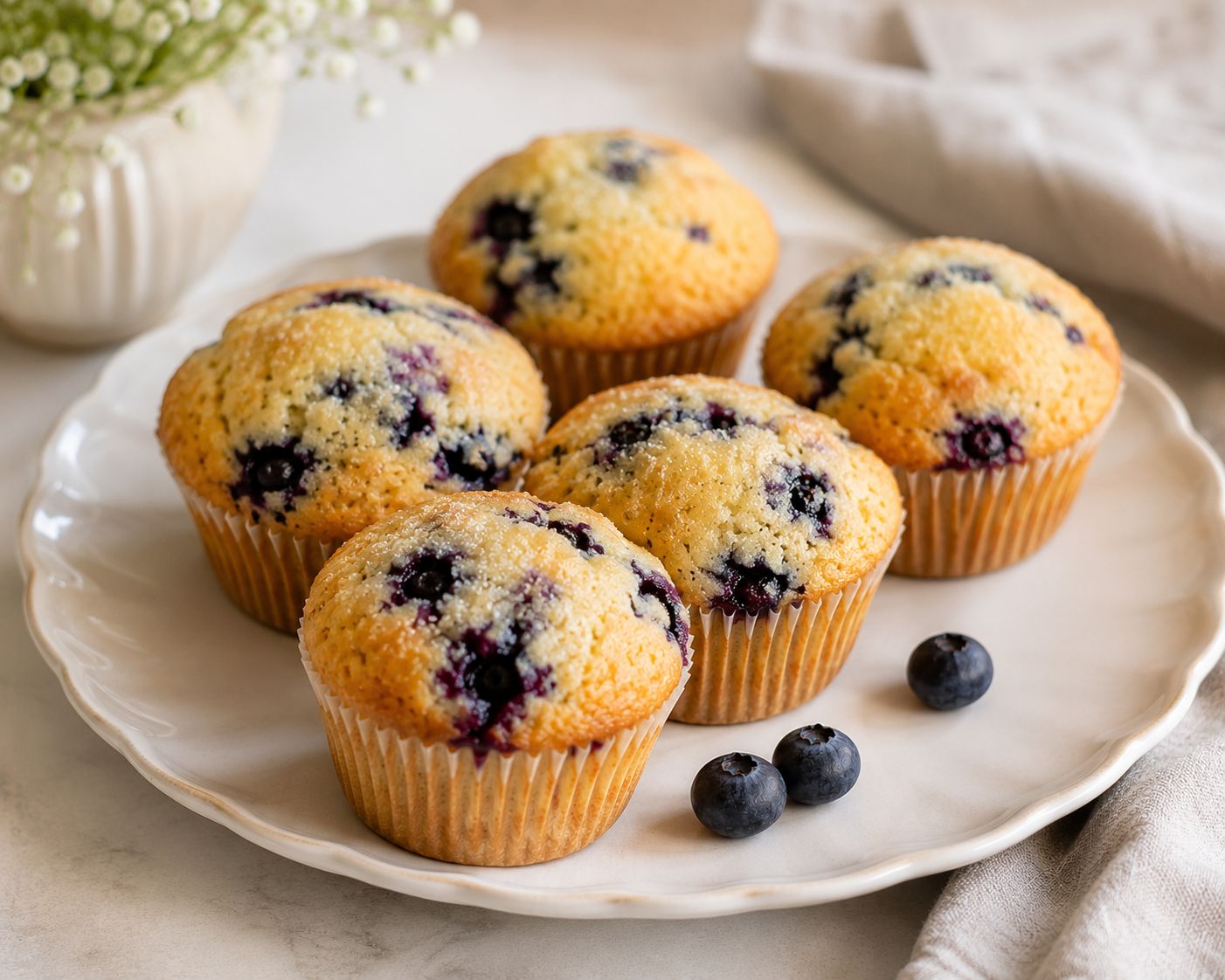
Soft, tender and filled with juicy berries, the blueberry muffin is now familiar in cafés, bakeries and home kitchens around the world. Although it is closely associated with North American baking, its story begins with an older British bread and later expands through European café culture and local berry traditions.
In the United States, 11 July is observed as National Blueberry Muffin Day, conveniently falling during blueberry season.
Where Did Muffins Originate?
The word muffin was used in Britain long before the appearance of the tall, cake-like muffins sold today.
Traditional British muffins were small, round yeast breads cooked on a griddle or hotplate. Recipes appeared in British cookery books by the 18th century, and muffins became a familiar street food, sold by vendors who rang bells to attract customers.
These early muffins were not sweet cakes. They were split, toasted and served with butter.
During the 19th century, muffin-making developed differently in North America. American cooks began using chemical raising agents such as baking soda and baking powder instead of yeast. This created a softer, sweeter quick bread that could be mixed and baked immediately.
It was this American-style muffin that eventually became the base of the blueberry muffin.
Blueberries Before the Muffin
Blueberries are native to North America, where Indigenous communities had gathered and eaten wild varieties for generations. The berries were consumed fresh, dried for winter and added to breads and other foods.
European settlers later incorporated local blueberries into their own cooking, using them in puddings, pies and simple baked dishes. However, blueberries remained largely wild and seasonal because they were difficult to cultivate.
That changed in the early 20th century through the work of botanist Frederick Vernon Coville and New Jersey farmer Elizabeth Coleman White.
Coville discovered that blueberries required highly acidic soil, while White helped locate wild plants with especially large and desirable fruit. Their collaboration led to the first commercial crop of cultivated highbush blueberries in 1916.
This made blueberries more widely available and helped support the growth of blueberry baking.
When Was the Blueberry Muffin Invented?
There is no single known inventor of the blueberry muffin.
It probably developed gradually as American cooks added local berries to quick-bread muffin batter during the late 19th and early 20th centuries. Blueberries were particularly suitable because they were small enough to be folded into the batter whole.
Before commercial cultivation, blueberry muffins would have depended on locally gathered fruit and remained strongly seasonal. As blueberry farming expanded, the muffins became easier to bake and distribute.
Elsewhere, bakers were already adding currants, raspberries, apples and other fruits to small cakes and quick breads. The blueberry muffin was therefore a North American version of a much broader baking tradition.
From Home Bake to Café Favourite
Blueberry muffins became more popular during the 20th century as recipes appeared in cookbooks, newspapers and community collections.
After the Second World War, refrigeration, frozen fruit and improved transport made blueberries available for more of the year. This helped turn the muffin from a seasonal home bake into a regular bakery and breakfast item.
Some regional versions also became famous. The blueberry muffins sold by the Jordan Marsh department store in Boston were especially well known for their generous quantity of berries and sugar-crusted tops.
By the late 20th century, muffins had become larger, sweeter and more cake-like. Coffee shops and supermarket bakeries popularised oversized versions with domed tops, coarse sugar or streusel.
How Blueberry Muffins Spread to Europe
American-style muffins became increasingly familiar outside North America after the Second World War through cookbooks, films, hotels and packaged baking products.
In Britain, sweet muffins became more common during the 1980s and 1990s as coffee-shop culture expanded. They were quite different from traditional British muffins and were often described as American muffins.
Blueberry quickly became one of the most recognisable flavours.
Across mainland Europe, café chains, hotels and supermarket bakeries introduced muffins to consumers already accustomed to regional buns, cakes and pastries. Frozen and imported blueberries made them easier to produce throughout the year.
Muffins did not replace older European bakes. Instead, they became part of a growing range of international café foods.
Blueberries and European Berry Traditions
European bakers were not unfamiliar with blue-coloured berries.
Northern and eastern Europe have long traditions of gathering wild bilberries, which are related to North American blueberries but are smaller, darker and more intensely coloured inside.
In Finland and other Nordic countries, bilberries have long been used in pies, cakes, soups and other dishes. A muffin made with bilberries is usually darker and has a stronger berry flavour than one made with cultivated highbush blueberries.
As American-style muffins spread through Europe, bakers adapted them to local ingredients. Some used cultivated blueberries, while others used wild bilberries or frozen fruit.
Why Blueberries Work So Well in Muffins
Blueberries are well suited to muffin batter because they require little preparation and can be folded in whole.
Their skins help them hold their shape during baking, while their juice creates moist pockets in the crumb. Their gentle acidity also balances the sweetness of the batter.
Bilberries behave slightly differently because their deeply coloured juice can turn the batter purple, especially if mixed too vigorously.
National Blueberry Muffin Day
National Blueberry Muffin Day is observed in the United States on 11 July.
Its exact origins are unclear, but the date is fitting because July falls within blueberry season across much of North America.
Although the celebration is American, blueberry muffins are now enjoyed around the world, from British cafés and Finnish supermarkets to bakeries across Europe, Asia and Australasia.
From British Bread to International Bake
The blueberry muffin did not emerge from one invention.
Its name has roots in Britain’s yeast-raised griddle muffins. Its cake-like form developed in 19th-century North America with the use of chemical raising agents. Native blueberries supplied its defining flavour, while successful cultivation made the fruit more widely available.
Refrigeration, frozen berries, international trade and coffee-shop culture then carried the blueberry muffin far beyond North America.
What began as an American quick bread built upon an older British name has become an international favourite, shaped by North American agriculture, British baking history and Europe’s own traditions of baking with berries.
To continue the story in your own kitchen, try our Blueberry Muffin Recipe for soft, tender muffins filled with juicy blueberries.