
Around the World in 80 Bakes: Stop #53 — Berry Trifle
There is something wonderfully old-fashioned about a berry trifle, a soft, creamy, fruity dessert that feels at home on a summer table, a Christmas sideboard or at a family gathering. Its beauty lies in its layers: sponge or cake, fruit, custard, cream and sometimes jelly, each simple on its own but far more memorable together.
As part of our 80 Bakes series, berry trifle earns its place through its sponge layer and its long connection with British dessert traditions. The trifle we know today is closely associated with Britain, but its story is older and more layered than the dessert itself. It began not as the tall, colourful pudding many of us recognise now, but as a much simpler cream-based dish.
From Flavoured Cream to Layered Pudding
To understand how trifle became the layered dessert we know today, it helps to look at its earliest forms. The word “trifle” originally meant something light or of little importance. In food, early trifles were closer to sweetened cream than to the layered dessert we know today.
One of the earliest known printed references appeared in Thomas Dawson’s The Good Huswifes Jewell in 1585. This early version was made with thick cream flavoured with sugar, ginger and rosewater. There was no sponge, no custard, no fruit and no dramatic glass bowl. It was more of a rich, perfumed cream.
Over time, however, English desserts began to change. By the 18th century, trifles had become more elaborate. They started to include sponge biscuits or cake soaked in alcohol, usually wine, sherry or sack, along with custard and cream. This was the beginning of the trifle’s familiar structure: something soft at the bottom, something creamy in the middle, and something decorative on top.
The Role of Sponge, Custard and Sherry
As trifles evolved into more complex desserts, certain ingredients became essential to their identity. The sponge layer became one of the most important parts of a traditional trifle. It was often made with sponge fingers, ratafia biscuits or leftover cake. These were soaked with alcohol, allowing the dessert to become soft, fragrant and spoonable.
Custard also gave the trifle its richness. Before ready-made custard powders became common, custard was made with eggs, milk or cream, and sugar. It helped turn the dessert from a bowl of sweet cream into something more substantial.
Sherry became especially associated with trifle in Britain. A classic “sherry trifle” usually includes sponge soaked in sherry, fruit or jam, custard, whipped cream and a decoration of almonds, glacé cherries or fresh fruit. For many families, this version became a celebration dessert, served at Christmas, birthdays and Sunday lunches.
Where Do Berries Come In?
With the basic structure of trifle established, variations naturally began to emerge, particularly in the choice of fruit. Fruit has long been part of trifle, but berry trifles feel especially suited to summer. Strawberries, raspberries, blackberries and blueberries bring freshness and colour to a dessert that can otherwise be very rich. Their slight sharpness cuts through the cream and custard, making the whole pudding feel lighter.
In earlier versions, fruit was often preserved, stewed or used as jam. Fresh berries became more practical as fruit growing, markets and later refrigeration improved. By the 19th and 20th centuries, berry trifles had become a natural variation of the classic trifle, especially during the warmer months when fresh berries were abundant.
A berry trifle also reflects the British love of cream-and-fruit desserts. It sits comfortably beside summer puddings, fools, syllabubs and Eton Mess: all desserts that celebrate soft fruit, dairy and sweetness in different ways.
If you enjoy old-fashioned British berry desserts, you may also like our article on Eton Mess: A Sweet British Classic Born from Chaos, the much-loved combination of strawberries, cream and meringue.
Trifle, Fruit Fool and Other Creamy Relatives
To place trifle in a broader culinary context, it is helpful to compare it with other traditional cream-based desserts. Trifle is not the only old English dessert built around cream and fruit. Fruit fool, for example, is made by folding cooked or crushed fruit into sweetened cream or custard. It is simpler than trifle because it does not usually include sponge or distinct layers.
Syllabub, another historic dessert, was made with cream and wine or cider, often whipped into a light, frothy texture. These desserts show how much early English sweets relied on cream, fruit, wine and sugar long before modern cakes and chilled desserts became common.
What makes trifle different is its structure. A fool is mixed. A syllabub is whipped. A trifle is layered. That layering gives it a sense of occasion.
Why Trifle Became a Family Favourite
Given its versatility and visual appeal, it is easy to see why trifle became so popular in households. Part of trifle’s popularity comes from its flexibility. It can be grand or humble, depending on what is available. Leftover cake can become the base. Jam can stand in for fresh fruit. Custard can be homemade or bought. Cream can be piped beautifully or simply spooned on top.
This made trifle a practical dessert as well as a festive one. It allowed home cooks to use up cake, stretch ingredients and still produce something that looked impressive.
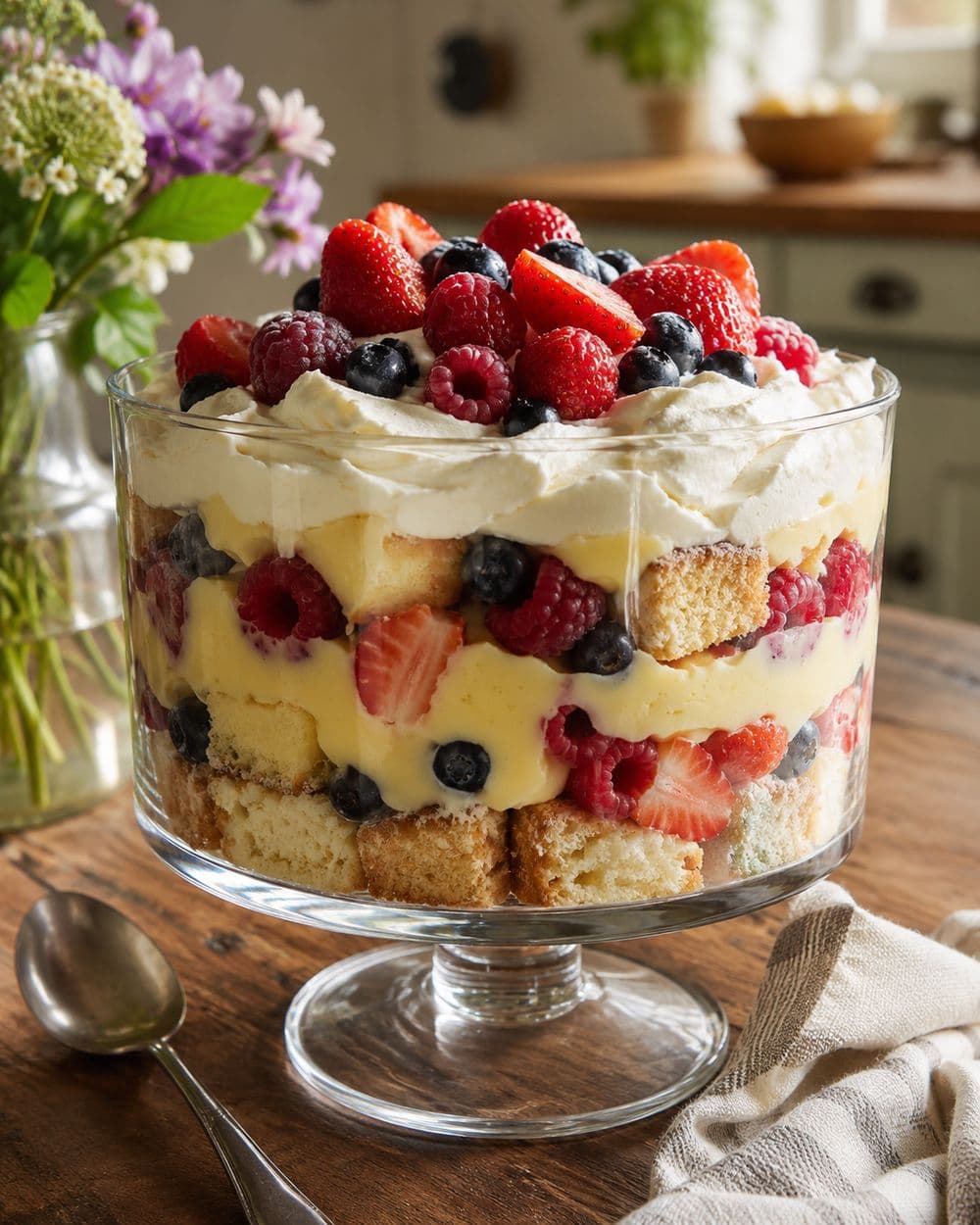
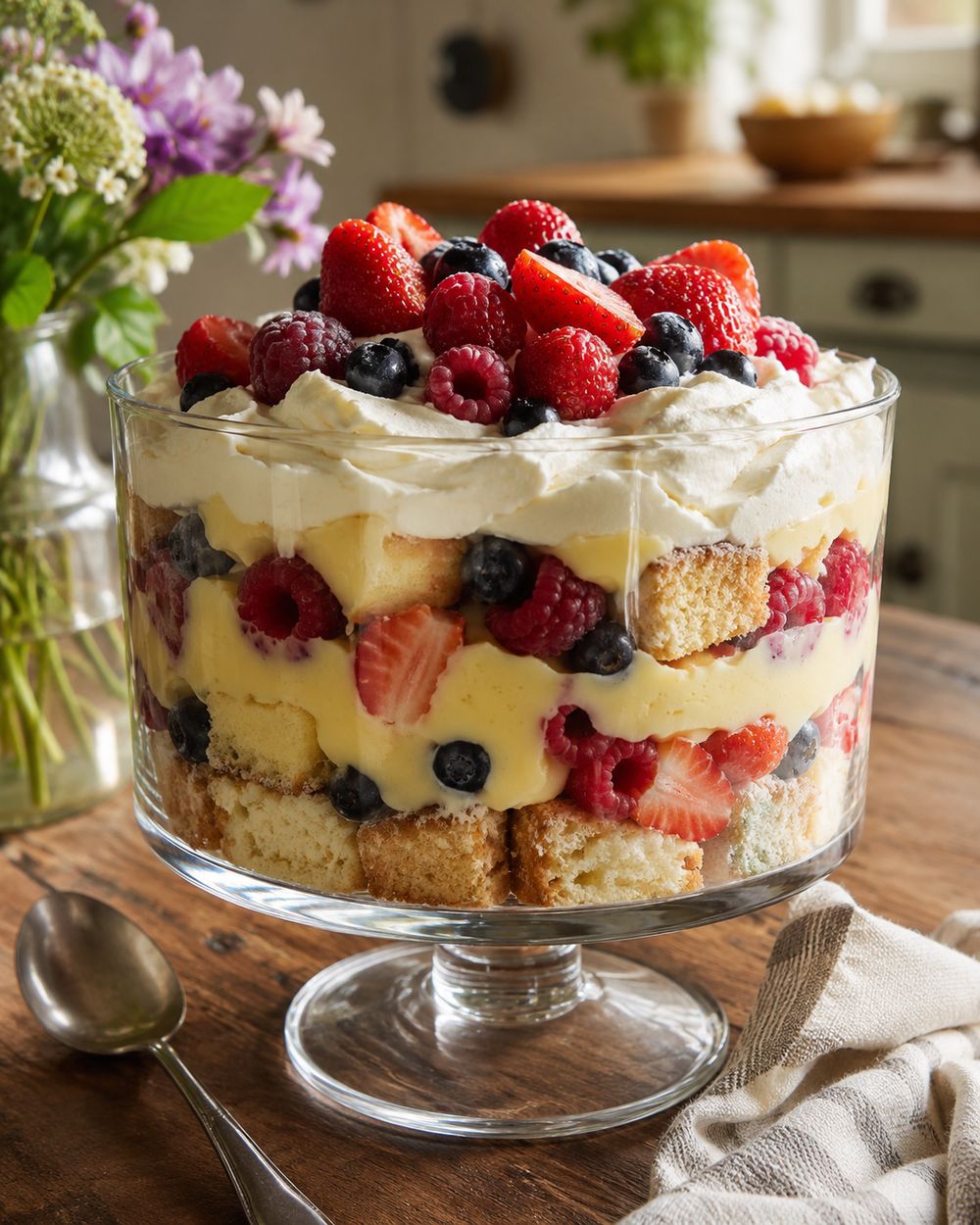
The glass bowl also helped make trifle special. When served in a clear dish, the layers become part of the appeal: golden sponge, red berries, yellow custard and white cream. Few desserts are so easy to recognise at a glance.
The Modern Berry Trifle
As tastes and presentation styles have evolved, so too has the way trifle is prepared and served. Today, berry trifle has many forms. Some versions use classic sponge fingers and custard. Others use pound cake, Madeira cake, ladyfingers or Swiss roll. Some include jelly, while others leave it out for a softer, more cream-led dessert. The fruit may be fresh, macerated with sugar, cooked into a compote, or layered with jam.
Individual trifles in glasses have also become popular. They keep the same old idea but make it neater, lighter and easier to serve. A berry trifle in a small glass feels both nostalgic and modern: familiar flavours, but presented in a way that suits today’s tables.
A Dessert Built on Layers of History
Looking back over its long history, it becomes clear why trifle has endured for so many generations. Berry trifle has survived because it offers comfort without being dull. It carries traces of old English cream desserts, 18th-century layered puddings, Victorian family tables and modern summer entertaining. It can be made with care from scratch, or assembled quickly with good ingredients.
That is the charm of trifle. It does not demand perfection. In fact, it is often better when it looks a little generous and homemade. The sponge softens, the fruit releases its juices, the custard settles, and the cream brings everything together.
A berry trifle is more than a pretty layered dessert. It is a reminder that some of the best puddings are built slowly, one spoonful, one layer and one family table at a time, carrying forward a shared culinary heritage that continues to delight across generations and cultures.
References: Thomas Dawson, The Good Huswifes Jewell, 1585; Alan Davidson, The Oxford Companion to Food; Wikipedia, “Trifle”; British food history sources on trifle, syllabub and fruit fool.