National Sugar Cookie Day falls on 9 July, which makes this a fitting moment to look at a biscuit that seems simple at first, but carries a much longer story.
A sugar cookie does not ask for much: sugar, flour, butter, eggs, vanilla and a little raising agent. Yet this plain little bake has become one of the most decorated, gifted and remembered cookies in home baking.
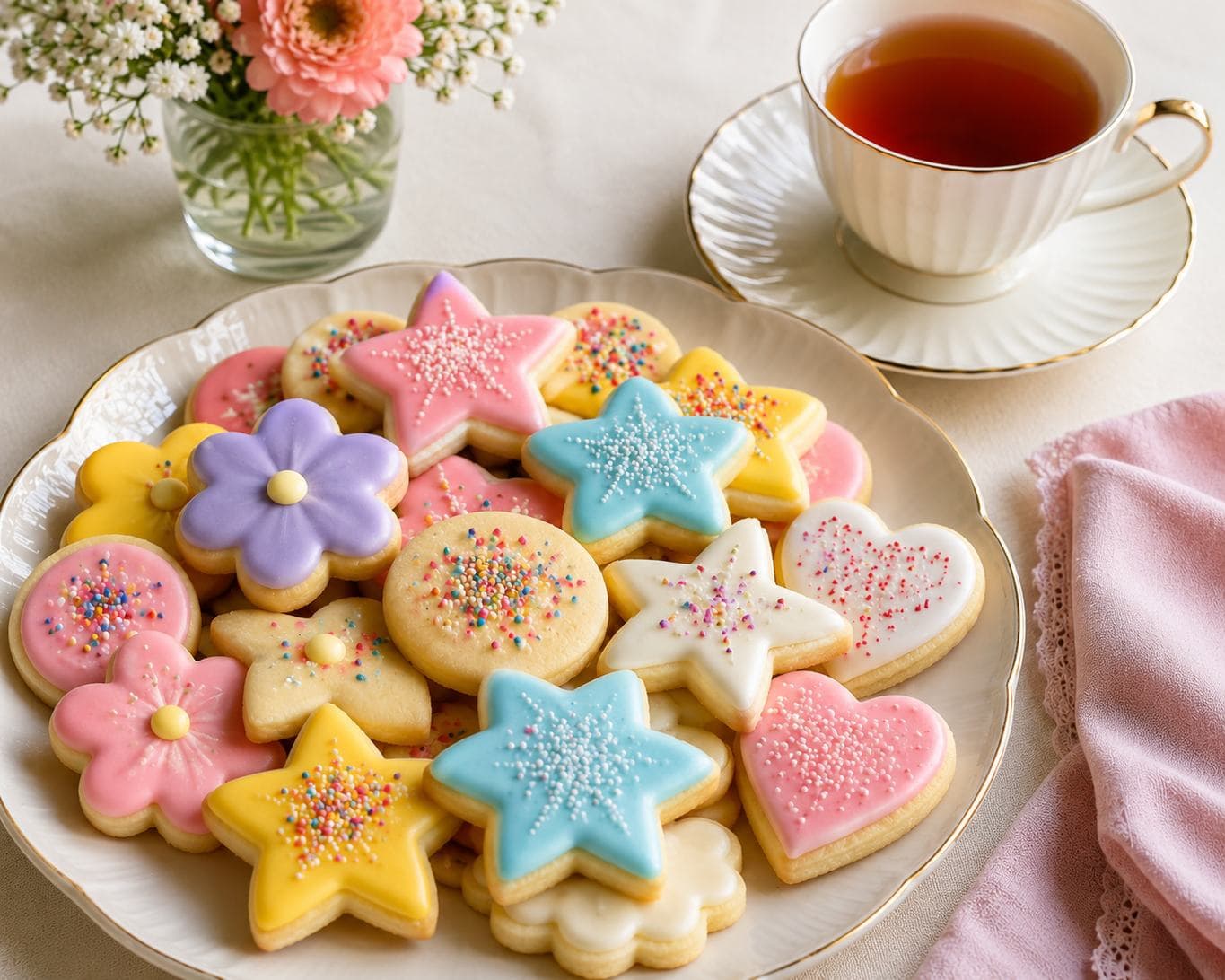
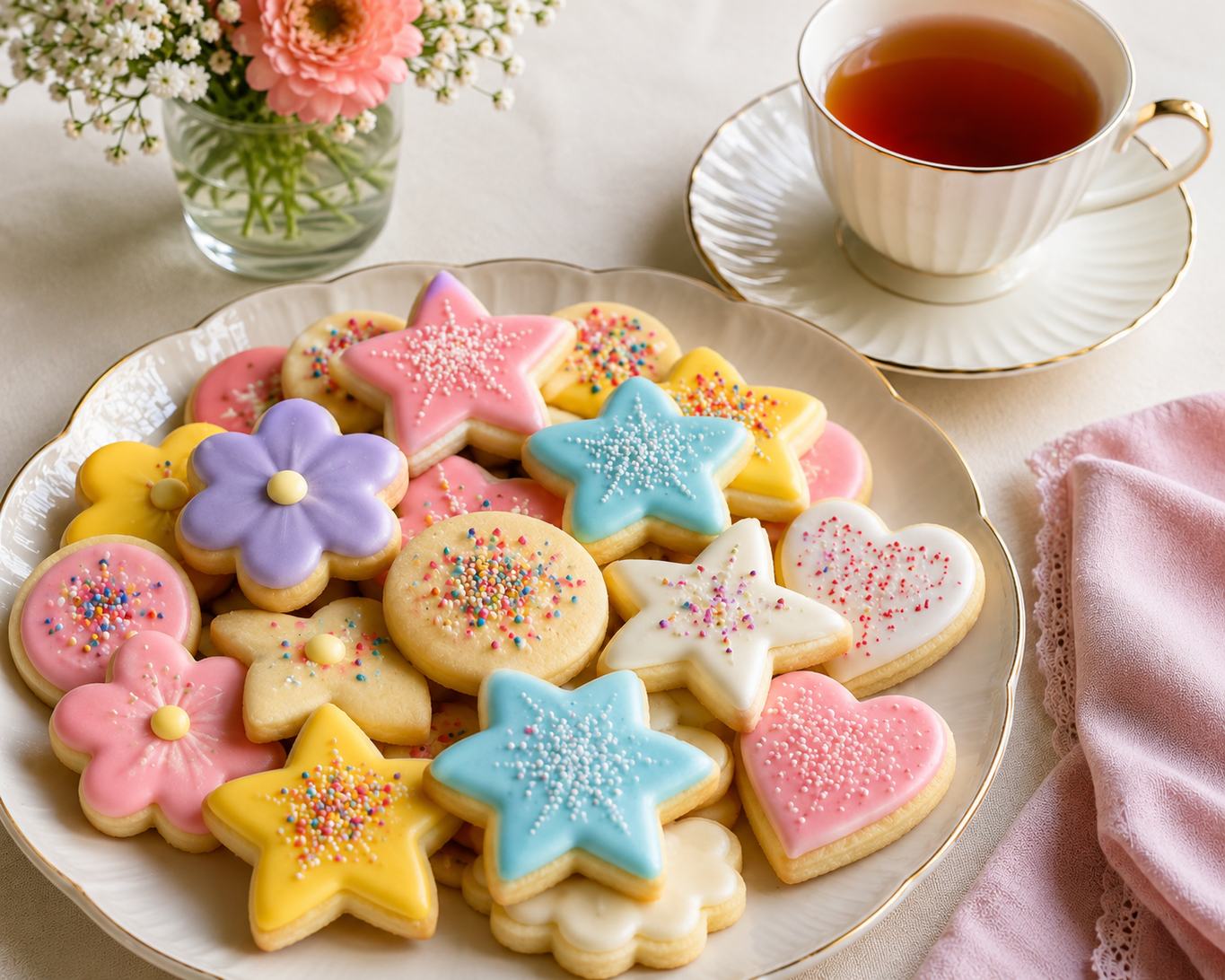
Its charm lies not in luxury, but in possibility. A sugar cookie can be a round biscuit for tea, a star for Christmas, a heart for Valentine’s Day, or a tray of imperfect shapes made by children at the kitchen table. It can be formed by hand, dropped in rounds, rolled and cut, sprinkled with sugar, iced, covered with colourful sprinkles or left beautifully plain.
Across different baking traditions, the name may vary, but the idea is familiar: a sweet, buttery dough that can be rolled, cut, decorated or kept simple. Compared with French sablés viennois, which are piped, delicate and rich with butter, sugar cookies are sturdier and more practical. They are made to be handled. They welcome cutters, icing and small hands.
The sugar cookie did not appear in one single moment. It came together slowly through sugar, trade, European biscuit-making, colonial kitchens and the gradual development of more reliable home baking.
Long Before Sugar Cookies
Small sweet bakes existed long before the modern sugar cookie. Some food-history accounts trace early sugar-rich baked goods to Persia, where sugar was used in cooking before it became common in much of Europe.
These early sweets were not sugar cookies as we know them today, but they remind us that the sugar cookie belongs to a much older story of sugar, trade and small celebratory bakes.
In medieval Europe, sugar was still expensive. It was valued as a luxury, used much like a spice, and sometimes included in medicinal preparations rather than treated as a common ingredient for everyday baking. Only as sugar became more available through trade did small biscuits and sweet bakes move closer to the crisp, tender forms we recognise today.
Jumbles, Gingerbread and Shaped Biscuits
Before sugar cookies, there were jumbles. Jumbles, also spelled jumbals or jumballs, were small sweet biscuits or cakes popular in Europe from the early modern period onwards. They were often flavoured with spices such as aniseed, coriander, fennel, nutmeg or caraway. Some were shaped into knots, rings, letters or decorative forms.
In this sense, jumbles were important ancestors of the sugar cookie: not because they tasted exactly the same, but because they showed how a sweet dough could be shaped, displayed and shared. Gingerbread also belonged to this wider world of spiced, shaped baking, where biscuits could be festive, decorative and practical all at once.
This is where the sugar cookie’s story becomes more than a recipe. It is really the story of several changes happening together: sugar becoming more available, shaped biscuits becoming familiar, and home bakers learning how to turn simple doughs into small bakes for storage, travel, holidays and family tables.
From Europe to Colonial Kitchens
European settlers carried many biscuit and small-cake traditions with them to North America. English, Dutch and German-speaking communities all brought their own ways of making sweet doughs, shaped biscuits and festive bakes.
The word cookie itself comes through Dutch influence, from koekje, meaning little cake. In early colonial baking, the line between small cakes, biscuits and cookies was not always as clear as it is today. Many recipes were practical home bakes: sweet doughs that could be rolled, cut, flavoured and baked for storage, travel or celebration.
Over the 1600s and 1700s, these older European traditions adapted to new kitchens, ingredients and habits. Bakes such as jumbles, gingerbreads, small cakes and butter biscuits helped prepare the ground for the plainer, sweeter and more adaptable sugar cookie that would later become familiar to many home bakers.
The Nazareth Sugar Cookie
One important chapter in the sugar cookie’s history is the Nazareth sugar cookie, often linked to German-speaking Protestant settlers in Nazareth, Pennsylvania, in the mid-18th century. These simple buttery biscuits brought together ingredients we still recognise in sugar cookies today: flour, butter, sugar, eggs and a plain, crumbly texture.
By then, sweet shaped biscuits already had a longer history in Europe, and colonial America had many related bakes. The Nazareth story sits within that wider tradition, showing how the sugar cookie became more recognisable in American baking: less heavily spiced, more buttery, and closer to the simple, adaptable cookie many home bakers know today.
A Printed Milestone in 1796
A clearer printed milestone appears in Amelia Simmons’ American Cookery, published in 1796. Often described as the first known cookbook written by an American and published in the United States, it included recipes called “Cookies” and “Christmas Cookey”.
These were not modern vanilla sugar cookies. Simmons’ Christmas cookie used ingredients such as flour, sugar, butter, milk, coriander and pearlash, an early chemical leavening made from wood ash. The flavour would have been more spiced and old-fashioned than the plain sugar cookies many bakers recognise today.
Still, these recipes matter because they show how cookie-making was changing in print. Pearlash helped doughs rise and lighten before modern baking powder became common, while sugar, butter, flour, milk and eggs were being used for small sweet bakes connected with festive occasions.
By the late 18th century, many of the sugar cookie’s familiar elements were beginning to come together.
From Simple Dough to Decorated Tradition
Published sugar-cookie recipes became more common in the 1800s, and over time the cookie settled into the form many bakers recognise today. Some versions were dropped into rounds, while others were rolled and cut with cookie cutters into hearts, stars, animals, flowers and festive shapes.
This shaping ability changed the sugar cookie’s place in home baking. It was no longer only something to eat; it became something to do. Someone rolls the dough. Someone chooses the cutter. Someone presses too hard. Someone adds far too many sprinkles. The finished cookies may not be perfect, but that is part of their charm.
Although sugar cookies are often associated with Christmas, they are not limited to one holiday. Their plain dough makes them easy to adapt throughout the year: hearts for Valentine’s Day, eggs and flowers for Easter, stars and bells for Christmas, or simple rounds for everyday baking.
Why Sugar Cookies Still Endure
Some desserts impress us because they are complicated. Sugar cookies do the opposite. They stay with us because they are simple.
The sugar cookie has lasted because it understands home baking. It does not need rare ingredients or expert hands. It can be plain or decorated, crisp or tender, neat or wonderfully uneven.
It can be made by a careful baker with chilled dough and royal icing, or by a child pressing a cutter into a soft, floury sheet of dough.
In the end, the sugar cookie’s story is not only about sugar, butter and flour. It is about how a simple dough became a canvas for celebration. Plain enough to belong anywhere, yet special enough to mark the moment, the sugar cookie remains one of baking’s most enduring little pleasures.
The sugar cookie’s story also connects naturally with the history of cookie cutters, the simple tools that helped turn plain dough into shapes for holidays, gifts and family baking.
For more on the tools behind these familiar shapes, read our article on A Brief History of Cookie Cutters, from early moulds to the cutters that helped turn simple dough into stars, hearts and holiday traditions.
To bring the story into your own kitchen, try our Classic Sugar Cookies Recipe — simple enough for everyday baking, but perfect for cutting, icing and decorating too.