
Around the World in 80 Bakes: Stop #14 – Greece
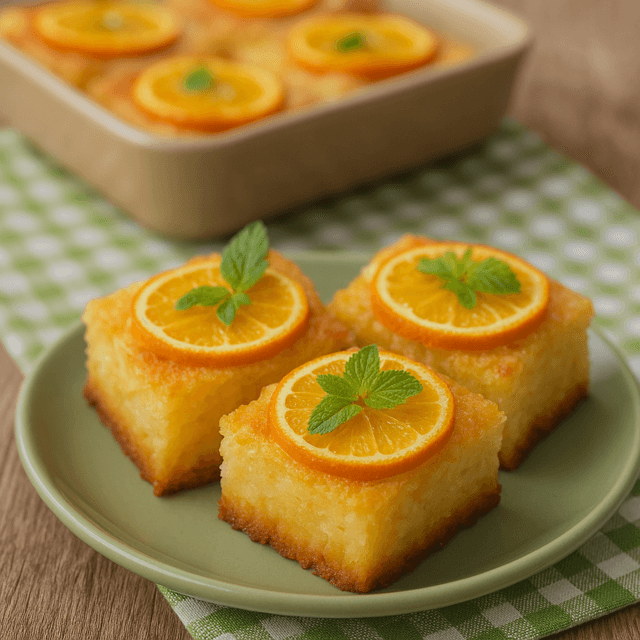
From the sun-drenched kitchens of Greece comes a dessert that tastes like summer and smells like a citrus grove. Portokalopita — a syrup-drenched orange phyllo cake — is as bright in flavor as it is in origin. And while it looks refined, this dessert started not with perfection, but with leftovers.
Born from Scraps, Not Pastry Schools
Portokalopita (pronounced por-to-ka-LO-pee-ta) combines two of Greece’s most iconic ingredients: phyllo pastry and oranges. But here’s the twist — instead of the delicate layering phyllo is famous for, this cake tears it up. Literally.
Traditionally, it was a way to use up torn or dried-out phyllo sheets that couldn’t be used for savory pies or baklava. Cooks would shred the phyllo into pieces, mix it into a custard of yogurt, eggs, oil, and orange zest, then bake and soak the result in citrus syrup.
The texture lands somewhere between a bread pudding and a moist cake, but the flavor is pure Mediterranean summer — floral, tangy, sweet, and soaked.
A Dessert of the 20th Century, Rooted in Tradition
Unlike ancient Greek pastries or Ottoman-era sweets like galaktoboureko or kataifi, portokalopita is relatively modern. It likely gained traction in the mid-to-late 20th century as phyllo became a household staple and reduction cooking (reusing or reimagining leftovers) was part of everyday life — especially in rural areas.
What made it stick wasn’t just practicality. It was the flavor. The cake uses Greek yogurt, which adds tang and tenderness, and gets doused in citrus syrup — often made with fresh juice, sugar, zest, and sometimes a splash of liqueur like Metaxa or Cointreau. The name itself means “orange pie” (portokali = orange, pita = pie).
Today, it’s a café and taverna favorite, often served chilled with a scoop of ice cream or a dollop of whipped cream. Some versions include cinnamon, vanilla, or even chocolate chips — but the base always stays the same: torn phyllo, yogurt batter, citrus syrup.
From Fridge to Fame
What makes portokalopita special is that it doesn’t rely on finesse. It’s a messy cake by design — torn dough, rough batter, poured syrup. But the result is rich, soaked, and sticky in the best way.
It’s also one of the few Greek desserts served cold, making it perfect for hot summer days. And like the best traditional bakes, it was built out of necessity, not trend — and now stands tall on menus across Greece and beyond.
And if you’re ready to bring a little sunshine to your table, the full recipe for portokalopita is up now in the Recipes section.