Few bakes have travelled from rationing-era kitchens to the pages of home economics textbooks with such ease as the humble rock cake. Craggy and golden on the outside, soft and crumbly within, they’ve been part of countless childhood memories — mine included.
I first baked rock cakes when I was 13, in my home economics class. It was my very first time baking anything, and I still remember the quiet thrill of rubbing cold butter into flour with my fingertips, watching the mixture transform into coarse crumbs. That lesson left me with more than a batch of warm cakes; it sparked a love for baking that’s never left.
The Origins of Rock Cakes
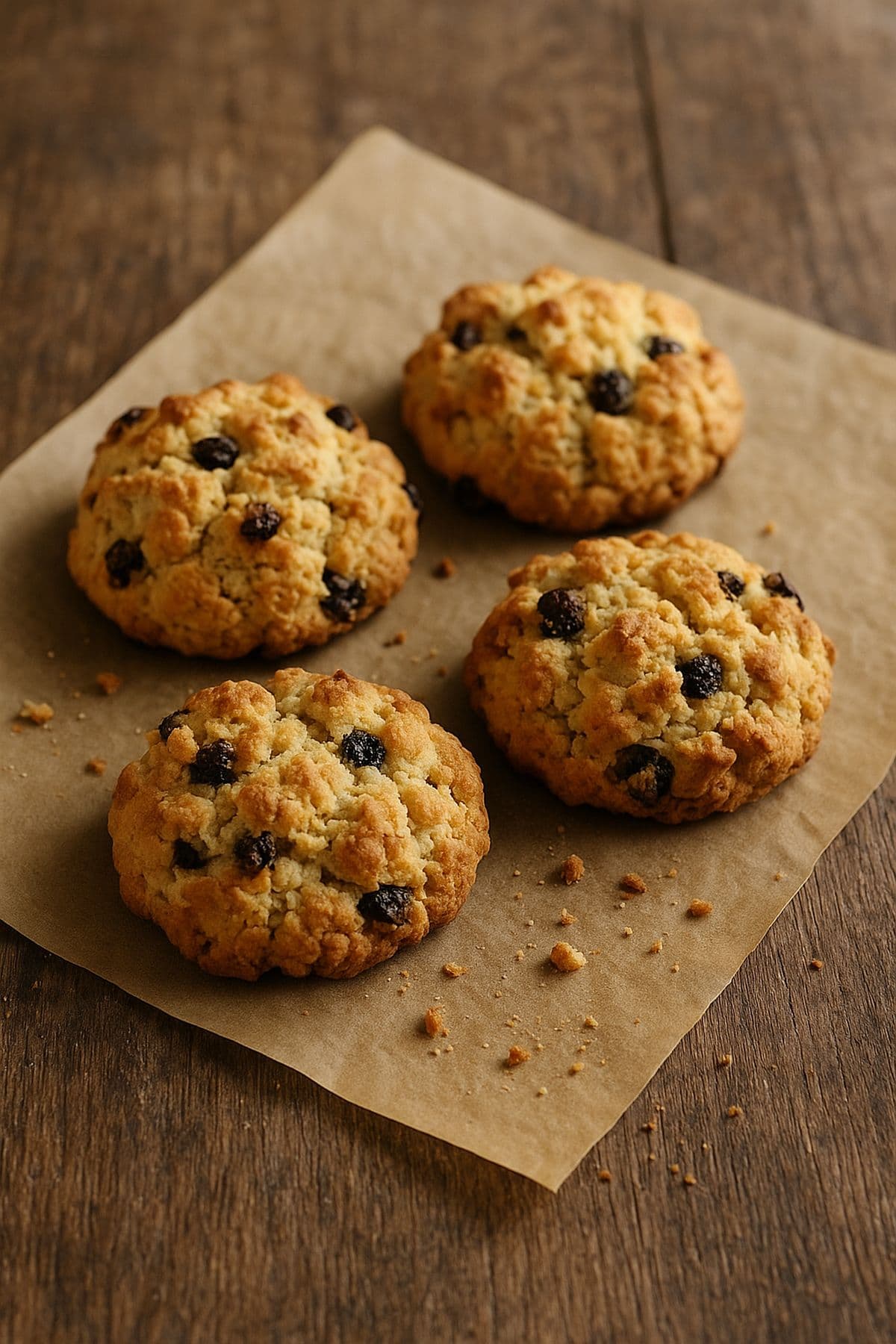
Rock cakes — sometimes called rock buns — get their name from their rugged, stone-like tops. Despite the name, they’re not hard; the best are tender inside, their texture somewhere between a scone and a small, crumbly cake.
The earliest recipes appeared in British cookbooks of the late 19th century, though their popularity soared in the early to mid-20th century. During the Second World War, the Ministry of Food promoted them as an ideal ration bake: they used less sugar, fat, and eggs than sponges, but still felt indulgent. The craggy shape also meant no need for precision — perfect for busy or novice bakers.
A Bake for Schools and Homes
In Britain, rock cakes became a fixture in school canteens, church fêtes, and charity bake sales. Their forgiving recipe and short bake time made them a favourite in home economics classes — teaching children not only baking skills, but also thrift and resourcefulness.
They were often wrapped in wax paper or tucked into lunchboxes, eaten plain or with a smear of butter. At village events, they’d be piled high on plates, invitingly golden and sugar-dusted.
How They Travelled and Changed
Rock cakes spread through Britain’s colonial links, arriving in countries as far-flung as Australia, New Zealand, South Africa, and parts of the Caribbean.
Australia & New Zealand: Often called “rock buns”, these tended to include glacé cherries or coconut for a tropical note.
Caribbean: Bakers sometimes added mixed spice, nutmeg, or even a splash of rum essence, echoing local fruitcake flavours.
South Africa: Dried apricots or sultanas were common, reflecting the availability of local dried fruits.
Hong Kong & Singapore: British-style rock cakes appeared in colonial-era cafés and school tuck shops, though they were less common than other imported bakes like scones.
Jamaica: Occasionally topped with a sprinkle of coarse sugar for extra crunch.
The adaptability of the recipe is part of its charm — change the fruit, tweak the spice, and it still feels authentically “rock cake”.
A Bake That Endures
Today, rock cakes still appear in Britain’s National Trust tearooms, community fundraisers, and nostalgic home baking sessions. For some, they’re a reminder of wartime resourcefulness; for others, they’re a taste of childhood.
For me, they will always be the first bake that made me feel like a baker — simple, fragrant, and full of memories.
Read the recipe here – make your own rock cakes at home!