
Around the World in 80 Bakes: Stop #46 — Simnel Cake
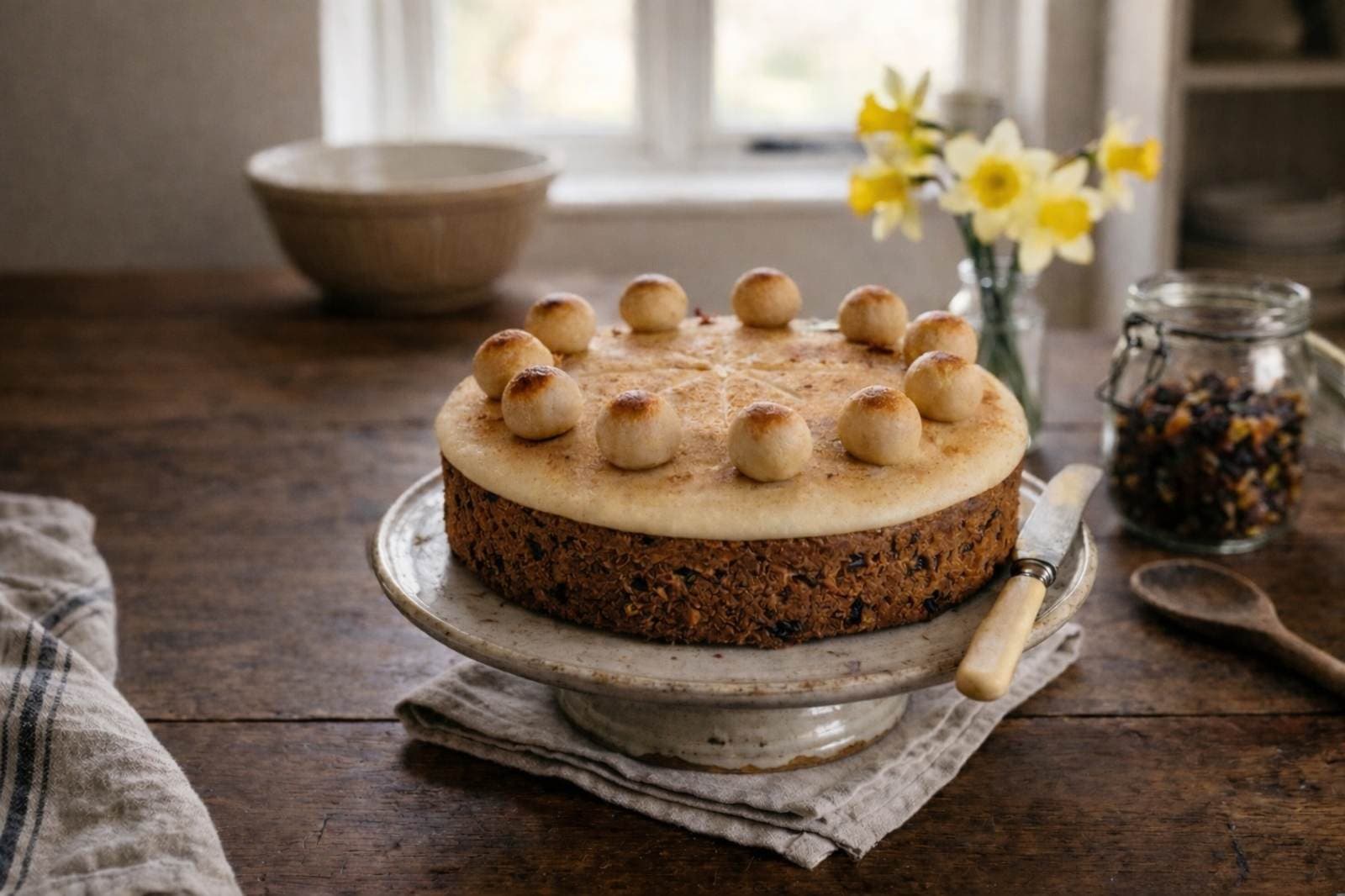
The Simnel cake is a traditional fruit cake closely associated with Lent and Easter, long enjoyed in Britain, Ireland, and beyond wherever their baking traditions have travelled. Its origins, however, are far older and more layered than the cake we recognise today. What is now a marzipan-topped Easter cake began centuries ago as a simple bread, gradually evolving alongside changing ingredients, customs, and ways of life.
What is Simnel Cake?
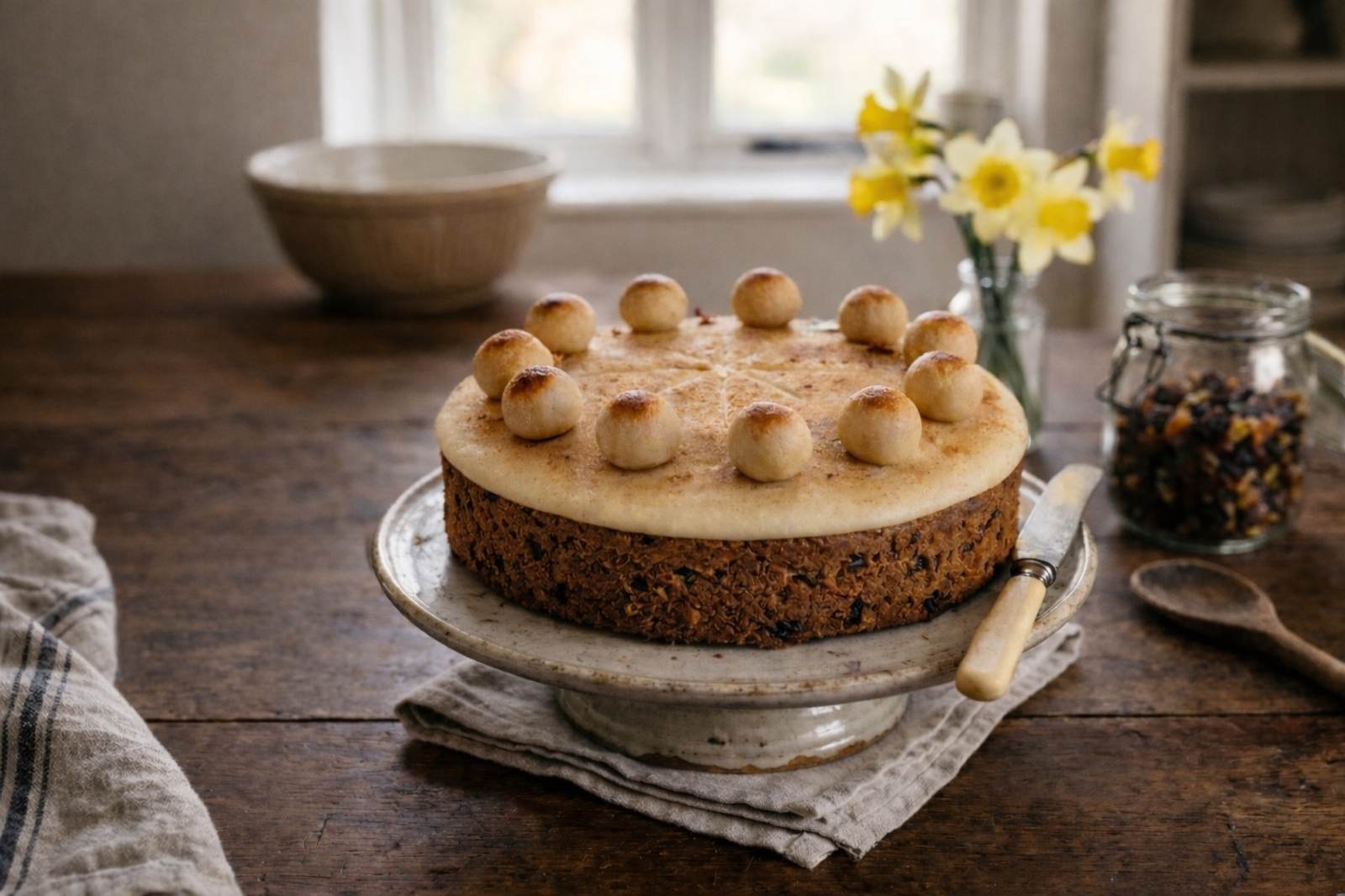
Simnel cake is a traditional British fruit cake associated with Lent and Easter, made with dried fruits, warm spices, and layers of marzipan, and typically decorated with eleven marzipan balls symbolising the apostles.
A Cake with Medieval Origins
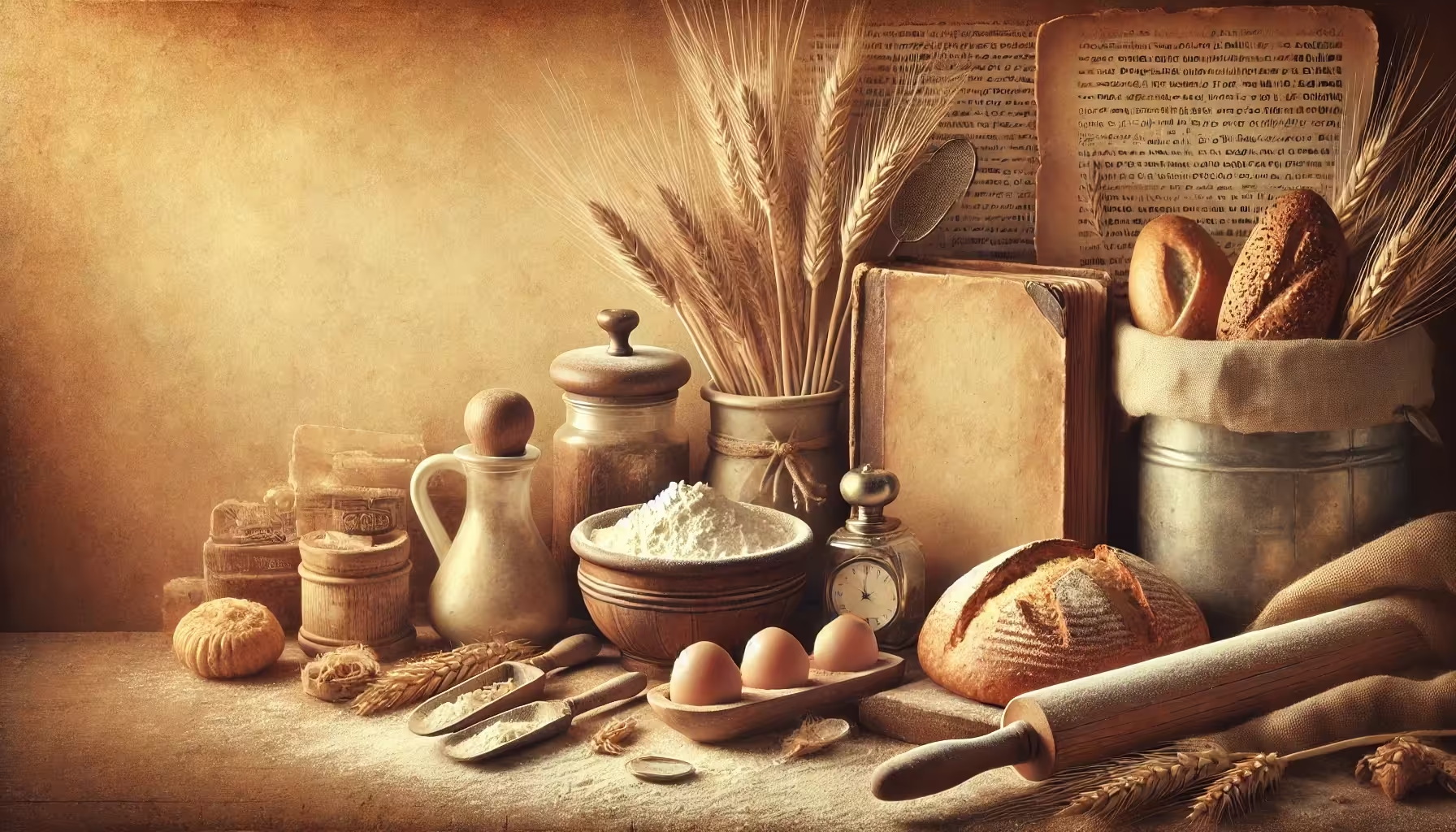
The story of Simnel cake begins not with cake, but with bread. The word “Simnel” is widely believed to derive from the Latin simila, meaning fine flour, a term used in medieval Europe to describe bread made from carefully sifted wheat.
In medieval England, such bread was a mark of status. Fine white flour was expensive and labour-intensive to produce, and breads made from it were reserved for feast days and special occasions. Early references from the 13th century mention “simnel bread” as a refined food, distinct from the coarse loaves eaten daily by most households.
Some early preparations involved techniques that seem unusual today, including boiling before baking. While practical at the time, these methods likely contributed to later stories attempting to explain the cake’s origins. At this stage, simnel contained no dried fruits or added sweetness. Its value lay in the quality of its flour and the care taken in its preparation.
From Fine Bread to Rich Fruit Cake
As ingredients and tastes evolved, so too did simnel. The gradual expansion of trade brought sugar, spices, and dried fruits into wider use, particularly in festive baking. These ingredients, once rare and costly, began to reshape traditional recipes.
By the late medieval and early modern period, simnel had started to take on a richer form. Butter and eggs were incorporated into the mixture, along with sweetened dried fruits, transforming what had once been a simple bread into something closer to a fruit cake.
This transition was gradual rather than uniform. Regional variations developed across England, particularly in places such as Shrewsbury and Bury, where local customs and ingredients influenced the final result. Some versions retained older methods or structures, while others moved more quickly towards the fruit-rich cakes we recognise today.
These variations reflect a time when baking was not standardised but shaped by local practice, availability, and tradition.
The Mothering Sunday Tradition
As simnel became richer, it also became closely tied to a specific moment in the English calendar, Mothering Sunday, the fourth Sunday of Lent. Long before its association with Easter, this was the occasion on which the cake was most firmly rooted.
In 17th-century England, many young people lived and worked away from home as domestic servants or apprentices. Mothering Sunday was one of the few days in the year when they were allowed to return to their families. Contemporary descriptions in early English writings note people travelling back to their “mother church” and home, often carrying small gifts. Among these, simnel cake became one of the most recognisable offerings.
Food historians such as Ivan Day have observed that these cakes were prepared in advance and carried home for the journey, reflecting both their value and their purpose. To bring a simnel cake was not simply to share food, but to present something made with care, using ingredients that would not have been part of everyday life.
The timing within Lent added further meaning. As a season marked by restraint, when rich foods were limited, Mothering Sunday offered a brief moment of relaxation. In this context, the simnel cake, enriched with butter, eggs, and dried fruits, became both a treat and a symbol of reunion, affection, and a temporary lifting of hardship.
How Simnel Cake Became an Easter Tradition
By the 18th and 19th centuries, the social structures that had sustained the Mothering Sunday tradition began to shift. The system of live-in service declined, and with it, the widespread custom of returning home on that day.
Rather than disappearing, simnel cake gradually found a new place within the calendar. Its richness and symbolism made it well suited to Easter, which marked the end of Lent and the return to celebratory foods.
By the Victorian period, when many traditional recipes were being recorded and standardised, Simnel cake was increasingly recognised as an Easter bake. It appears in 19th-century British cookery books, including those by Mrs Beeton, where it is presented as part of Easter fare rather than solely as a Mothering Sunday gift.
In this way, the cake retained its connection to the rhythms of Lent, even as the occasion itself evolved.
The Meaning Behind the Marzipan
One of the defining features of Simnel cake is its use of marzipan, both layered within the cake and placed on top. This is not simply decorative, but central to its identity.
A layer of almond paste is traditionally baked into the centre of the cake, creating a distinct contrast when sliced. A second layer is placed on top, where it is lightly toasted to a golden finish. This dual use of marzipan sets Simnel apart from other fruit cakes and reflects the importance of almond-based ingredients in festive baking.
The most recognisable element is the ring of marzipan balls. The commonly accepted interpretation is that eleven balls represent the apostles, excluding Judas, a meaning widely referenced in modern food writing and heritage sources, though some historians suggest this symbolism may have been formalised later.
Earlier recipes also show variation in flavour and colour. Saffron, for example, was sometimes used to give the cake a golden hue, reinforcing associations with light, renewal, and the arrival of spring.
Myths and Folklore
Like many traditional foods, Simnel cake has accumulated stories that attempt to explain its name and origins.
One of the most frequently repeated tales tells of a couple named Simon and Nelly who disagreed over whether the cake should be boiled or baked, eventually combining both methods. Another links the cake to Lambert Simnel, a 15th-century pretender to the English throne.
However, references to simnel bread appear as early as the 13th century, long before either of these figures. Most food historians therefore regard these stories as later inventions, created to give a memorable narrative to a much older tradition.
Food historians generally agree that these stories are later inventions, as references to simnel bread appear in medieval records centuries earlier.
A Heritage Bake That Endures
Simnel cake was historically more common in certain regions of England, particularly in the North and West, where local traditions helped sustain it. It was never uniformly adopted across the entire country, and its form varied from place to place.
With the rise of industrial baking and the increasing availability of commercially produced cakes, many traditional recipes, including Simnel, became less common in everyday life. By the 20th century, it was often regarded as a seasonal speciality rather than a regular household bake.
In recent years, however, there has been renewed interest in heritage baking. Simnel cake has reappeared in home kitchens and seasonal features, valued for both its flavour and its history. Its combination of fruit, spice, and almond offers a lighter alternative to the heavier Christmas fruit cake, making it particularly suited to spring.
Why Simnel Cake Still Matters
The story of Simnel cake is, at its heart, a story of gradual transformation. What began as a fine medieval bread made from carefully sifted flour became, over time, a richly layered fruit cake tied to specific moments in the calendar.
It reflects changing patterns of work and family life, from the journeys of servants returning home on Mothering Sunday to the broader celebrations of Easter. At the same time, it preserves elements of older baking traditions, from its use of almond paste to its symbolic decoration.
Few bakes illustrate so clearly how food can carry meaning across generations. In its layers, Simnel cake holds not only flavour, but a record of how people marked time, celebrated reunion, and adapted tradition to a changing world.
If you would like to experience this tradition for yourself, you can explore this Simnel Cake Recipe and bring this historic Easter cake into your own kitchen.