Around the World in 80 Bakes: Stop #35 — Madeleines
There’s something almost magical about a madeleine. Simple and humble but tender, buttery, gently domed and shaped like a shell. Its origins story is far richer than its size suggests, full of regional lore, royal connections, symbolism, and a bit of literary magic.
Let’s take a cosy journey into how madeleines came to be and why they’ve become such an enduring symbol of French baking.
Humble Beginnings in Lorraine
If you asked ten people where madeleines come from, most would say France, and they’d be right. But even within France, the cake’s birthplace is a charming subject of debate. The most commonly told tale places the first madeleines in Commercy, a small town in the Lorraine region of northeastern France.
According to one tradition, these dainty sponge cakes were first created by Madeleine Paulmier, a cook in the service of Stanisław Leszczyński*, the exiled King of Poland and Duke of Lorraine in the 18th century.
During his time at the Château de Commercy, Madeleine is said to have baked small shell-shaped cakes that so impressed the king, he named them after her. The cakes were later introduced to the French court at Versailles by his daughter Marie Leszczyńska, who had become Queen of France through her marriage to King Louis XV. Thanks to her influence, the madeleine gained popularity among the aristocracy and eventually across France.
Over time, the madeleine became associated with the town of Commercy, where bakers began producing them commercially by the late 19th century. By then, madeleines had become so closely tied to the region that they were being packaged and sold in decorative boxes and Commercy remains one of the most recognised sources of traditional madeleines in France to this day.
Why the Shell Shape?
One of the things that makes madeleines instantly recognisable is their shell shape. But why shells?
There are a few intertwined ideas here and all of them are as evocative as the cakes themselves:
Pilgrimage Symbolism
The scallop shell has been a powerful symbol for centuries, most famously associated with the Way of Saint James (Camino de Santiago), a celebrated pilgrimage route leading to the shrine of Saint James in Spain.
Pilgrims would carry scallop shells as physical emblems of their journey, almost like a passport of passage and they were also practical tools for scooping water or food along the way.
Some food historians suggest that bakers might have shaped madeleines like shells to honour this tradition, perhaps offering them at inns, convents, or pilgrim stops as simple, nourishing treats. Even if this connection is more poetic than proven, it gives madeleines a sense of belonging to a long history of travel, devotion, and shared stories.
The Practical Appeal of a Classic Mould
Beyond symbolism, the shell shape made practical sense. In 18th‑century France, skilled tin and copper workers crafted decorative moulds for baking all sorts of pastries. The shell design was elegant, reasonably easy to produce, and created individual portions that baked evenly and looked beautiful.
Once people came to expect madeleines in this shape, the form became inseparable from the cake’s identity, just as important as its flavour.
Layers of Meaning
Some writers have also noted that the shape, the name “madeleine,” and the idea of pilgrimage intersect at a deeper cultural level, tying food, faith, and memory together. Whether pilgrims truly inspired the cake’s form, or whether the shape simply caught on because bakers liked it, the result is the same: madeleines feel familiar, comforting, and meaningful in a way that goes beyond ingredients.
A Cake Immortalised in Literature
By the late 18th century, madeleines had begun to appear in written recipes, marking their rise beyond oral tradition into culinary history. Over the years, they became a staple of French households and bakeries alike, appreciated for their simplicity and elegance.
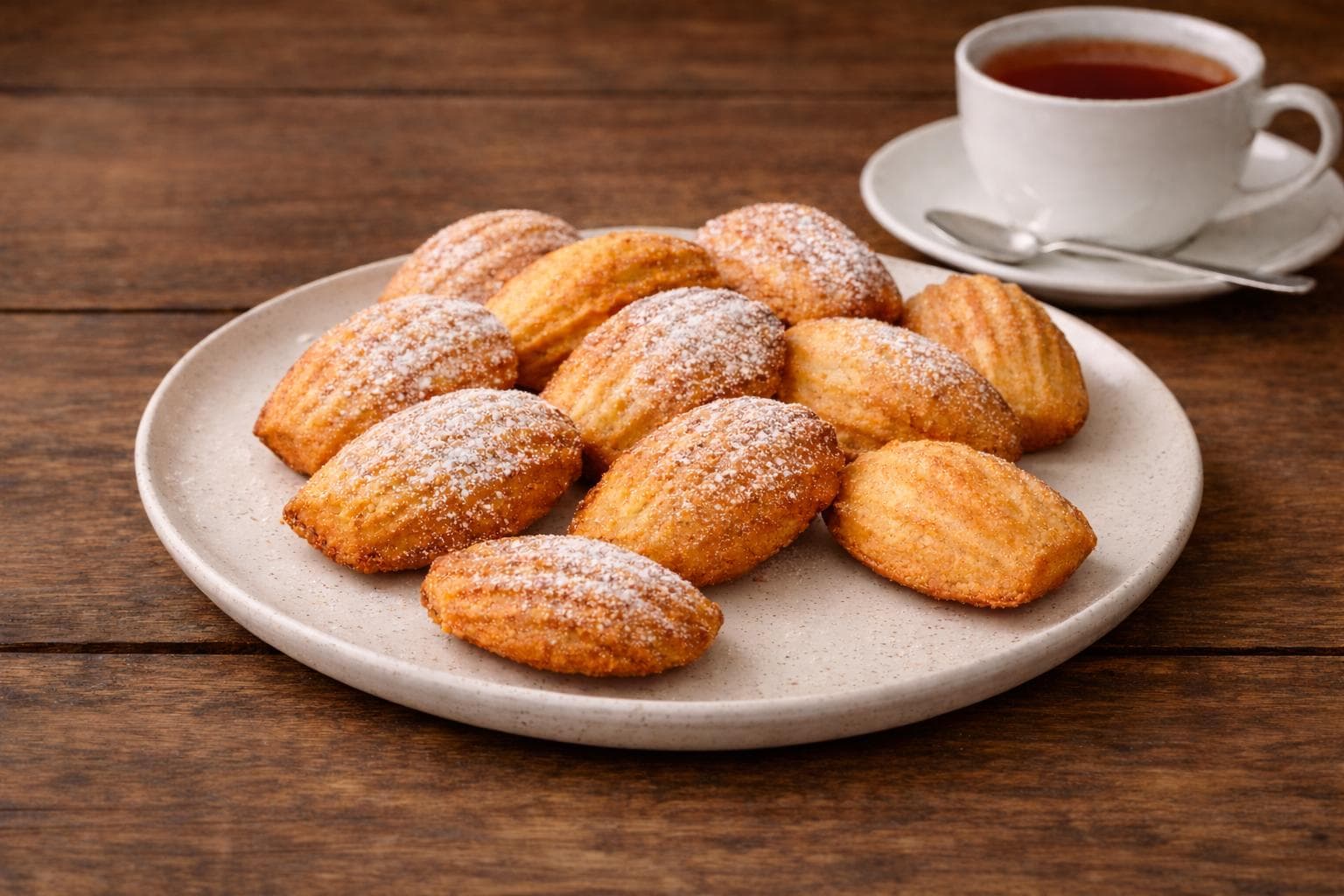
But it was perhaps not a baker or a king who sealed the madeleine’s place in global imagination but a writer. More than a century later, Marcel Proust gave us the most famous tribute to this modest cake in In Search of Lost Time (1913). In the unforgettable “episode of the madeleine”, the narrator dips a madeleine into tea and is suddenly transported back into his childhood memories. The phrase “madeleine moment” has since become shorthand for that unexpected rush of recollection brought on by a taste or smell.
In that way, the madeleine is not just a cake. It’s almost a metaphor for memory itself.
Today’s Delight: Tradition with a Twist
Modern madeleines stay true to their roots: a light, egg‑rich sponge with a delicate flavour (often lemon or vanilla), baked in shell‑shaped moulds. Beyond Commercy, they now appear in bakeries around the world, sometimes dipped in chocolate, perfumed with orange blossom, or studded with nuts.
But at their heart, they remain what they always were: a simple pleasure, a reminder of home, and a piece of history you can savour in every bite.
A Treat Worth the Memory
Perhaps that’s why these tiny cakes endure. They’re humble yet elegant, simple yet evocative, a reminder that some of life’s richest stories are told not in grand gestures but in quiet moments: a sip of tea, a shell‑shaped cake, and a memory awakened. 🍵✨
Bake your own golden, shell-shaped madeleines at home with our classic French recipe that is delicately scented with orange zest, buttery, and ready for dipping into tea (or memory).
* Note: Stanisław Leszczyński’s name appears in various forms across historical records, including Stanislas Leczinski (French) and Stanislaw Leszczynski (English). The spelling used here reflects his original Polish name.