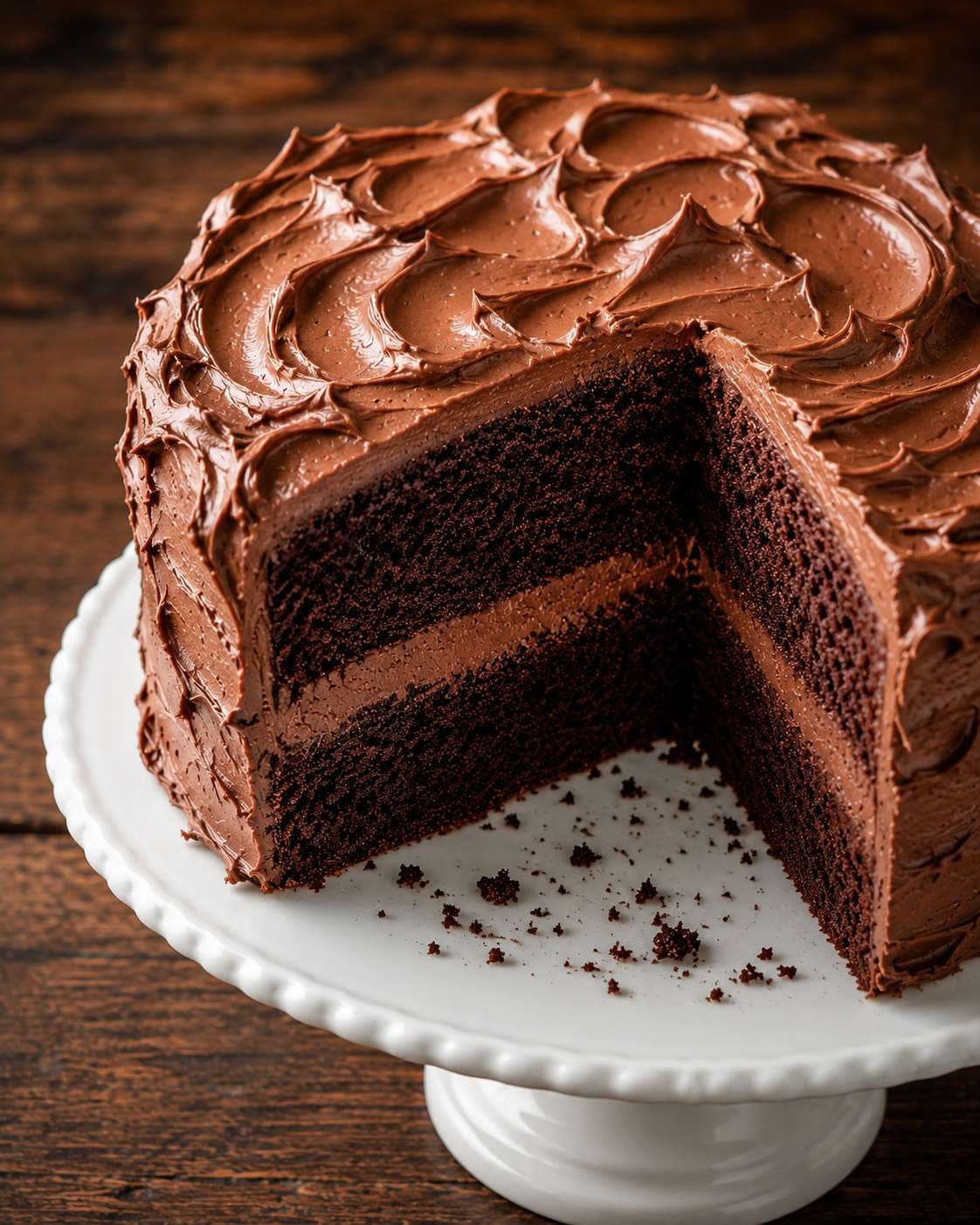
Chocolate cake feels so familiar today that it is easy to assume it has always existed. Yet for most of chocolate’s long history, it was never baked into cakes at all.
For centuries, chocolate was consumed as a drink. The idea of turning it into a soft, airy cake is surprisingly modern — made possible only through changes in technology, ingredients, and home baking itself.
So when was chocolate cake actually invented?
The answer is not as straightforward as it seems.
Chocolate Before Cake
Long before it appeared in ovens, chocolate was prepared as a bitter drink by the Maya and Aztec civilisations. When cacao reached Europe in the 16th century, it first took hold in Spain, where sugar was added to make it more palatable.
For centuries, chocolate remained primarily a beverage — thick, rich, and reserved for the wealthy.
Baking with chocolate was not yet practical.
That only changed in 1828, when Dutch chemist Coenraad Johannes van Houten developed the cocoa press, producing a fine cocoa powder that could be easily incorporated into batters.
For a deeper look at how chocolate became a baking ingredient, read: A Brief History of Chocolate in Baking.
Early Chocolate Cakes in Europe
Chocolate began appearing in European desserts before it was widely used in everyday cakes.
One of the earliest and most famous examples is the Sachertorte, created in 1832 by Austrian pastry chef Franz Sacher in Vienna. Rich and dense, with a layer of apricot jam, it represents an early form of chocolate cake.
However, this was a specialised pastry rather than a home-baked cake. It shows that chocolate had entered baking — but not yet in the form most people recognise today.
The First Documented Chocolate Cake Recipe
A clearer milestone appears in 1847, when Eliza Leslie published a chocolate cake recipe.
This is widely considered one of the earliest documented recipes for a recognisable chocolate cake.
These early cakes were quite different from modern versions. They were often denser, sometimes spiced, and occasionally included molasses. Chocolate was used more as a flavouring rather than the dominant taste.
Even so, this marks an important shift — from chocolate as a luxury ingredient to something used in everyday baking.
From Dense Cakes to Light Crumbs
The chocolate cake we know today only took shape later in the 19th century.
The introduction of baking powder and baking soda allowed cakes to rise more reliably, creating a lighter texture. Combined with improved cocoa powders, chocolate cake became softer, more consistent, and easier to make at home.
At the same time, industrial production made chocolate more affordable and widely available.
Chocolate cake was no longer rare. It was becoming part of everyday life.
The Rise of Modern Chocolate Cake
By the early 20th century, chocolate cake had become richer and more indulgent.
Devil’s Food Cake emerged as a darker, softer variation, using cocoa powder and ingredients like buttermilk to enhance both flavour and texture. Recipes became more standardised, often printed on cocoa packaging, making them widely accessible to home bakers.
Chocolate cake was no longer experimental. It had become a household favourite.
So, Where Was Chocolate Cake Invented?
Chocolate cake was not invented in a single country.
Spain introduced chocolate to Europe, but it remained a drink there for centuries. Austria developed early chocolate cakes like the Sachertorte. The United States provided one of the first clearly documented chocolate cake recipes in 1847.
Rather than a single invention, chocolate cake evolved across regions over time.
A Cake That Became a Tradition
Chocolate cake is not ancient, but it has become timeless.
From early European tortes to American cookbook recipes, it gradually evolved into the soft, rich cake we know today.
And once chocolate entered the cake, it never left.
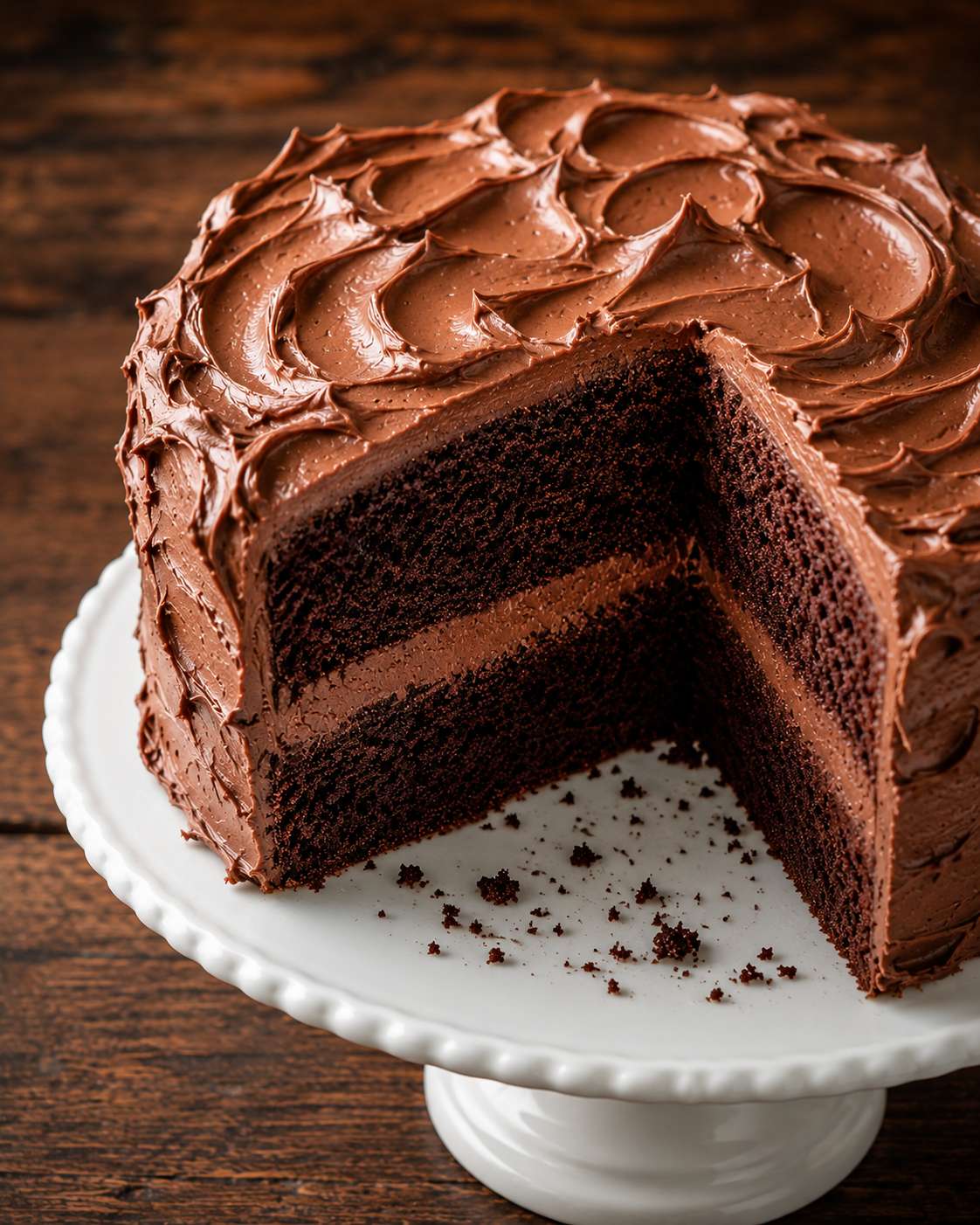
Ready to bake your own? Try our Moist Chocolate Cake with Ganache (Easy One-Bowl Recipe) — an easy, foolproof version for home bakers.