Rich, dark, and versatile in flavour and form, the brownie is one of the most beloved chocolate bakes in the world. From school lunchboxes to bakery counters, few treats enjoy such consistent popularity. Yet, for all its fame, the brownie is a relatively modern creation—and one whose origins are wrapped in charming mystery.
While today it seems like the brownie has always existed, this dense chocolate square only emerged in the late 19th century. Its invention is closely tied to the growing accessibility of chocolate in home baking, the rise of American cookbooks, and an era of culinary experimentation. To trace the brownie’s journey is to explore a fascinating slice of modern baking history.
The Palmer House Brownie: A Dessert with Purpose
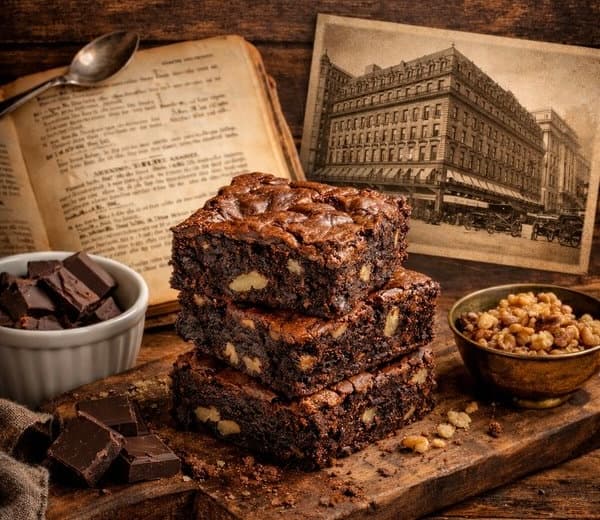
The first known brownie, as many food historians believe, was created at the Palmer House Hotel in Chicago in 1893. Bertha Palmer, wife of the hotel’s owner and a prominent figure in Chicago society, requested a dessert that was small, rich, and easy to pack into boxed lunches for ladies attending the World’s Columbian Exposition.
The hotel’s pastry chefs devised a dense chocolate bar enriched with walnuts and topped with a thin apricot glaze. That recipe, known today as the Palmer House Brownie, is still served at the hotel more than 130 years later.
But not everyone agrees on this origin. Some say the brownie was born by mistake—when a baker forgot to add baking powder to a chocolate cake, resulting in a deliciously dense square that needed no fixing.
While the Palmer House version may not have used the term “brownie” at the time, it is widely acknowledged as the first brownie-like dessert ever made.
The First Printed Brownie Recipes
The earliest known published recipe for brownies appeared in Fannie Merritt Farmer’s Boston Cooking-School Cook Book, first printed in 1896. Interestingly, that version did not contain chocolate—it was more of a molasses bar, and the name “brownie” may have been used simply to describe its colour.
It wasn’t until 1904, in the Home Cookery cookbook from Illinois, that a recipe titled “Bangor Brownies” included chocolate. This is widely considered the first true chocolate brownie recipe in print. Its name likely referred to Bangor, Maine, a city that has long claimed to be the birthplace of the chocolate brownie.
The Bangor Brownie contained the key ingredients we now associate with the dessert: butter, sugar, eggs, chocolate, and flour. It was unpretentious, unfrosted, and baked in a shallow pan—perfect for slicing into squares.
The Name “Brownie”: A Bit of Folklore
The name “brownie” itself might have a more whimsical origin. At the turn of the 20th century, “brownies” were also the names of mischievous household elves in Scottish and English folklore. These figures were popularised in children’s books and even inspired a popular girls’ scouting group (Brownies).
Some culinary historians suggest that the playful name may have been borrowed from these characters—especially since the earliest “brownie” recipes were often aimed at children or meant to be part of simple teatime treats. Alternatively, the name may simply derive from the dessert’s rich brown colour.
Evolution: From Cakey to Fudgy and Beyond
As American home baking evolved, so too did the brownie. Throughout the 20th century, cookbooks and baking columns introduced countless variations—from cakey versions with a lighter crumb to intensely fudgy styles rich in eggs and chocolate.
Brownies quickly became a canvas for personalisation: walnuts, pecans, frostings, swirls of caramel or peanut butter, and later even cream cheese layers. By the 1950s, boxed brownie mixes began appearing on supermarket shelves, making it one of the first baked goods widely available in pre-measured form.
In time, brownies also crossed borders, gaining popularity in the UK, Australia, Europe, and beyond. While American in origin, they’ve become a truly international dessert that is celebrated by bakers for their ease, indulgence, and nostalgic comfort.
The Brownie’s Heritage in Context
Though it lacks the centuries-old lineage of cakes like fruitcake or gingerbread, the brownie’s rise tells an important story about changing food habits. It reflects the democratization of chocolate, the influence of women’s cookbooks and social clubs, and the invention of casual, make-ahead, shareable desserts in an increasingly fast-paced world.
And perhaps most importantly, the brownie is a testament to one of baking’s oldest truths: some of the best recipes begin as happy accidents.
Today, brownies are baked in countless homes every week—cut into neat squares, packed into lunchboxes, dressed up for dinner parties, or eaten warm from the pan with a spoon. It’s hard to imagine a world without them.
But now, next time you bite into one, you’ll know: this simple treat carries with it a short but fascinating history, shaped by chocolate, society, and a stroke of culinary chance in a Chicago hotel kitchen.
Craving a taste? Try our Chocolate Fudge Brownie recipe here.