Around the World in 80 Bakes: Stop #49 — Charlotte Russe
The word entremets comes from Old French, meaning “between servings,” a reminder that these dishes were not originally desserts. In medieval Europe, entremets were served between the main courses of a banquet, often designed as much to entertain as to nourish.
What appears today as a refined, multi-layered pastry has its roots in something far more theatrical. Over centuries, entremets evolved from symbolic displays into structured culinary compositions, and eventually into the technical desserts of modern French pâtisserie.
My own fascination with entremets began long before writing about them. It was a subject that drew me to France, where I trained at École Nationale Supérieure de Pâtisserie. There, I worked through a range of classic entremets, including the Charlotte Russe, a mocha cake, and the Opera Cake.
What became clear through practice was that these desserts are not simply recipes. They are constructions. Each layer, each texture, is deliberate. Seen through that lens, the history of entremets is easier to understand; not as a sudden invention, but as a gradual refinement over time.
Medieval Origins: The First Recorded Entremets
The earliest written evidence of entremets appears in medieval culinary manuscripts such as the Le Ménagier de Paris (1393), which includes recipes for dishes like blancmange, an early European dessert made from almond milk, rice, sugar, and sometimes poultry.
Blancmange was served between courses and often coloured or moulded for visual effect. It exemplifies the early function of entremets: transitional dishes that combined nourishment with presentation.
At aristocratic banquets, entremets became increasingly elaborate. They could take the form of sculpted displays, symbolic scenes, or edible illusions — all designed to surprise guests and demonstrate wealth. In this context, food extended beyond sustenance. It became theatre.
At this stage, entremets were not defined by sweetness, but by their role within the meal and their visual impact.
From Spectacle to Structure (17th–18th Century)
By the 17th century, French dining had begun to shift towards a more organised system, and entremets evolved alongside it. Rather than purely theatrical displays, they became more structured dishes — jellies, custards, and moulded preparations that required precision in both technique and presentation.
This period marks a quiet but important change. Entremets were no longer primarily about spectacle. They were becoming culinary compositions, shaped and refined through technique.
The distinction between savoury and sweet, however, remained fluid. Many entremets still occupied a middle ground, reflecting a culinary tradition that had not yet separated courses as strictly as modern dining would.
Carême and the Transformation of Entremets
The transformation of entremets into recognisable desserts is closely tied to the work of Marie-Antoine Carême, a pioneering 19th-century French chef widely regarded as the founder of modern pastry and haute cuisine.
Carême approached cooking with the mind of an architect. Under his influence, pastry became structured, intentional, and composed. Entremets were no longer single preparations, but assemblies of multiple elements, each prepared separately and combined with care.
In this period, desserts began to take on a defined form, shaped not only by flavour but by structure. Creams could be set, components layered, and compositions designed to hold their shape when sliced.
For the first time, pastry moved beyond individual preparations towards constructed desserts, where texture, balance, and presentation were considered together.
Bavarois played a key role in this transformation. By combining custard with gelatin and whipped cream, it created a preparation that was both light and stable, capable of holding its shape when moulded.
This was a significant technical advancement. Earlier custards and creams were often too soft to maintain structure, limiting their use in composed desserts. Bavarois, by contrast, could be shaped, layered, and sliced.
It introduced a new possibility: that a dessert could hold a defined form while remaining delicate.
Charlotte Russe: A Turning Point in Entremets
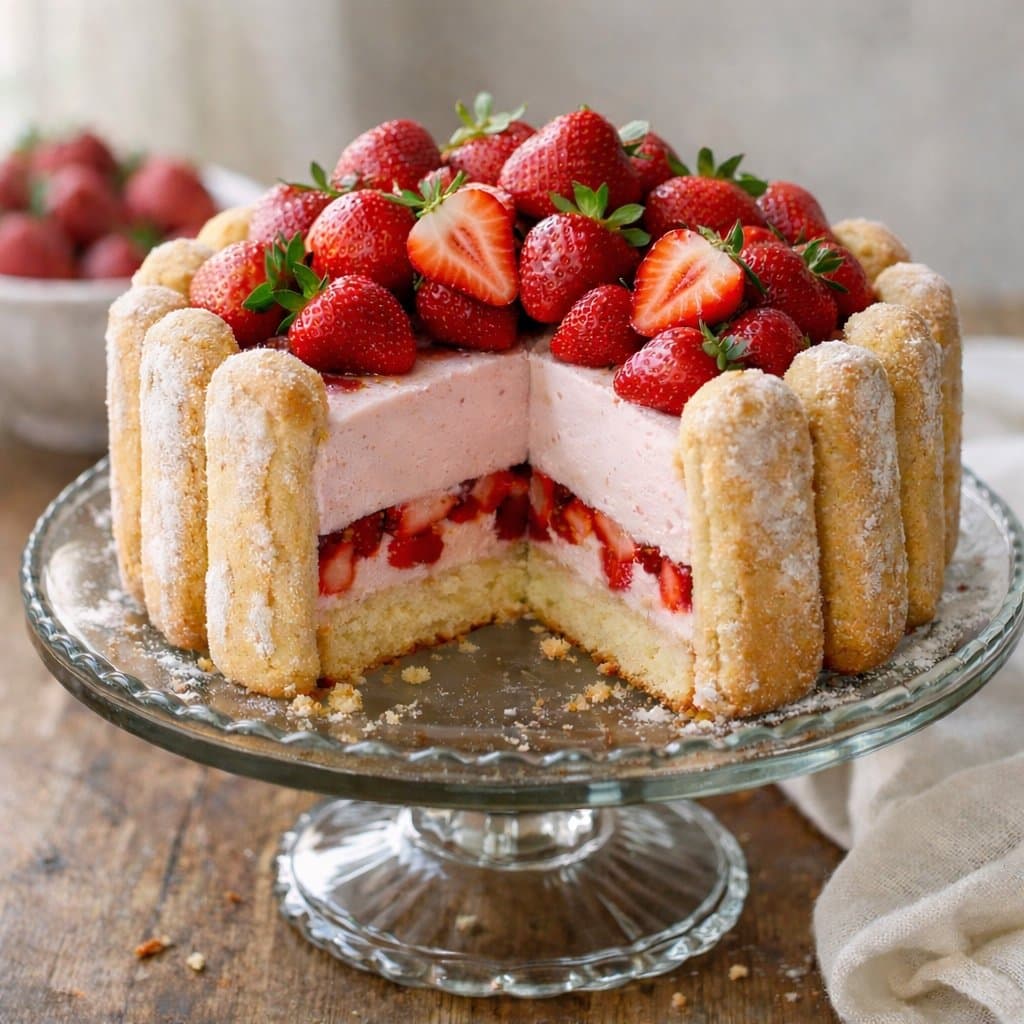
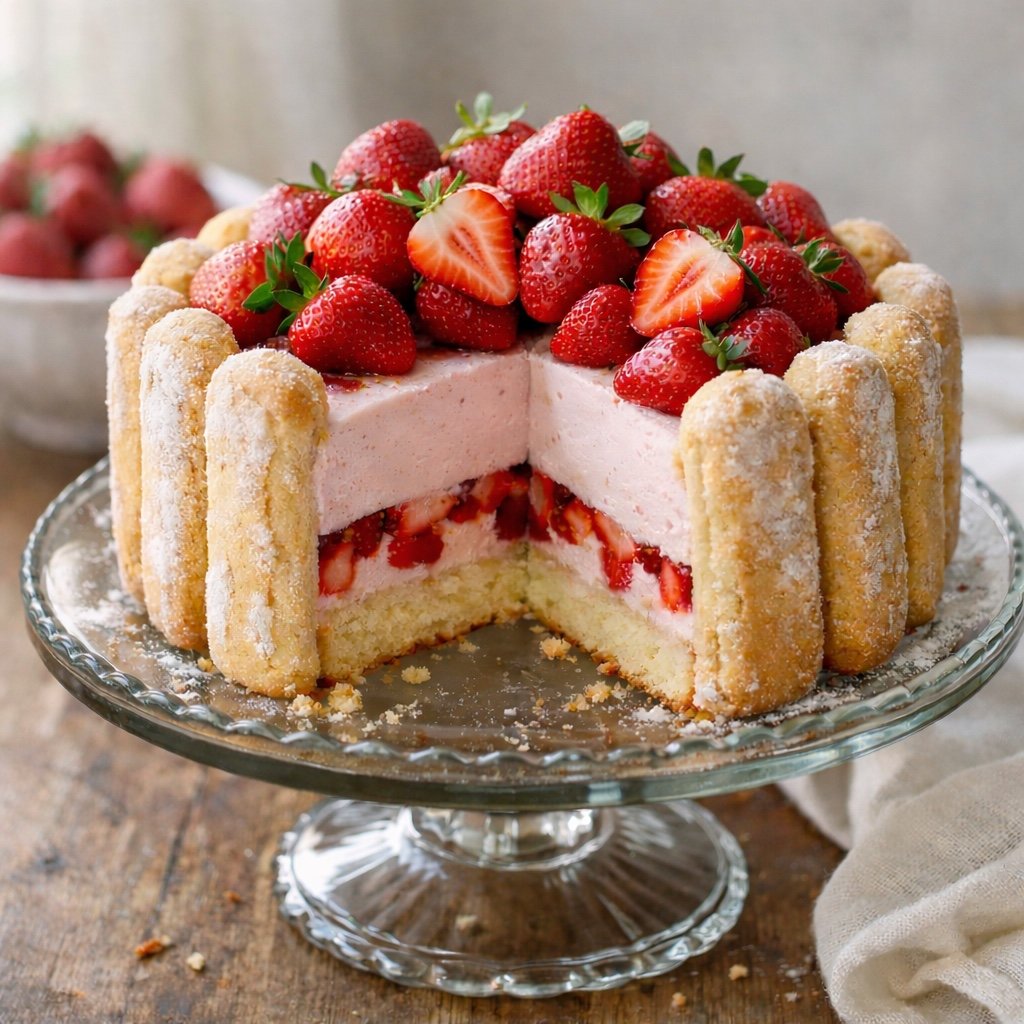
Attributed to Marie-Antoine Carême, the Chalotte Russe is composed of ladyfingers lining a mould and filled with Bavarois or lightly set cream. Once chilled, it is unmoulded and sliced into clean portions.
Its importance lies not in complexity, but in structure.
For the first time, we see a dessert with a defined outer framework and inner filling, bringing together separate components into a unified whole. The contrast between sponge and cream, the clean slicing, and the controlled form all point towards a new way of thinking about pastry.
In practice, its simplicity reveals its precision. This becomes especially clear when preparing it alongside later entremets such as mocha cake and Opera Cake.
Seen in this light, the Charlotte Russe marks a turning point. It is no longer a moulded preparation alone, but a composed dessert that anticipates the modern entremet.
From Charlotte Russe to Modern Entremets
Later developments in French pâtisserie would refine these ideas further. By the late 19th and early 20th centuries, layered cakes introduced sharper definition between components and a more architectural approach to construction.
This progression eventually led to the modern entremet as we know it today — a dessert built from multiple layers, textures, and flavours, assembled with technical precision and visual intent.
The Opera Cake, with its precise layering and clean geometry, stands as one example of this later refinement.
A Continuous Evolution
The history of entremets reflects a gradual shift in both technique and intention.
From the spectacle of medieval banquets, they evolved into more structured and refined preparations in the early modern period. Under Carême’s influence, these dishes became composed desserts, bringing together multiple elements with clarity and purpose. With the Charlotte Russe, this evolution takes a decisive step forward, introducing a layered, sliceable form that anticipates modern pastry.
Later developments would refine this approach further, emphasising precision, balance, and clean definition between components.
Seen in this context, the Charlotte Russe occupies a pivotal place in pastry history, bridging the theatrical traditions of the past with the structured, technical desserts that followed.
The recipe that follows reflects this moment of transition. Simple in composition yet significant in technique, the Charlotte Russe reveals how separate elements, sponge and cream, are brought together into a unified whole. It is best understood not as a complex showpiece, but as a foundational form, one that continues to shape the way entremets are made today.
After exploring its origins, here is the Charlotte Russe (Classic French Entremet) Recipe to bring this classic entremet into practice.