Around the World in 80 Bakes: Stop #29 — Yule Log Cake
Ancient Origins: A Log to Welcome the Light
Long before sponge, cream, and ganache entered the picture, the Yule Log was exactly that — a real log, ceremoniously burned in hearths during the darkest days of winter.
The tradition is thought to have originated with Germanic and Scandinavian pagans, who celebrated the winter solstice with fire-based rituals. The word “Yule” itself comes from the Old Norse term jól, a solstice festival marking the return of light. Lighting a large fire, or burning a specially selected log, was believed to bring blessings, protection, and the promise of spring.
The earliest known written records of this practice date to 17th-century Germany, though it is believed to have been carried out for centuries prior. As Christianity spread across Europe, the log came to symbolise the birth of Christ, light triumphing over darkness, and spiritual renewal.
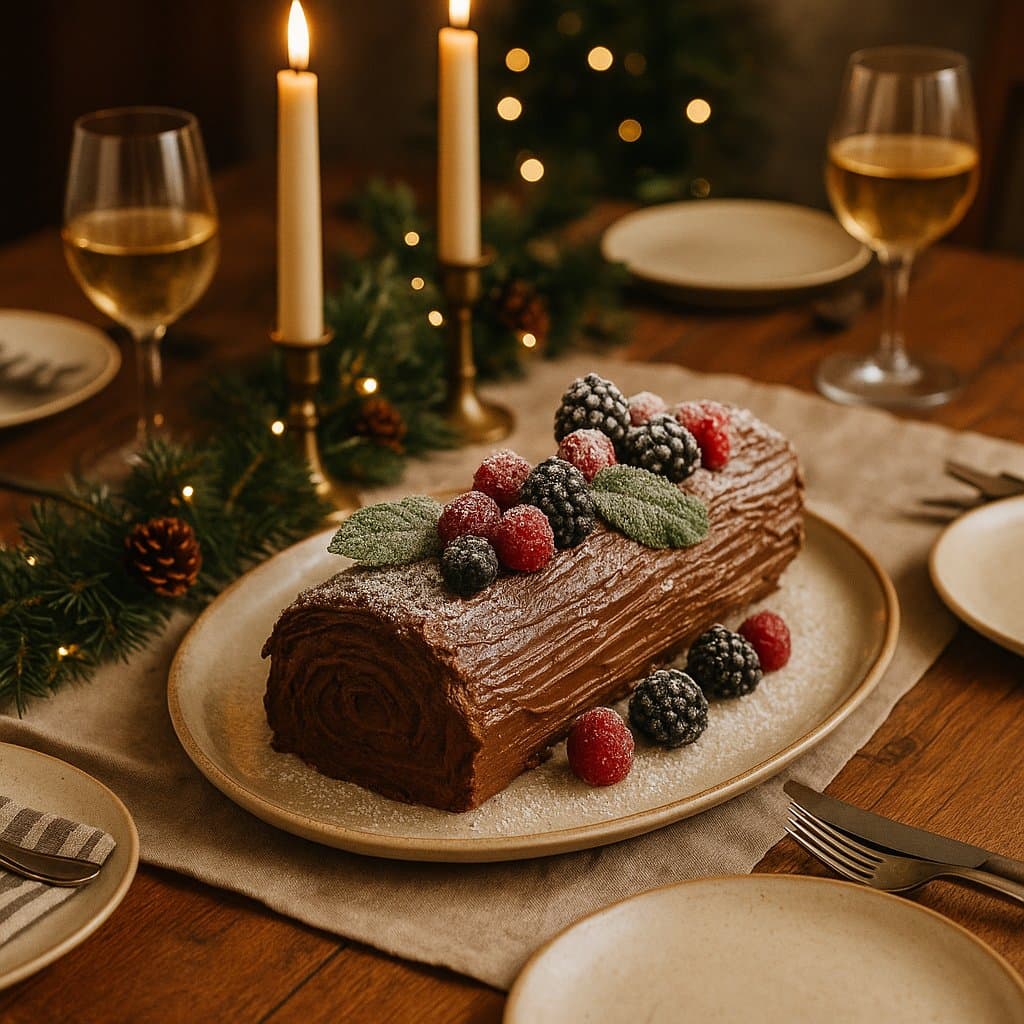
A homemade Bûche de Noël, decorated with raspberries, blackberries, and mint leaves, capturing the rustic charm and festive spirit of this beloved French Christmas tradition.
In France, the tradition took on regional forms. Families would bring in a large log, ideally from a fruit tree like cherry or plum, and bless it with wine, salt, or oil before placing it in the hearth. Known locally as souche, chalendon, or cosse de Nau, the log was meant to burn slowly over several nights. The ashes were often kept to protect the home or fertilise crops.
By the 18th century, the practice began to decline as large open hearths disappeared but the symbolic weight of the tradition remained.
From Fireplace to Pastry: The French Invention of the Cake
As the physical yule log became impractical, French pâtissiers in Paris began reimagining it as a festive dessert. The Bûche de Noël was born in the elegant salons and bakeries of the Belle Époque, a time when grand holiday meals and artistic presentation were central to middle-class life.
By 1886, the cake was already popular in Paris. In 1890, French pastry chef and historian Pierre Lacam included one of the earliest recorded recipes in his book Le Mémorial Historique et Géographique de la Pâtisserie. His version described a sponge cake rolled around coffee or chocolate buttercream, textured with fork marks to simulate bark, and decorated with small offcut “branches”.
Notably, early bûches were made using a vanilla sponge, offering a light contrast between the pale cake interior (the “wood”) and the darker outer frosting (the “bark”). The effect was visual as much as delicious, a true homage to the burned log.
Decorations ranged from meringue mushrooms and sugared holly leaves to spun sugar cobwebs and marzipan creatures, each paying tribute to the woodland setting and the rustic hearth.
The dessert soon spread beyond Paris, becoming a staple in Belgium, Switzerland, Canada, and other French-speaking regions, as well as in parts of Vietnam, Lebanon, and North Africa, where colonial influences and local adaptations helped it evolve.
Modern Twists on an Old Tradition
Today, the Bûche de Noël comes in endless forms. While chocolate sponge and buttercream remain classics, modern interpretations play with flavours like pistachio, hazelnut, raspberry, chestnut, and passionfruit. Some versions are made with mousse, others as ice cream logs (bûche glacée), and many feature mirror glazes or sculptural, minimalist design.
Even in homes without a fireplace, the symbolism endures. In North America, televised and streamed “yule log fires”, which are looped videos of logs burning in a hearth, have become a nostalgic fixture during the holidays.
Yet the rolled cake remains the most beloved and recognisable heir to the yule log tradition, a creative reinterpretation that blends culinary craft, seasonal joy, and deep-rooted history.
A Sweet Slice of Heritage
The Bûche de Noël is more than a dessert. It’s a story told in cake — a tale of fire and festivity, pagan ritual and Christian reinterpretation, hearth and home. From rural solstice fires to ornate Parisian tables, it has remained a symbol of hope, light, and togetherness in the heart of winter.
👉 Want to bake your own Bûche de Noël this Christmas? Try our step-by-step chocolate Yule Log Cake Recipe. The classic Yule log may have its roots in ancient rituals, but today’s version begins with a soft, flexible sponge cake.
To make rolling easier, I bake the sponge in a shallow, rimmed sheet pan like this 👉Nordic Ware Naturals Half Sheet Pan. It gives an even bake and releases cleanly, a small detail that makes a big difference.