Origins of Munkki: Why Finns Eat Them at Vappu
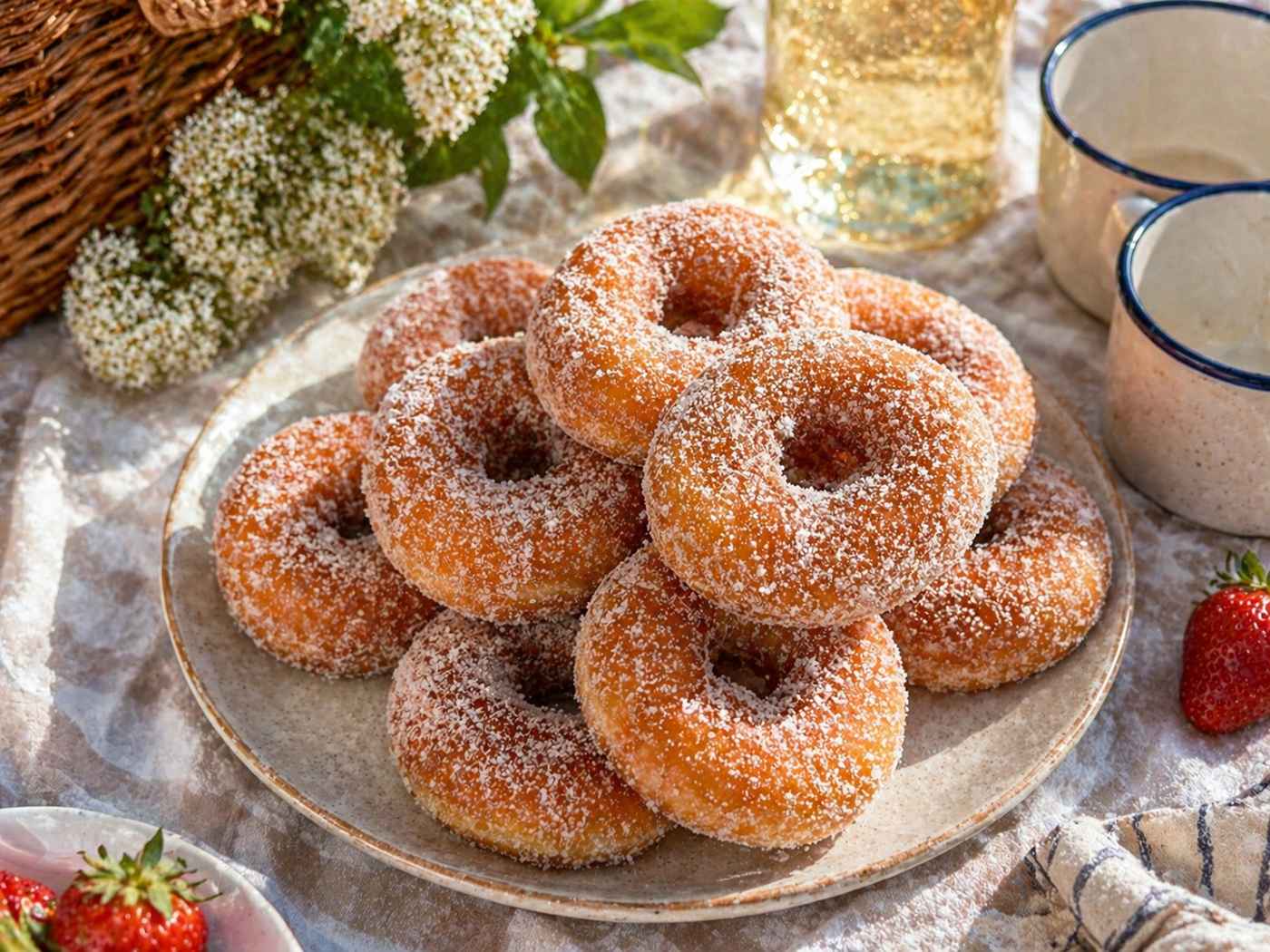
Each year, as Finland emerges from the cold winter months, the scent of frying dough begins to fill kitchens, cafés, and market squares. Golden, sugar-coated munkki (or donuts) appear everywhere — simple, familiar, and unmistakably tied to one moment in the year.
But munkki did not begin as a festival pastry. Nor was it originally Finnish.
To understand why it belongs so firmly to Vappu, you have to trace it back through centuries of European baking, religious traditions, and seasonal rhythms.
From Monasteries to European Dough Traditions
The word munkki comes from the Swedish munk, meaning “monk,” a name that has been in use in Finland since at least the 17th century.
Across medieval Europe, fried dough pastries were closely associated with monastic life. Monasteries were centres of food production, and monks prepared rich foods using butter, eggs, and wheat flour — ingredients that were not always available to the wider population.
The name itself likely comes from visual resemblance. When dough is dropped into hot fat, it swells and browns into rounded forms thought to resemble a monk’s tonsure or robe.
From these origins, fried dough spread across Europe and diversified. By the late 15th century, filled doughnuts were already documented in German cookbooks as Krapfen, which later evolved into the Berliner.
By the time these traditions reached Finland, the idea of fried dough was already well established — but its final form would be shaped locally.
If you’re interested in how fried dough evolved more broadly, you can explore my article on The Origins and History of Donuts, where these traditions are traced across Europe and beyond.
A Finnish Interpretation: Between Bread and Doughnut
In Finland, munkki developed in close relationship with pulla, the country’s cardamom-scented sweet bread. This connection shapes much of its character.
Rather than becoming heavily glazed or overly sweet, munkki remained rooted in yeast dough traditions. Cardamom — introduced through trade routes in the 17th and 18th centuries — became a defining flavour, linking it to the broader landscape of Nordic baking.
Structurally, munkki sits between bread and doughnut. It is most commonly made from yeast dough, while cake-style versions are rare and largely outside traditional Finnish baking.
What defines the Finnish approach is restraint.
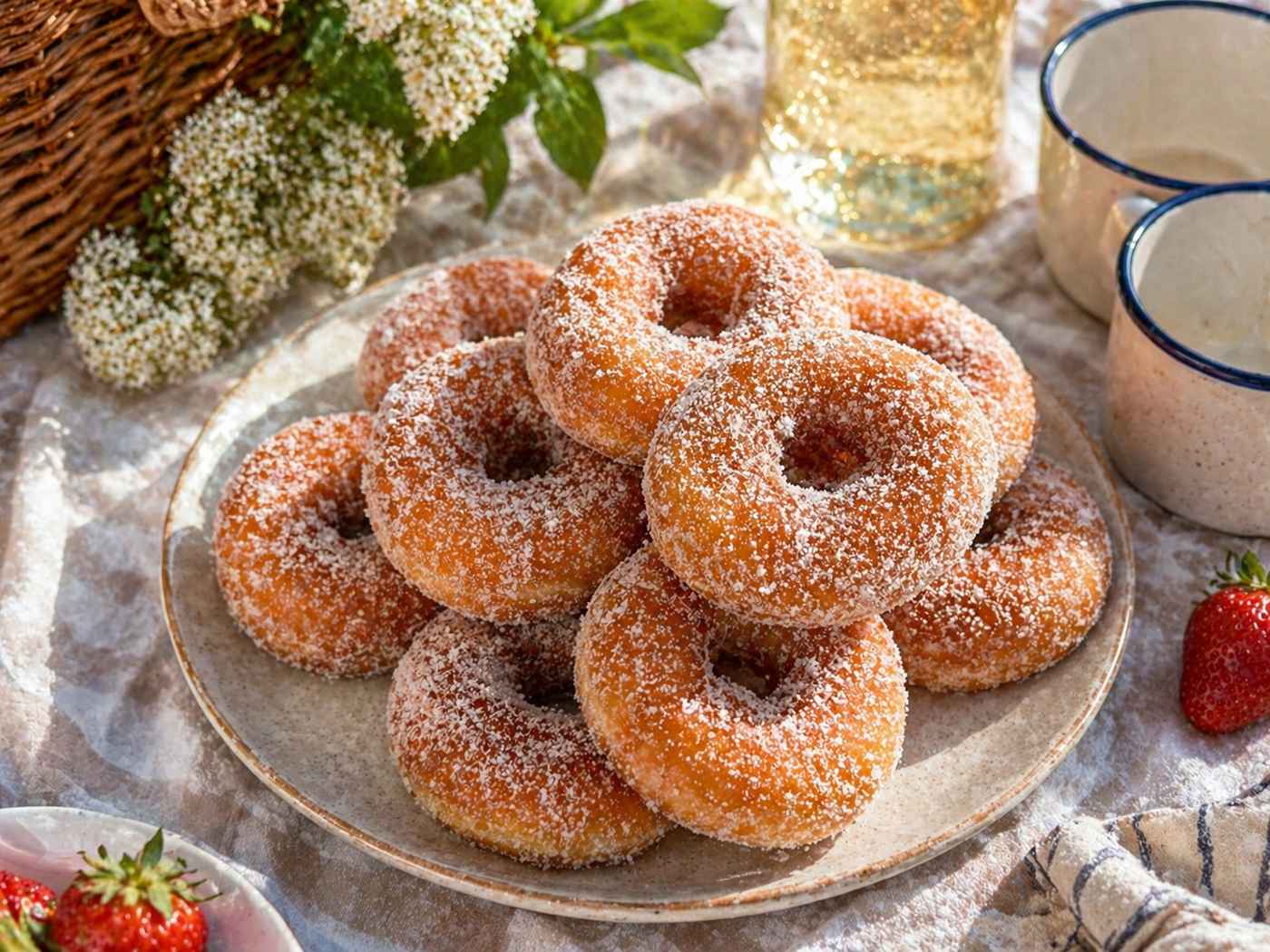
Instead of glazes or elaborate toppings, the classic Vappu munkki is simply rolled in sugar while still warm, creating a thin, crisp exterior over a soft, slightly chewy interior.
The Many Forms of Munkki
Although often spoken of as a single pastry, munkki exists in multiple forms, each reflecting both local adaptation and wider European influence.
The most familiar is the ring-shaped munkkirinkeli, a simple yeast doughnut with a hole in the centre, fried and coated in granulated sugar. Alongside it is the hillomunkki, a round doughnut filled with jam — most often raspberry or apple — echoing the filled pastries that spread across Europe centuries earlier.
Other variations reveal how international influences were absorbed into Finnish baking. The berliininmunkki — known in some regions as piispanmunkki — is directly linked to the German Berliner, filled with jam and finished with a pink or white sugar glaze.
More regional forms exist as well. The possumunkki, a flatter rectangular pastry pinched at the corners and filled with apple jam, reflects a more rustic shaping tradition. In eastern Finland, lörtsy takes the idea even further — turning fried dough into a large, folded, pie-like pastry filled with sweet or savoury fillings.
Even within simpler forms, variation continues. Some munkki are shaped as small round “puffs,” lighter in texture, while others retain the denser, bread-like structure of traditional yeast dough.
What emerges is not a single fixed pastry, but a family of related forms — united by method rather than shape.
The Rise of Vappu as a National Celebration
To understand why munkki became inseparable from Vappu, you have to look at Vappu itself.
Vappu began as a European spring festival linked to Walpurgis Night, marking the transition from winter to summer. In Finland, it later absorbed student traditions and labour celebrations, becoming one of the most widely observed public holidays in the country.
What makes Vappu distinctive is its timing.
It arrives at a moment of release.
After months of darkness, the return of light transforms daily life. People gather outdoors, picnic in parks, and celebrate collectively. It is one of the few festivals in Finland that is fully public in nature.
Food plays a central role in marking that transition.
Why Munkki Became Associated with Vappu
Munkki’s connection to Vappu was not the result of a single decision, but of repetition over time. By the 19th century, foods such as munkki, tippaleipä, and sima had become closely associated with May Day celebrations. As Vappu evolved into a public, outdoor festival marked by picnics and social gatherings, these foods — easy to prepare, share, and carry — became part of the occasion. Over time, the association solidified, turning a familiar pastry into a seasonal tradition.
Frying is immediate and sensory. It brings warmth, aroma, and a sense of abundance — qualities that contrast sharply with the austerity of winter cooking. Freshly fried dough, eaten warm, feels inherently celebratory.
There is also the matter of accessibility. The ingredients — flour, milk, eggs, and sugar — are simple and widely available, making munkki suitable for both home kitchens and large-scale celebration. By the early 20th century, they were already commonly prepared and sold in markets in the lead-up to May Day.
Equally important is timing. Across Europe, fried pastries have long been associated with feast days and seasonal transitions. In Finland, this tradition aligned naturally with Vappu, alongside other festive foods such as tippaleipä, a crisp, funnel cake-like pastry dusted with sugar, and sima, a lightly fermented lemon drink often described as a Finnish-style mead.
Over time, repetition became ritual.
A Seasonal Ritual, Not Just a Doughnut
Today, munkki exists year-round but its meaning changes during Vappu.
In that brief window, it becomes more than a doughnut. It is part of a shared rhythm: made in the morning, packed for picnics, eaten outdoors, often with a glass of sima. It marks the turning of the season as much as the celebration itself.
That is why the tradition endures. Not because munkki is rare or elaborate, but because it carries layers of history — from monastic kitchens to European pastry traditions, from pulla dough to modern Finnish identity — arriving each spring at exactly the right moment.
To experience it firsthand, you can explore my Munkki Recipe and recreate this Vappu tradition at home.
Sources: feelslikefinland.com; finland.fi
Affiliate Disclosure: This article may contain affiliate links. When you purchase through these links, we may earn a commission at no additional cost to you. This helps support our content creation.