Around the World in 80 Bakes: Stop #42 — Baked Alaska
I was thinking about what to serve for a small dinner party when somehow Baked Alaska came to mind. I had eaten it once in a restaurant in Singapore, and the memory immediately returned — especially the moment when the wait staff dramatically set the dessert on fire before serving it. It was both theatrical and delicious.
That moment stayed with me, and it made me curious about how such an unusual dessert came to exist. How did a dessert that combines fire and ice become part of culinary history? As I soon discovered, the origins of Baked Alaska reveal a fascinating story that connects scientific discovery, French culinary creativity, and a historic moment in American history.
Early Experiments with Ice and Insulation
Long before Baked Alaska appeared on restaurant menus, cooks were experimenting with ways to protect frozen desserts from heat.
During the 18th century, European chefs discovered that meringue, a mixture of whipped egg whites and sugar, could act as a surprisingly effective insulator. When baked briefly in a hot oven, the outer meringue browned while the inside remained cool. This principle would later become the foundation of Baked Alaska.
One of the earliest recorded desserts using this idea was created by the French physicist Benjamin Thompson, better known as Count Rumford. In the late 1700s, Rumford observed that whipped egg whites contained many tiny air bubbles, making them poor conductors of heat. This meant they could shield colder ingredients underneath.
Inspired by this discovery, chefs began experimenting with dishes in which ice cream was wrapped in meringue and briefly exposed to intense heat, producing a dessert that looked baked but remained frozen inside.
The Birth of the “Omelette Norvégienne”
In 19th-century France, this technique evolved into a dessert known as Omelette Norvégienne (“Norwegian omelette”).
The name reflected contemporary fascination with Nordic ice and cold climates. French chefs imagined the dessert as a symbolic pairing of cold Scandinavian ice cream and warm French cooking techniques.
The dish typically consisted of a base of sponge cake, a layer of ice cream, a thick coating of meringue and a quick bake in a very hot oven (or sometimes flambé).
Because the meringue insulated the ice cream, the outer shell browned beautifully while the interior remained frozen. The contrast between hot and cold made the dessert both a technical marvel and a theatrical showpiece.
Baked Alaska and the Purchase of Alaska (1867)
The dessert became widely known as Baked Alaska in the United States after the historic Alaska Purchase.
In 1867, the United States purchased Alaska from Russia, dramatically expanding its territory into the far north. To celebrate the event, American chefs began renaming the French dessert with a more patriotic title.
One of the earliest and most influential versions is often credited to Charles Ranhofer, the celebrated chef of the famous New York restaurant Delmonico’s.
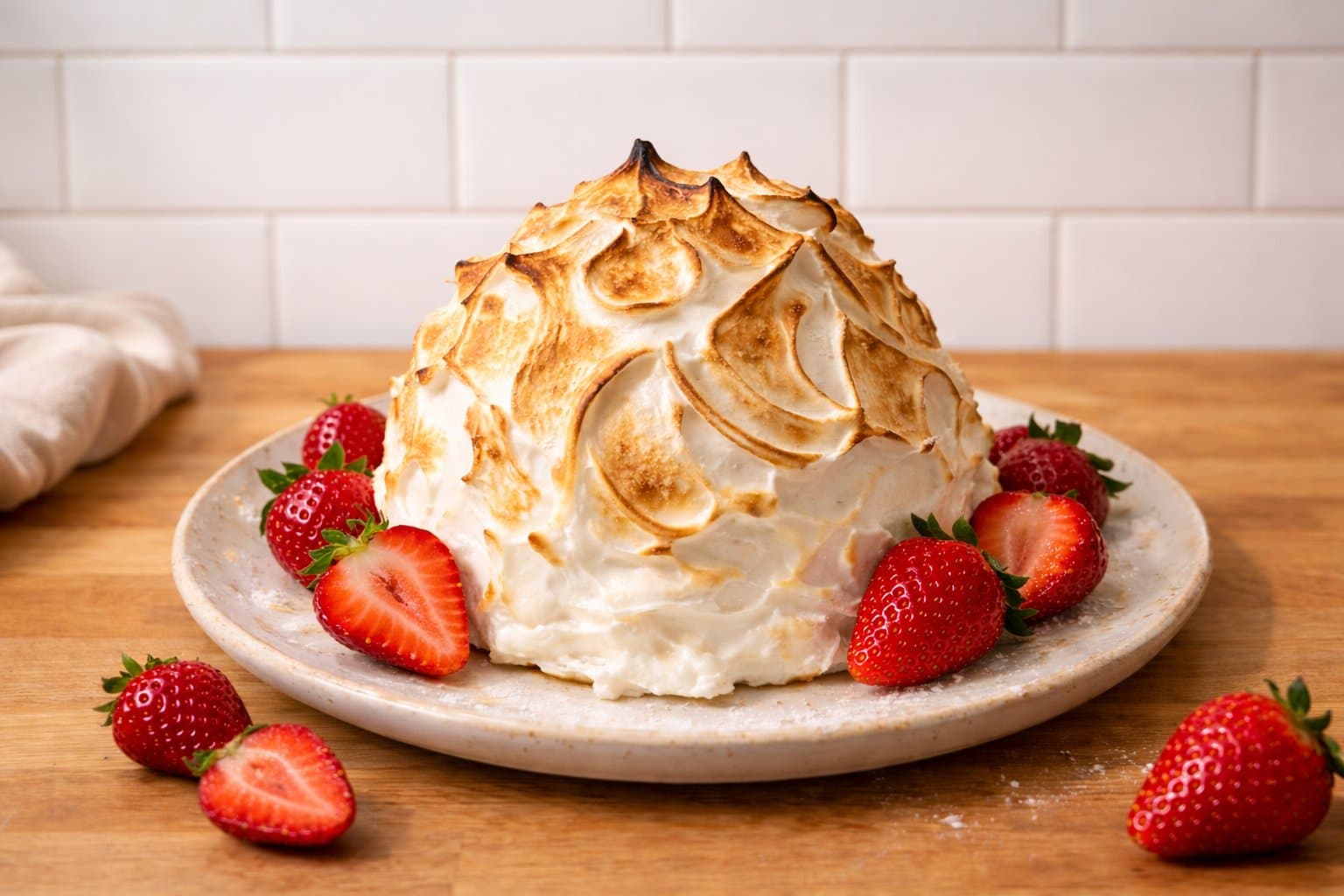
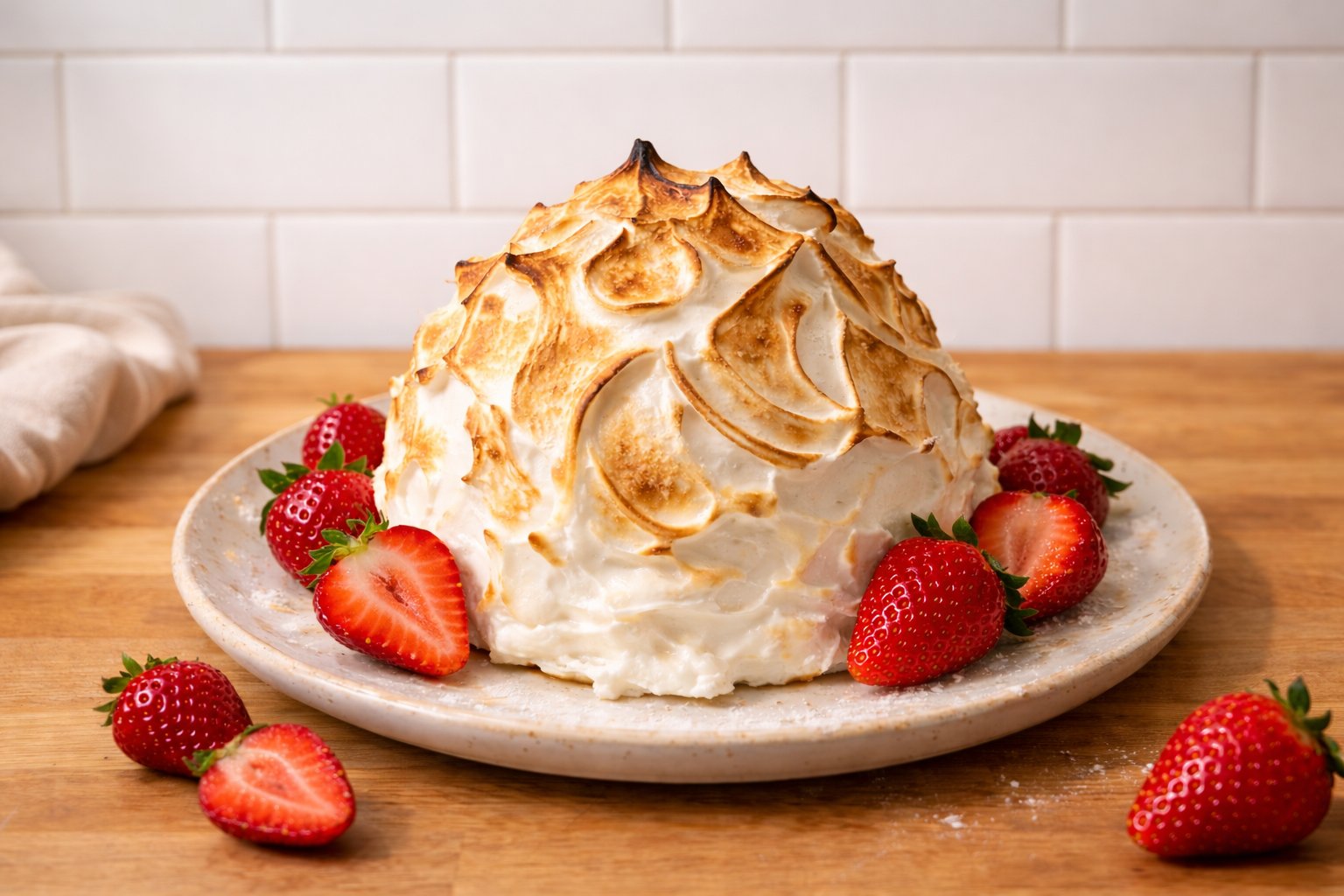
Ranhofer introduced a dessert called “Alaska, Florida”, symbolising the contrast between cold Alaska and warm Florida. The dish featured a sponge cake base, ice cream moulded into a dome and a thick layer of meringue browned in the oven.
The striking name and dramatic presentation quickly captured the public’s imagination.
A Dessert Designed for Spectacle
By the late 19th century, Baked Alaska had become a culinary showpiece in grand restaurants and hotels. It was especially popular at banquets and celebrations because it could be dramatically finished tableside.
Some versions were flambéed with rum or liqueur, while others were decorated with piped meringue peaks shaped into elaborate domes.
The dessert demonstrated both technical skill and scientific understanding, showcasing the insulating properties of meringue.
Why the Ice Cream Doesn’t Melt
The key to Baked Alaska lies in the physics of meringue.
Whipped egg whites trap air bubbles, creating a structure that conducts heat very slowly. When placed in a hot oven, heat quickly browns the outer layer of meringue, but little heat reaches the ice cream underneath.
Because the baking time is extremely short — often only 3 to 5 minutes — the ice cream remains frozen while the exterior caramelises.
This combination of science and culinary artistry is part of what makes Baked Alaska such a fascinating dessert.
Baked Alaska in Modern Baking
Although it is less common today than in the grand dining rooms of the 19th century, Baked Alaska still appears in bakeries, restaurants, and home kitchens.
Modern versions often include different ice cream flavours, fruit layers or compotes, chocolate or brownie bases, and torch-browned meringue for greater control.
Despite these variations, the fundamental idea remains unchanged: a dramatic dessert where fire meets ice.
A Dessert That Celebrates Contrasts
Baked Alaska is more than just a sweet treat. It represents a moment in culinary history when science, politics, and showmanship came together in the kitchen.
From the experiments of Count Rumford to the celebratory dishes served at Delmonico’s after the Alaska Purchase, the dessert tells a story of innovation and cultural fascination with extremes.
Even today, slicing into a Baked Alaska still feels a little like magic — revealing frozen ice cream hidden beneath a warm, golden shell.
If you would like to try making this dramatic fire-and-ice dessert at home, you can find the full Baked Alaska recipe here.