Around the World in 80 Bakes: Stop#47 — Easter Bakes
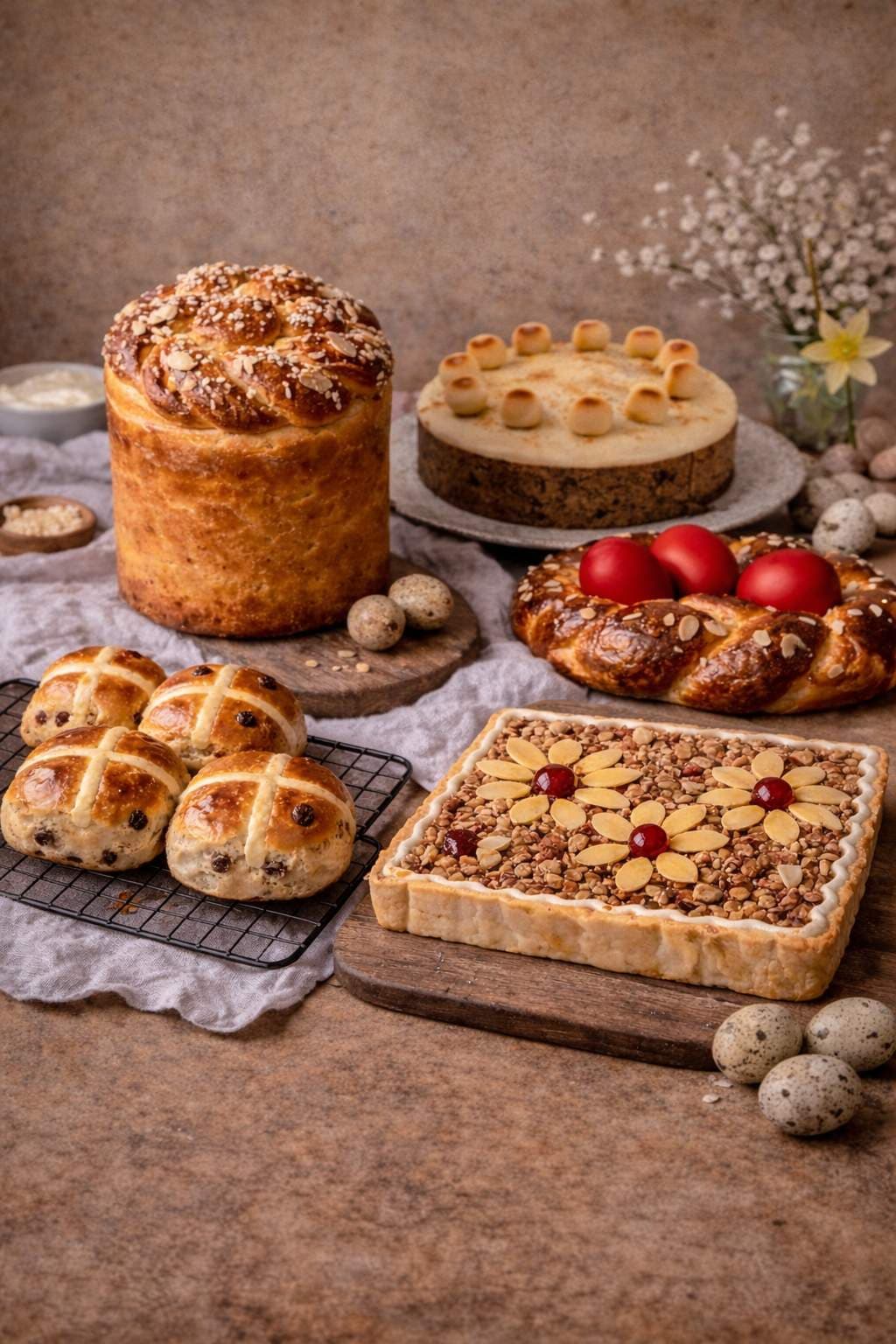
Hot cross buns may be the most familiar Easter bake, especially in the UK and Commonwealth countries, but they are only one part of a much larger story.
Across Europe and beyond, Easter has long been marked by breads, cakes, and pastries shaped by centuries of religious observance, seasonal ingredients, and local tradition. Many of these bakes were originally tied to the end of Lent, a period of fasting that restricted rich ingredients such as butter, eggs, and sugar.
When Easter arrived, baking became a way of celebration, a return to abundance after weeks of restraint.
But these bakes are not simply festive treats. They carry traces of older customs, from medieval fasting rules to regional rituals and even pre-Christian ideas of renewal.
In this article, we explore some of the most distinctive Easter bakes from around the world, and the histories that shaped them.
Simnel Cake (England)
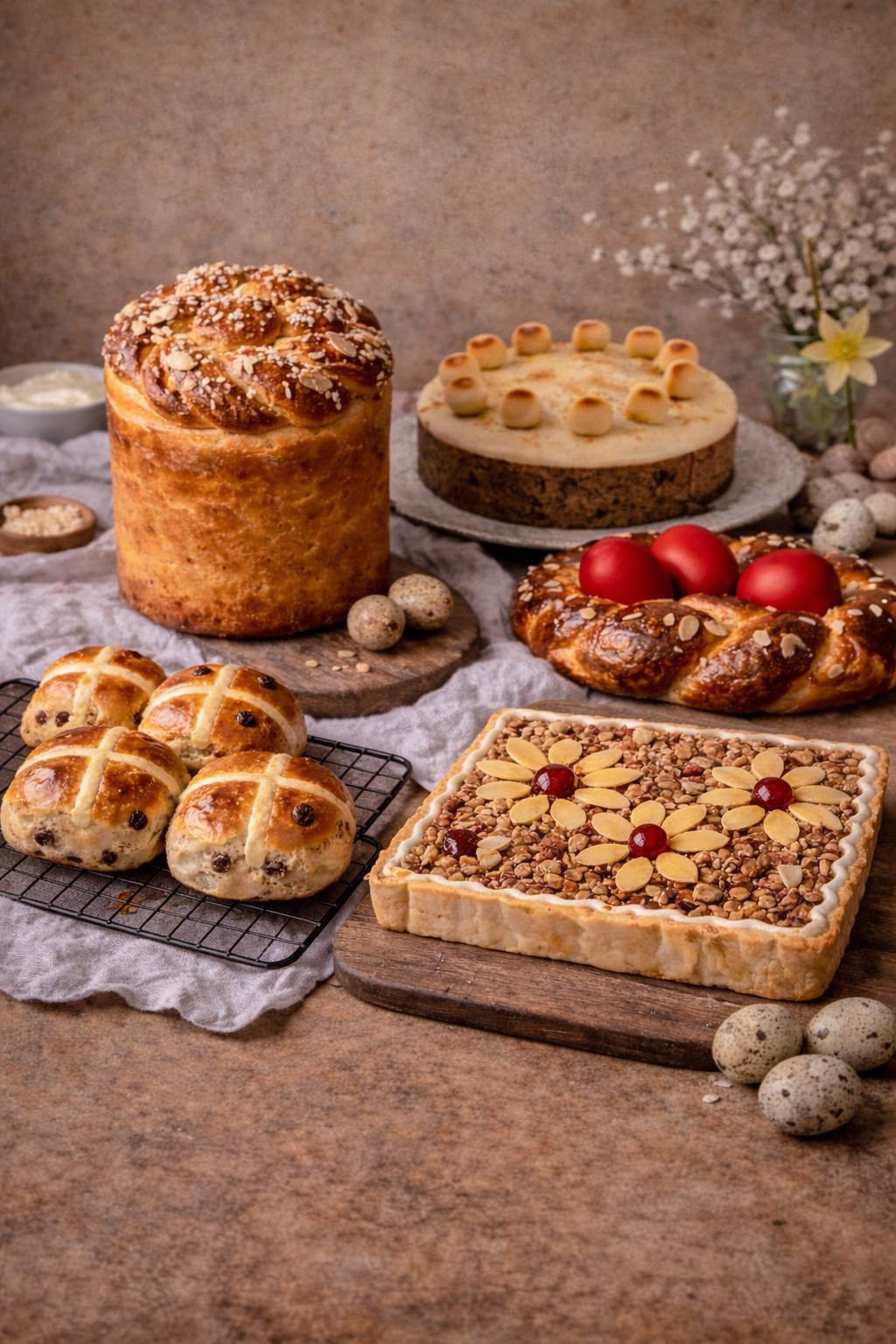
Simnel cake is now closely associated with Easter, but its origins lie in Mothering Sunday in medieval England. By the 17th century, young servants and apprentices were given a rare day off during Lent to return home, often bringing a special cake as a gift, with simnel cake among the most popular.
Early versions were simpler, sometimes boiled or made with less enriched dough, before gradually evolving into the spiced fruit cake we recognise today.
Its link to Easter emerged later, particularly in the 18th and 19th centuries, as it became tied to the end of Lent. The familiar decoration of eleven marzipan balls is said to represent the apostles, though this symbolism appears to be a later addition rather than part of its earliest form.
If you’d like to explore its story in more detail, you can read more here: The History and Origins of Simnel Cake.
Colomba di Pasqua (Italy)
Colomba di Pasqua, the dove-shaped Italian Easter bread, is often compared to panettone but its modern form is far more recent than many assume.
Although there are several legends that trace its origins back to early medieval Lombardy, including stories of dove-shaped breads offered as symbols of peace during times of conflict, the Colomba we recognise today was actually developed in the 1930s in Milan.
It was created by the Milanese company Motta, which was already famous for producing panettone. Using the same dough, ingredients, and production methods, the idea was to create a festive bread for Easter that could match the success of its Christmas counterpart.
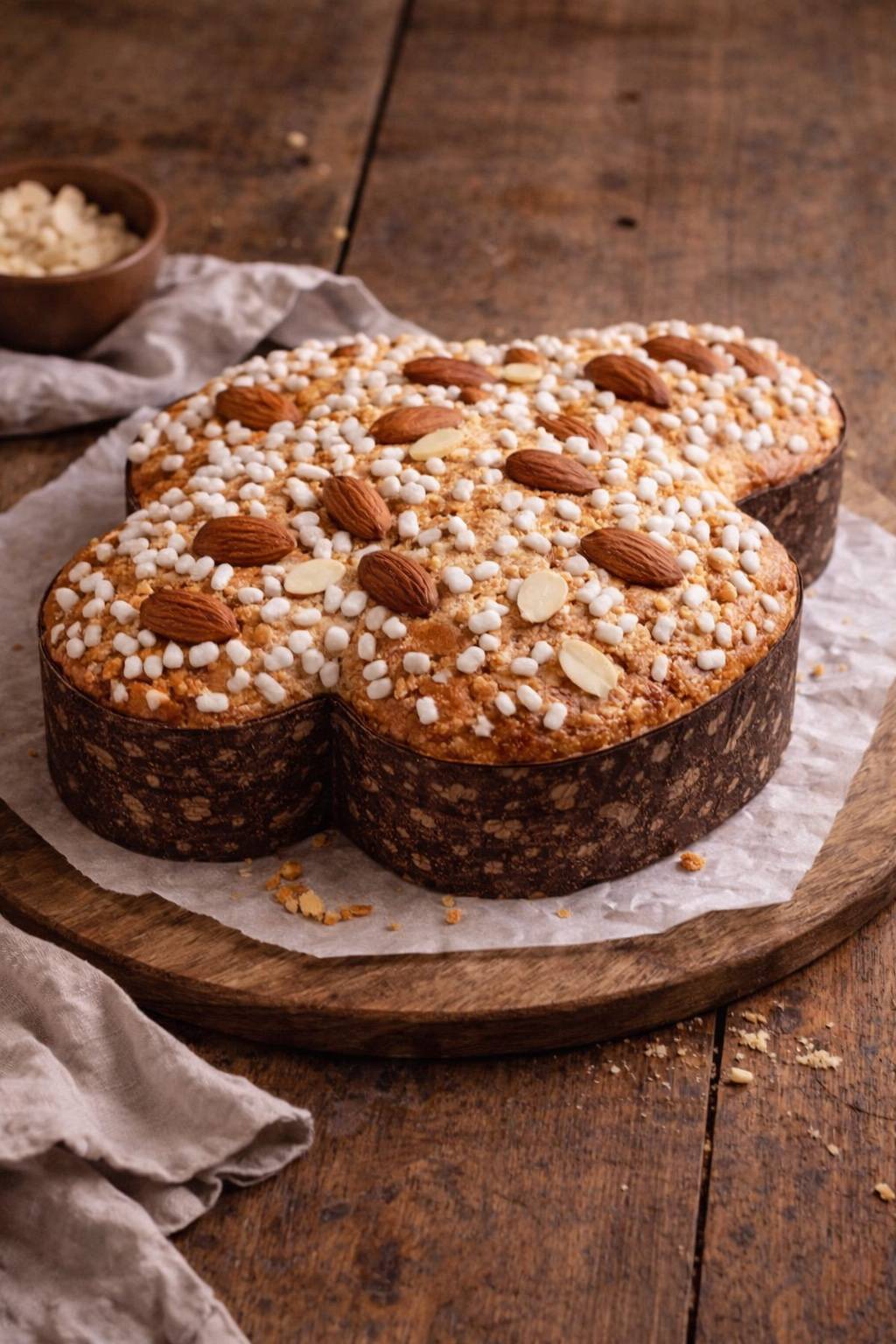
The dough itself reflects this connection. Like panettone, it is made from an enriched mixture of flour, eggs, butter, sugar, and natural yeast, but typically includes candied citrus peel and no raisins, and is topped with a distinctive topping of almonds and pearl sugar before being baked.
Its defining feature is its shape. “Colomba” means dove in Italian, and the form symbolises peace, renewal, and the spiritual meaning of Easter. While this symbolism feels ancient, it was the combination of this familiar shape with modern production and marketing that allowed Colomba to spread rapidly across Italy and beyond.
Today, Colomba di Pasqua sits at an interesting intersection of tradition and innovation, a relatively modern creation that draws on older symbolic meanings, seasonal practices, and the long-standing association between enriched bread and the end of Lent.
Tsoureki (Greece)
Tsoureki is closely tied to Greek Orthodox Easter, but its roots extend beyond Greece, reflecting a broader tradition of enriched holiday breads across the Eastern Mediterranean and Balkans.
It belongs to a wider family of sweet, yeast-leavened breads found in countries such as Armenia, Turkey, and Romania, known under different names such as choreg, çörek, and cozonac. The Greek name tsoureki itself is derived from the Turkish word çörek, meaning a type of round or braided bread, pointing to centuries of cultural exchange in the region.
The bread is made from a rich dough of flour, eggs, butter, milk, and sugar, often flavoured with distinctive ingredients such as mahleb, mastic, or citrus zest, flavours that reflect its Eastern Mediterranean origins.
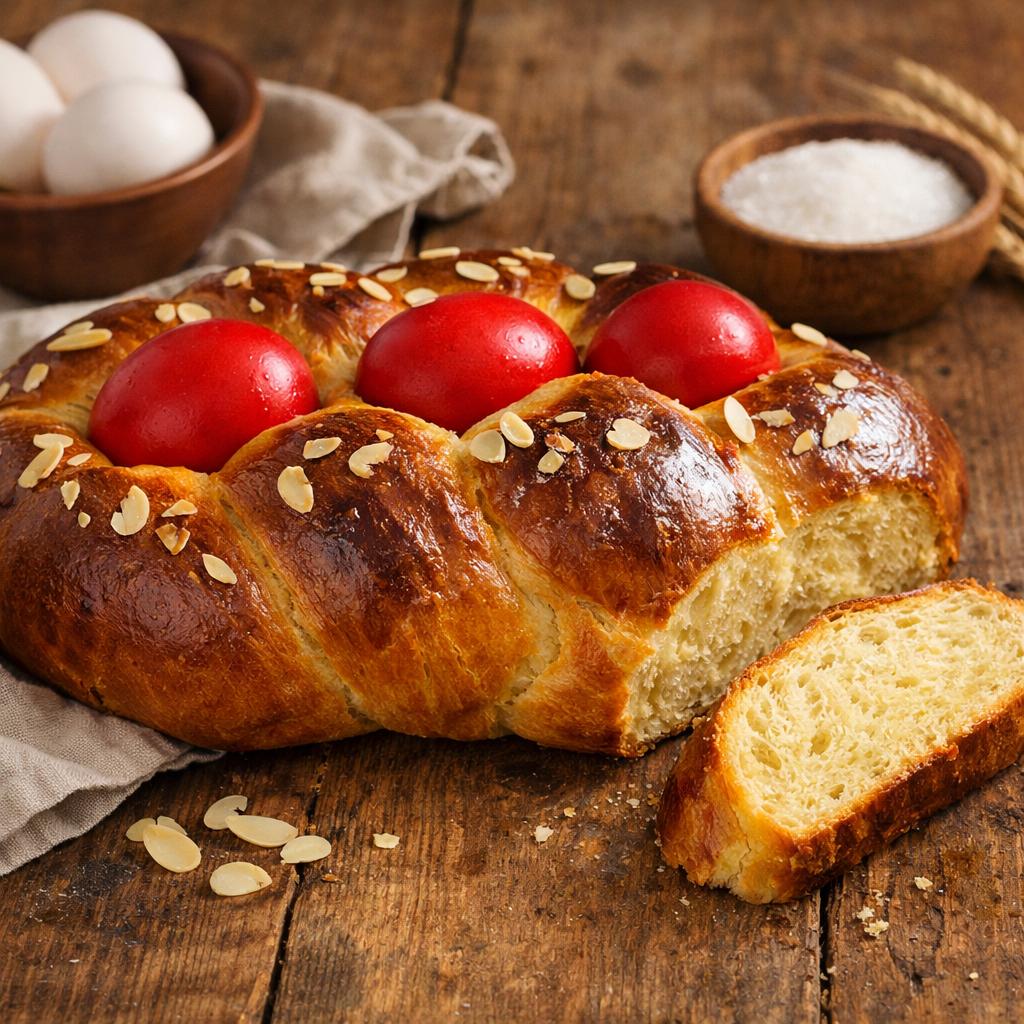
For Easter, Tsoureki takes on its most recognisable form as a braided loaf, often with red-dyed eggs pressed into the dough before baking. These eggs symbolise the blood of Christ and the promise of new life, while the bread itself marks the end of Lent, when rich ingredients once again return to the table.
Variations of Tsoureki are prepared for different occasions throughout the year, including Christmas and New Year, but its Easter form, sometimes called lampropsomo, remains the most symbolically significant.
Tsoureki therefore reflects more than a single tradition. It is the result of layered influences — religious, regional, and historical — shaped over centuries, and preserved through seasonal baking practices that continue today.
Mazurek (Poland)
Mazurek stands apart from many Easter bakes in both form and purpose.
Rather than a tall bread or cake, it is a flat pastry, typically made with a shortcrust or butter-rich base and topped with layers of caramel, chocolate, nuts, or fruit preserves. Its defining feature is not its structure, but its elaborate decoration, often arranged by hand in intricate patterns.
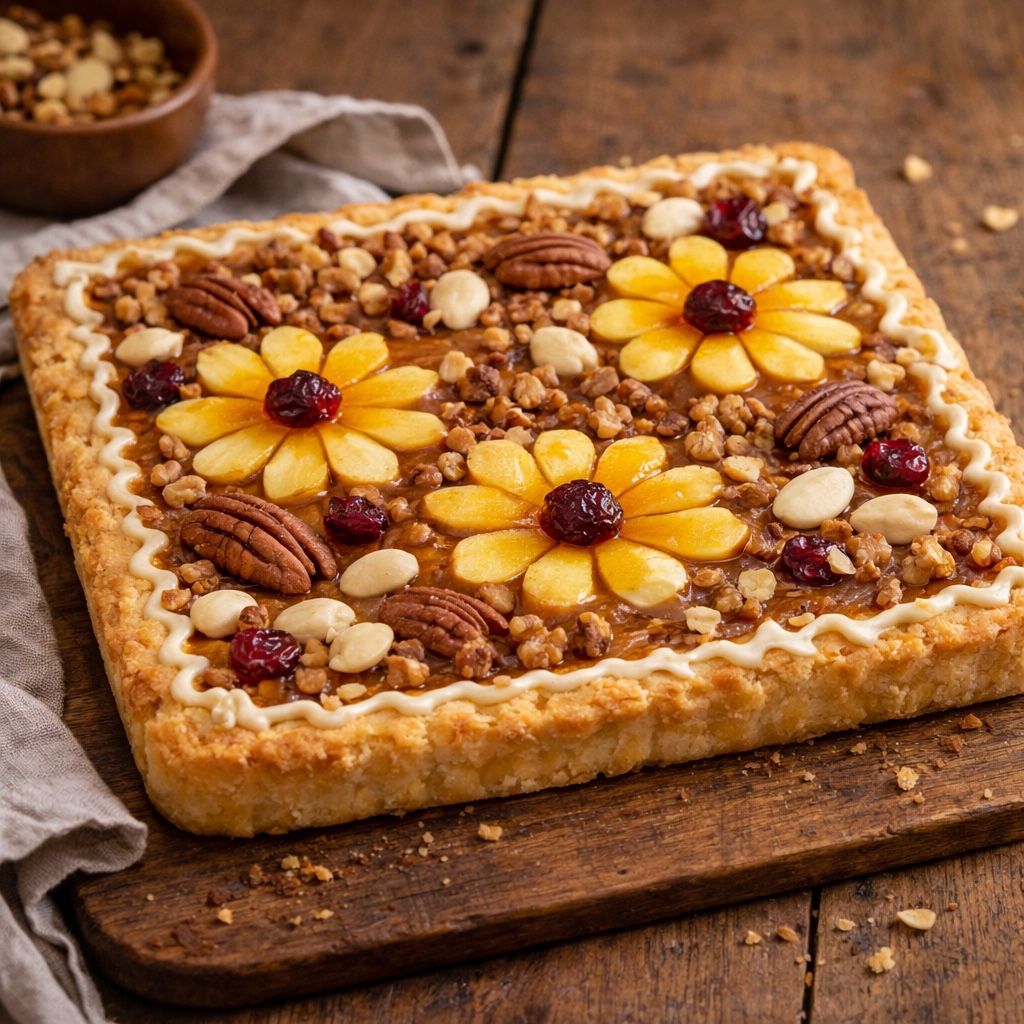
The origins of Mazurek are not tied to a single moment, but are believed to reflect influences from Turkish and Middle Eastern desserts, introduced into Poland through trade and cultural contact, particularly during the period of the Polish–Lithuanian Commonwealth. Its rich toppings and use of nuts and dried fruits echo these connections.
Mazurek is also closely linked to the rhythms of Lent. Traditionally, it was not eaten during the fasting period, when rich foods were restricted. Instead, it was prepared for Easter as a deliberate contrast, a return to sweetness and abundance after weeks of restraint.
Unlike everyday baked goods, Mazurek is often made only once a year. Families decorate it with personal touches, sometimes incorporating initials, dates, or symbolic motifs, making each one unique.
In this way, Mazurek is not just a dessert, but a reflection of celebration, creativity, and the transition from fasting to feast, a pattern that lies at the heart of many Easter traditions.
Paska (Eastern Europe)
Paska is a traditional Easter bread found across Ukraine, Slovakia, and other parts of Central and Eastern Europe, closely associated with regions shaped by Eastern Orthodox and Eastern Catholic traditions.
The name itself reflects its origins. “Paska” is derived from the Greek word for Easter, which also entered Slavic languages, linking the bread directly to the celebration of the resurrection.
Made from a rich dough of flour, milk, butter, eggs, and sugar, Paska is typically prepared specifically for Easter, marking the end of Lent when such ingredients return to the table.
Its role, however, goes beyond baking. In many regions, especially in Ukraine, Paska forms part of a larger Easter ritual. Families place it in a basket alongside eggs, meats, and other foods, which are then taken to church on Holy Saturday to be blessed before being eaten on Easter morning.
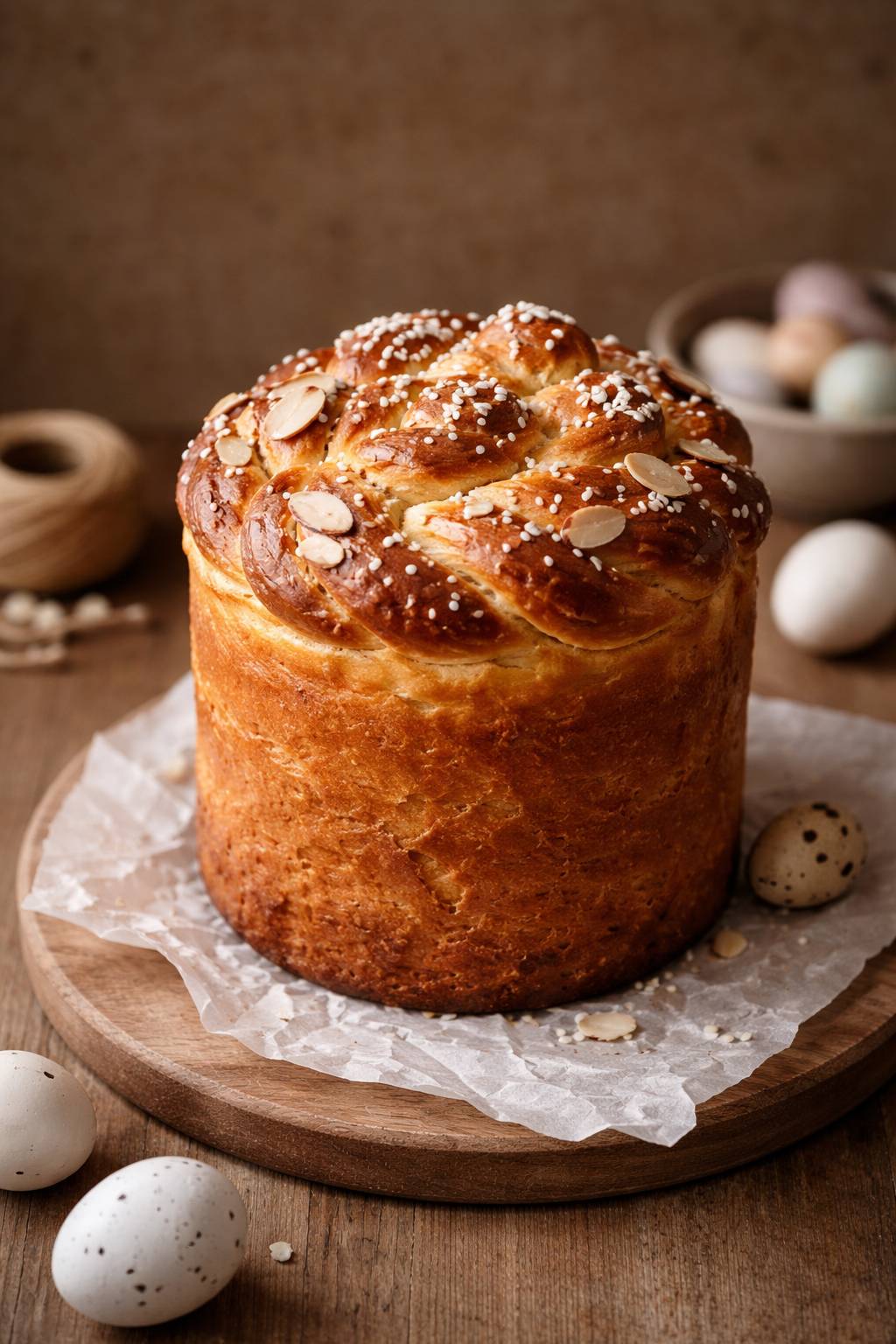
The bread is often decorated with dough patterns such as crosses, braids, or symbolic shapes. These designs reflect both Christian imagery and older seasonal motifs linked to spring and renewal. In some traditions, birds or wheat patterns are included, representing the awakening of nature after winter.
The meaning of “paska” can also vary by region. In some communities, it refers to elaborately decorated braided loaves, while in others it describes tall cylindrical breads, showing how the tradition has evolved across cultures.
More than a festive bread, Paska represents a moment of transition, from fasting to feasting, from winter to spring, and from ritual to celebration, making it one of the most symbolically rich Easter bakes in the region.
Hot Cross Buns (United Kingdom)
Hot cross buns are now closely linked to Good Friday, but their origins likely predate Christianity. Spiced buns marked with a cross have been connected to earlier spring traditions, later absorbed into Christian practice.
By the medieval period, they were firmly tied to Good Friday. The cross came to symbolise the crucifixion, while the spices were said to represent those used in burial. They were also steeped in superstition. In England, buns baked on Good Friday were believed to have protective qualities and were sometimes kept throughout the year.
If you’d like to explore their full story, you can read more here: The History of Hot Cross Buns.
What Connects These Bakes
What links these bakes is not just their ingredients, but their origins.
Each reflects a moment when food, belief, and tradition intersect, shaped by fasting, celebration, and seasonal change. Some carry traces of medieval customs, others reflect cultural exchange, and some have evolved into modern forms while retaining older meanings.
Together, they show how baking is not only about what we eat, but how traditions are preserved, adapted, and passed on.