Around the World in 80 Bakes: Stop #43 — Canéles
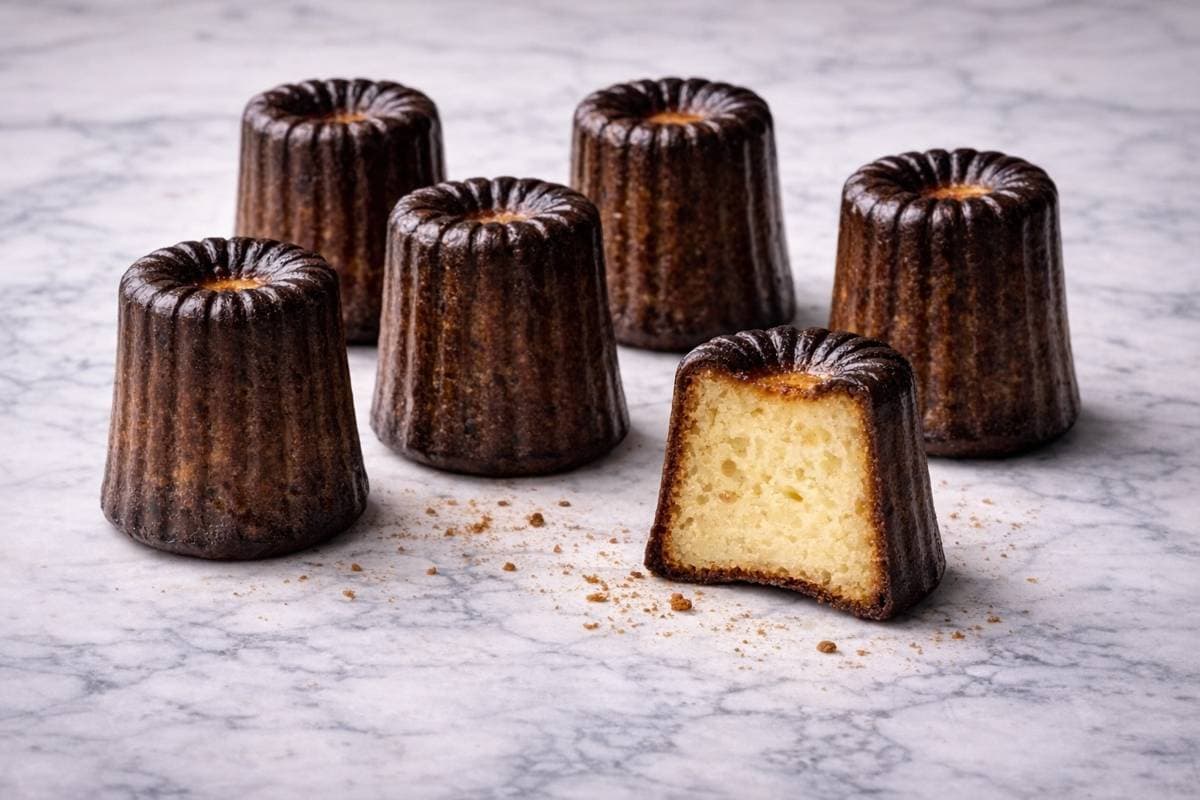
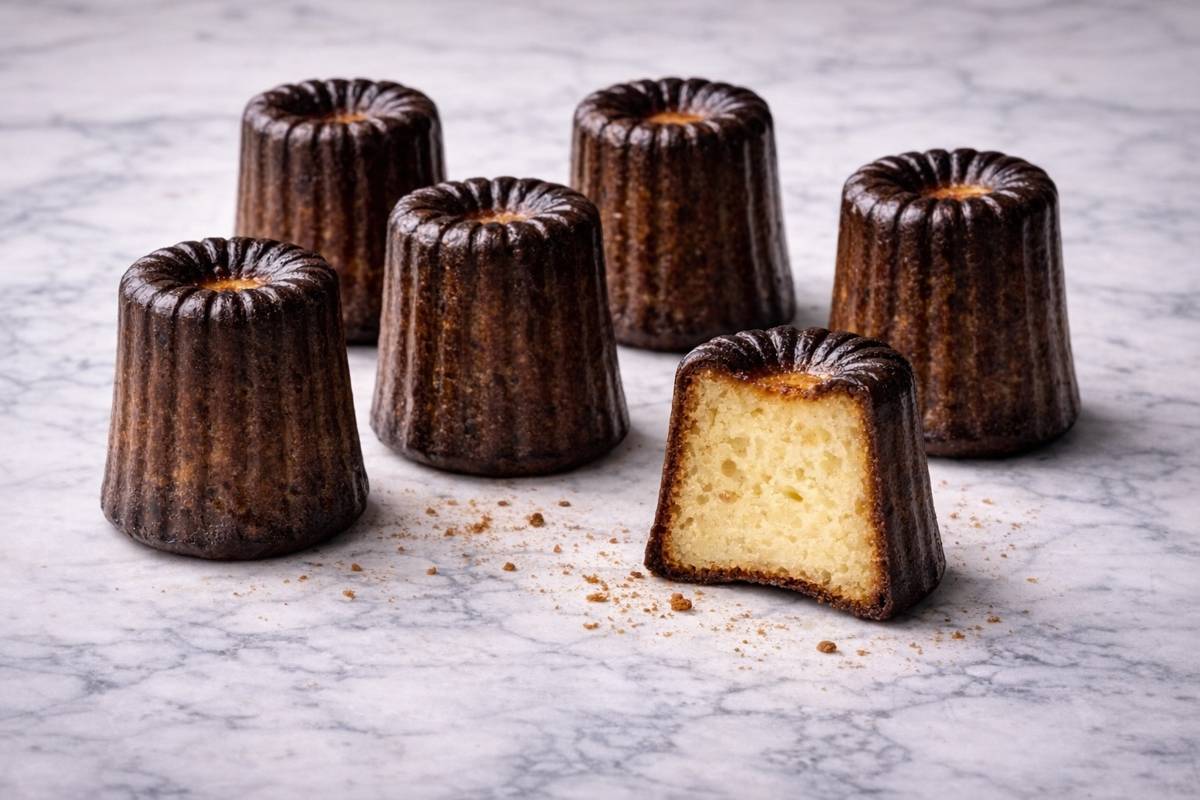
Among the many pastries that define French pâtisserie, few are as distinctive as the canelé. Small, dark and fluted, these pastries are famous for their remarkable contrast in texture: a deeply caramelised crust surrounding a soft, custardy interior delicately flavoured with vanilla and rum.
Today, canelés are recognised as a specialty of the historic wine city of Bordeaux in southwestern France. Yet the story behind this small pastry stretches across centuries, shaped by the region’s wine trade, convent kitchens, guild disputes and a remarkable twentieth-century revival.
A Pastry Shaped by Bordeaux’s Wine Trade
The origins of the canelé are closely connected to Bordeaux’s centuries-old wine industry.
Winemakers traditionally used egg whites to clarify wine, a process known as fining. The egg whites helped remove impurities from wine as it matured in barrels, leaving large quantities of unused egg yolks behind.
According to one of the most enduring stories about the pastry’s origins, these leftover yolks were often given to nearby convent kitchens. At the Couvent des Annonciades in Bordeaux, nuns are believed to have used them to prepare small cakes using simple ingredients that were readily available in the region.
These cakes were reportedly distributed to poor children or sold to support the convent. Although historians cannot confirm every detail of the story, it remains one of the most widely accepted explanations for how early versions of the pastry first appeared in Bordeaux.
The Influence of Trade
Bordeaux was one of France’s most important port cities, and international trade played a significant role in shaping the flavours of the pastry.
Ingredients such as sugar, rum and vanilla arrived through maritime trade routes connecting Bordeaux with the Caribbean and other overseas territories. Over time, these ingredients became defining flavours of the canelé, giving the pastry its distinctive aroma and richness.
Today, canelés are baked in distinctive fluted moulds that produce their recognisable ridged shape. The name itself likely derives from the French word cannelure, meaning “grooves” or “fluting”, referring to the pastry’s ridged sides.
The Canauliers and the Bakers’ Guild
Historical records also point to another group connected to the pastry’s early development: the canauliers, a group of bakers active in Bordeaux during the seventeenth century.
These craftsmen produced small breads or cakes known as canaules. In 1663, the canauliers formed an official guild that granted them the right to produce certain baked goods.
However, strict guild regulations created tension between the canauliers and the pastry chefs’ guild. The canauliers were initially forbidden from using ingredients such as milk and sugar, which were reserved for pastry specialists.
The dispute eventually reached the royal council in Versailles. In 1755, the ruling allowed the canauliers greater freedom in their recipes.
By the late eighteenth century, Bordeaux reportedly had dozens of canaulier shops producing these pastries, suggesting that early forms of the canelé had already become a well-known regional specialty.
Disappearance After the French Revolution
Like many culinary traditions tied to guilds and religious institutions, the pastry’s fortunes changed dramatically during the French Revolution.
When guilds were abolished and many convents were closed, the traditional structures that supported specialised food production disappeared. For a time, the pastry seems to have faded from prominence, and references to it became scarce in culinary records.
A Twentieth-Century Revival
The canelé we know today largely emerged from a revival in Bordeaux during the early twentieth century.
Pastry chefs rediscovered and refined the old recipe, introducing several defining elements: the use of rum and vanilla, the distinctive fluted mould and the signature caramelised crust.
Traditional moulds were made of copper, which conducts heat extremely well and helps create the pastry’s characteristic crisp exterior. The moulds were often coated with a thin layer of beeswax or butter, allowing the batter to caramelise beautifully as it baked.
Protecting a Regional Specialty
In 1985, pastry chefs in Bordeaux founded the Confrérie du Canelé de Bordeaux — the Brotherhood of the Canelé — to protect and promote the pastry as part of the region’s culinary heritage.
The organisation also standardised the spelling of the pastry’s name. While older sources often used the spelling “cannelé” with two ns, the Brotherhood promoted the spelling “canelé” with a single n as the official form associated with Bordeaux
Their efforts helped transform the pastry from a local specialty into an internationally recognised symbol of Bordeaux’s culinary culture.
A Small Pastry with a Remarkable Story
From convent kitchens and wine cellars to modern pâtisseries around the world, the canelé has travelled a remarkable path through history.
Its crisp caramelised shell and custardy centre reflect centuries of regional tradition, shaped by Bordeaux’s wine trade, maritime commerce and evolving pastry craftsmanship.
Today, whether enjoyed in a Bordeaux bakery or discovered unexpectedly in a pâtisserie halfway across the world, the canelé remains one of the most distinctive pastries in the French baking tradition.
Ready to try baking this classic French pastry at home? Find the full recipe here 👉 Canelés: The Classic French Pastry.