
Canelés: The Classic French Pastry
Traditional French canelés with a caramelised crust and custard centre. Learn how to make this Bordeaux classic at home with simple ingredients.
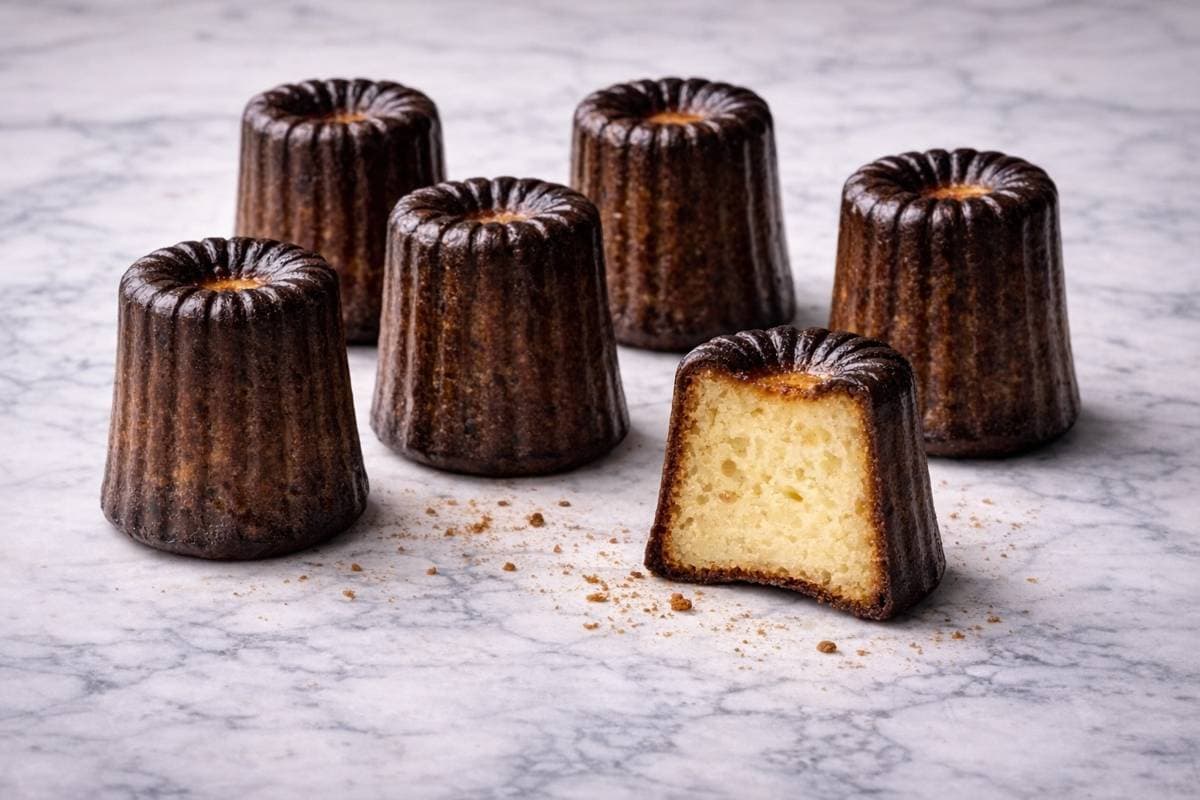
Few pastries are as technically demanding as the canelé. With its deeply caramelised crust and soft, custard-like centre, this small French pastry from Bordeaux is a study in contrast being crisp on the outside while staying tender within.
Traditionally flavoured with vanilla and dark rum, canelés rely on time, rest, and precise baking to achieve their signature texture. The batter is prepared in advance, allowing the flour to fully hydrate and the flavours to develop, before being baked at high heat to form that iconic dark shell.
Whether you are baking them for the first time or refining your technique, mastering canelés is a rewarding experience as you transform a handful of simple ingredients into something truly elegant.
To explore the fascinating origins of this pastry, including its connection to Bordeaux’s wine trade and convent kitchens, read The History of Canelés here.

Recommended Tools
These tools will help to increase the success of your bake and achieve that signature texture of canelés.
Copper Canelé Moulds are ideal as they conduct heat well and help to achieve the characteristic crisp, caramelised crust but they are expensive. A good alternative is a carbon steel Canelé Mould Cake Pan which offers better heat conduction than silicone while being more affordable. Silicone moulds are beginner-friendly and easy to use, though they may produce a slightly softer exterior. If using silicone, extend baking time slightly for deeper colour.
I use my Pastry Brush to coat the moulds evenly with butter. Ensure a thin and even layer as too much butter can cause pooling and uneven crusts. After brushing, turn the mould upside down briefly to allow any excess butter to drip out, helping to prevent thick spots and streaking during baking.
A Fine Sieve helps remove lumps from the batter for a smooth, custard-like interior. Do not skip this step, especially after resting the batter.
I bake by weight, not volume. Use a Digital Food Scale as accuracy is important for achieving the correct batter consistency. Small variations can affect how the canelés rise and set.
A Cooling Rack allows steam to escape after baking, helping to maintain a crisp crust. Remove canelés from moulds immediately to prevent sogginess.
Canelés: The Classic French Pastry
Ingredients
- 500 ml whole milk
- 50 g unsalted butter
- 1 vanilla pod (or 2 tsp vanilla extract)
- 100 g plain flour
- 200 g caster sugar
- 2 whole eggs
- 2 egg yolks
- 50 ml dark rum
- A pinch of salt
Instructions
- 1
Prepare the workstation.
- 2
Gather all the tools and ingredients.
- 3
Heat the milk, butter, and vanilla in a saucepan over medium heat until just simmering.
- 4
Remove from heat and allow to cool slightly.
- 5
In a bowl, whisk together flour, sugar, and salt.
- 6
Add eggs and egg yolks, whisking until smooth.
- 7
Gradually pour in the warm milk mixture, whisking continuously to form a thin batter.
- 8
Stir in the rum.
- 9
Strain the batter through a fine sieve to remove lumps.
- 10
Cover with cling film and refrigerate for at least 24 hours. Note: the cling film should directly touch the surface of the batter. This helps to prevent a skin from forming on top, reduces condensation dripping back into the batter and keeps the texture smooth and consistent after resting.
- 11
Tip: when you take it out the next day, give the batter a gentle stir (not vigorous) to recombine everything evenly before baking. Before pouring into the moulds, sieve the batter once more to ensure a smooth, lump-free consistency
- 12
TO BAKE: Preheat oven to 240°C.
- 13
Generously butter the canelé moulds.
- 14
Fill each mould about ¾ full with batter.
- 15
Bake at 240°C for 10 minutes.
- 16
Lower the oven temperature to 180°C and continue baking for 40–50 minutes until deeply caramelised.
- 17
Tip (this makes a difference): If your oven runs cool, give it a quick check around the 45-minute mark. You’re aiming for a deep brown (almost dark mahogany) colour, not just golden. If they’re still pale, bake another 5 minutes and check again. If they’re still pale, they’ll taste underdeveloped rather than burnt so don’t be afraid to go a little longer, just do it gradually.
- 18
Remove from moulds immediately and cool on a rack.
- 19
Serving Tips: Canelés are best enjoyed on the day they are baked, ideally within a few hours, when the crust is at its crispest. Serve slightly warm or at room temperature with coffee or tea.
- 20
Storage Tips: Store at room temperature for up to 1 day. Avoid refrigerating as it softens the crust. To refresh, bake at 200°C for 5–8 minutes to restore crispness.
Featured in our shop: Philips Hand Mixer (450W, 5 Speeds plus Turbo, White)