Long before “no-bake desserts” became a summer trend on social media, cooks were already creating elaborate sweets without ovens, relying instead on cold rooms, stored ice, and time itself.
Today, chilled cheesecakes, refrigerator pies, and icebox cakes are often associated with convenience. Yet their origins reveal something far more interesting: the transformation of domestic life through refrigeration, industrial food production, and changing ideas about work in the kitchen.
The story of no-bake desserts is not simply about avoiding heat. It is about how technology quietly reshaped the way people cooked, ate, and even thought about dessert.
Before Refrigerators: Cooling Desserts Without Electricity
The roots of no-bake desserts stretch far beyond 20th century America.
In Europe, layered and chilled desserts had already existed for centuries. English trifles combined sponge cakes soaked in alcohol with custard, cream, and fruit, while French charlottes used biscuits or ladyfingers arranged around moulds filled with cream or fruit purée.
These desserts relied not on baking, but on structure and temperature.
Before mechanical refrigeration, wealthy households often stored food in underground cellars packed with harvested winter ice. By the 18th and 19th centuries, specially insulated ice houses became common across Europe and North America. These structures preserved large blocks of ice beneath layers of straw or sawdust, allowing kitchens to cool foods even during warmer months.
One of the earliest known portable refrigeration devices was patented in 1802 by American farmer and cabinetmaker Thomas Moore, who created an insulated container to transport butter. His invention would later influence the development of the household icebox.
The idea that desserts could set through chilling rather than baking was therefore already well established. What changed later was accessibility.
The Rise of the Icebox
By the mid-19th century, iceboxes began appearing in middle-class American homes. This was the environment that would later give its name to one of the most iconic no-bake desserts: the icebox cake.
These were not refrigerators in the modern sense, but insulated cabinets lined with tin or zinc and packed with materials such as cork, sawdust, straw, or seaweed to retain cold temperatures. Large blocks of ice were delivered by ice men and placed inside compartments at the top of the cabinet, allowing cool air to circulate downward over stored food.
The icebox fundamentally changed domestic cooking.
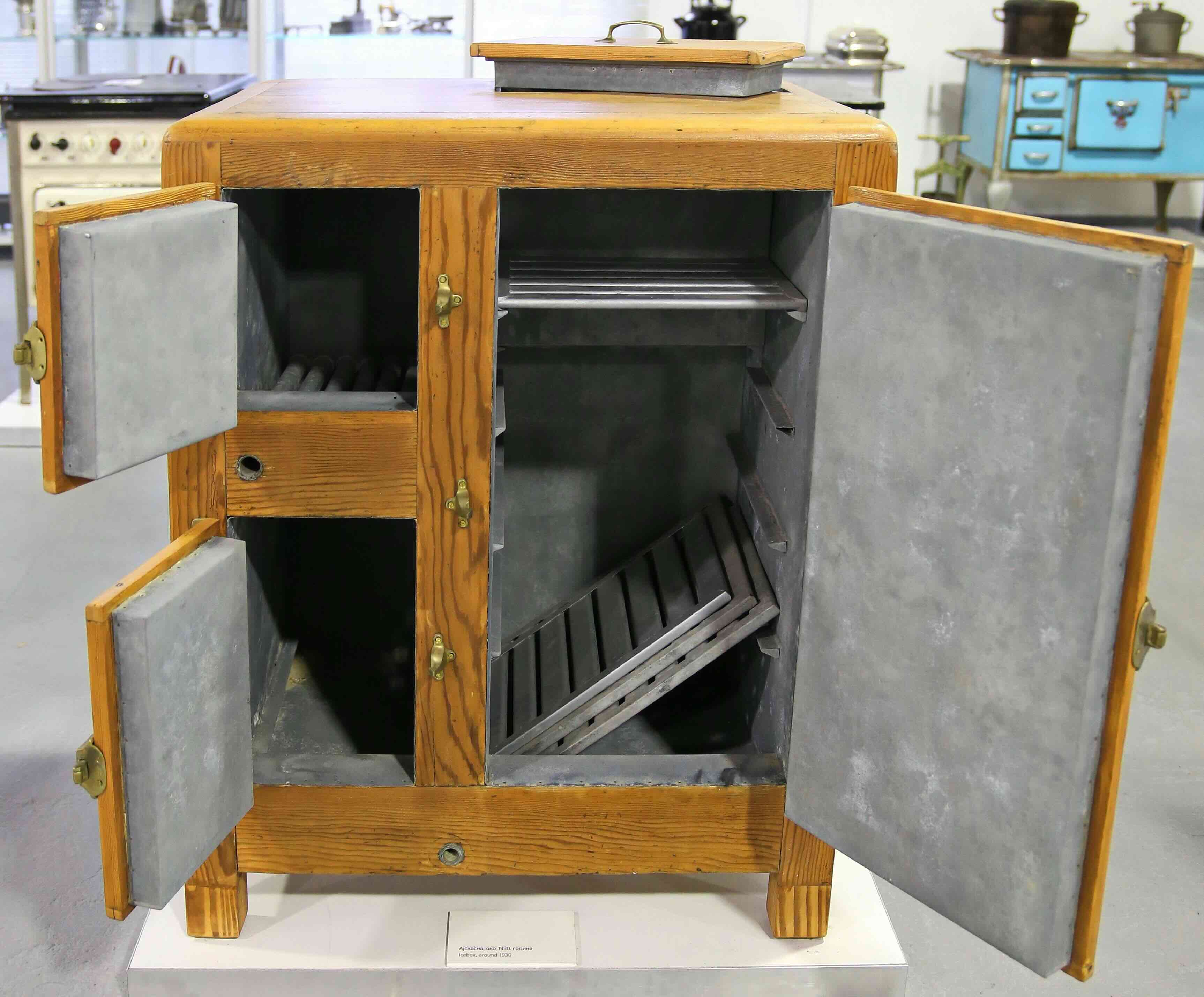
For the first time, households could reliably keep cream cold for extended periods. Desserts no longer needed to be served immediately. Custards, whipped cream fillings, gelatin desserts, and chilled puddings became easier to prepare and safer to store.
The ice trade itself became enormous. By the late 19th century, it had grown into a vast industry, with millions of tons of ice harvested annually from northern lakes and transported across cities and even overseas.
Refrigeration was no longer reserved for the wealthy. Cold desserts slowly became part of ordinary domestic life.
The transition from iceboxes to electric refrigeration marked a decisive shift in domestic life. Early attempts at mechanical refrigeration for the home emerged in the 1910s, but it was the introduction of General Electric’s “Monitor-Top” refrigerator in 1927 that brought reliable cooling into middle-class American kitchens.
As historians at the Smithsonian Institution note, refrigeration quickly transformed food storage and preparation, reducing dependence on the commercial ice trade and allowing households to maintain consistent low temperatures year-round.
By the 1930s, this stability made it far easier to prepare desserts that relied on gradual chilling rather than heat, laying the groundwork for the widespread popularity of icebox cakes and other no-bake sweets.
How the Icebox Cake Was Born
The dessert most closely associated with this new era of refrigeration was the icebox cake.
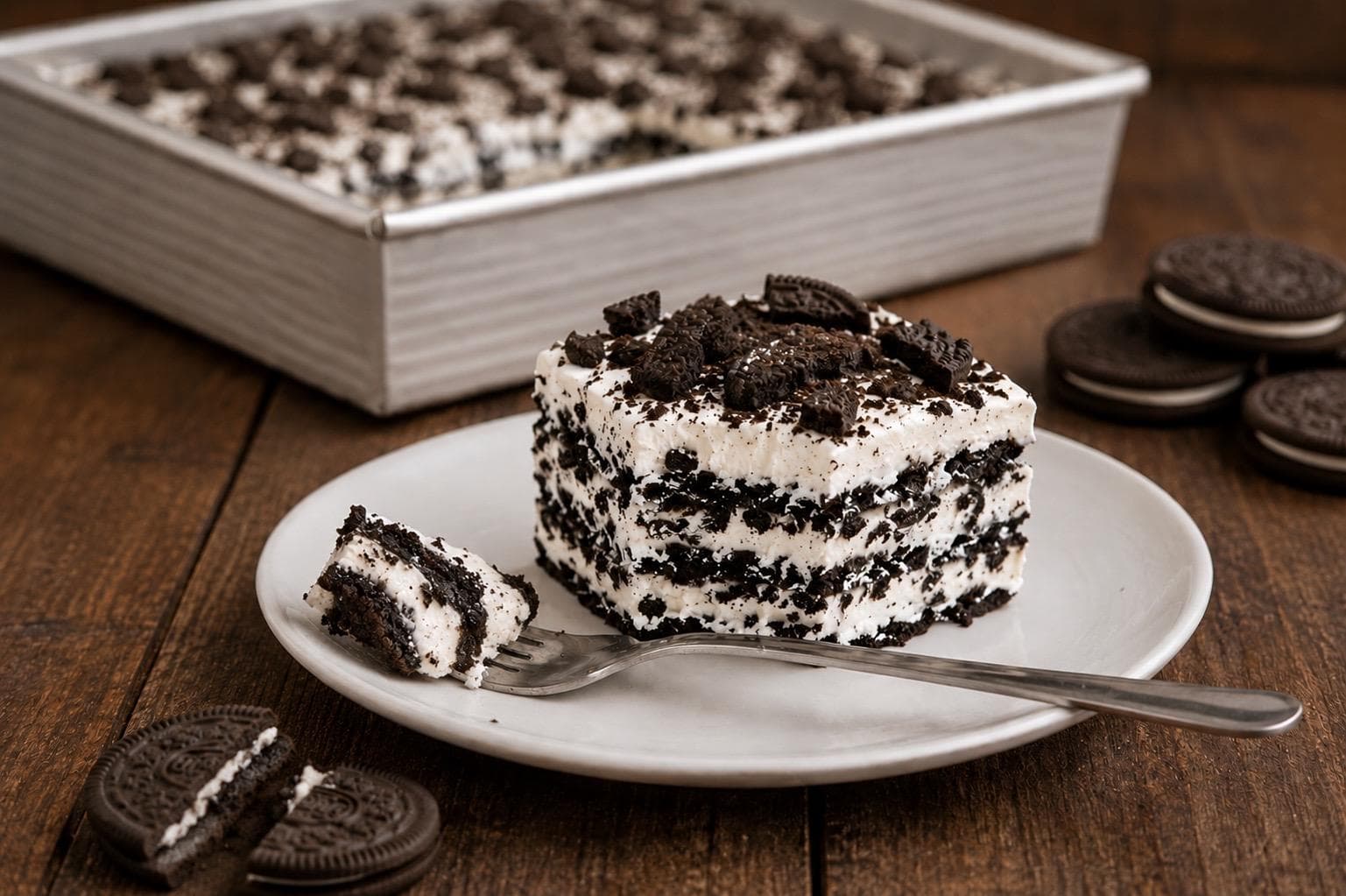
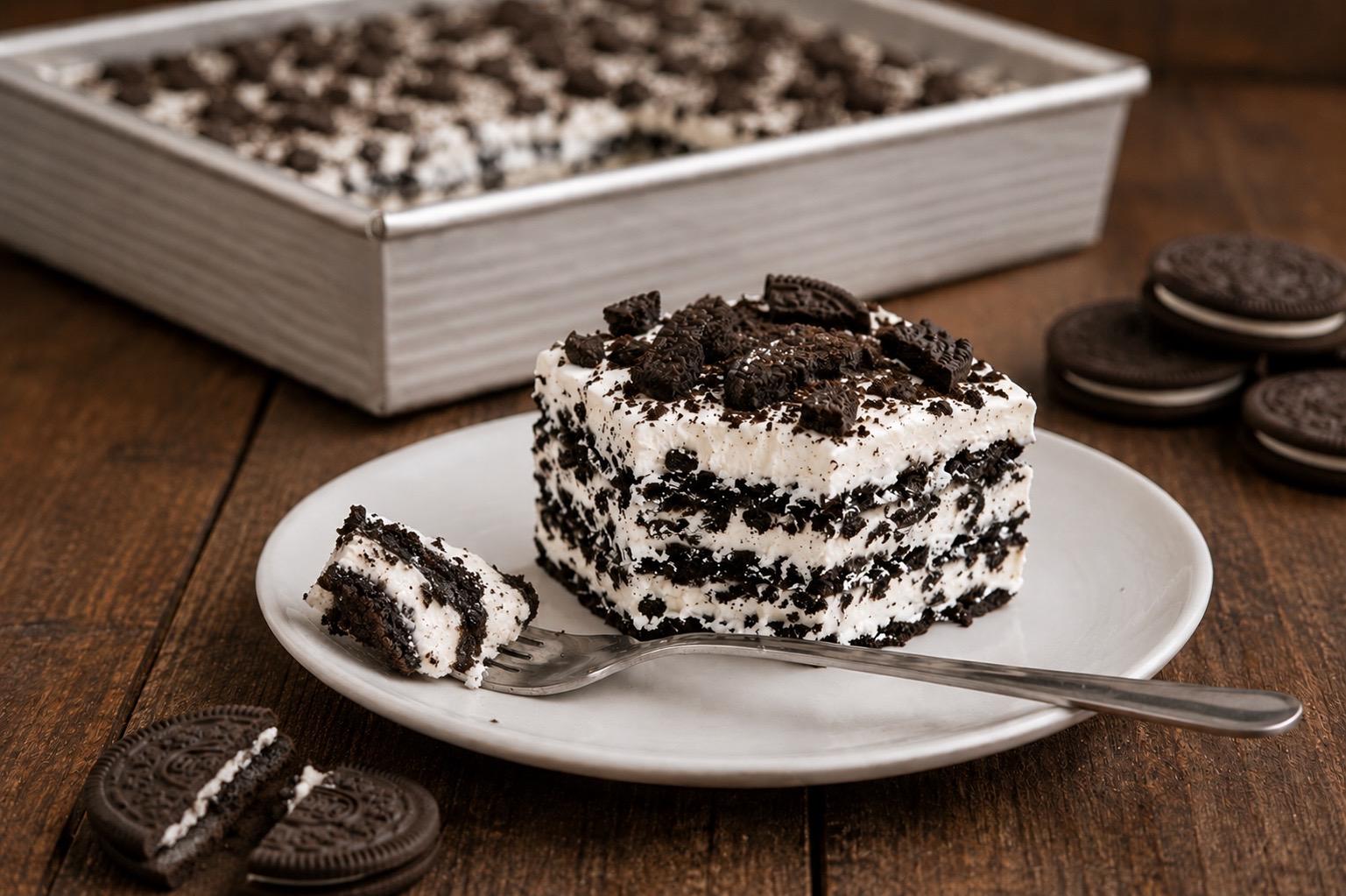
Unlike traditional cakes, it required no baking at all. Layers of crisp wafers or biscuits were combined with whipped cream and left to rest in the refrigerator overnight. By the next day, the once-firm wafers had absorbed moisture, softening into delicate layers that resembled sponge cake.
This transformation depended entirely on moisture migration. Time, rather than heat, became the essential ingredient.
Recipes for icebox cakes began appearing in American newspapers and magazines in the early 20th century, but their popularity surged in the 1920s and 1930s alongside the spread of household refrigeration.
One product proved especially influential: Nabisco Famous Chocolate Wafers.
Introduced in 1924 by the National Biscuit Company, these thin wafers were later paired with a “refrigerator roll” recipe printed directly on the packaging. By 1929, advertisements encouraged home cooks to layer the wafers with whipped cream and chill them overnight, promoting a dessert that was both modern and effortless.
The strategy was remarkably effective.
Rather than selling only biscuits, the company introduced a complete dessert idea — one perfectly suited to the emerging culture of refrigeration.
Food historians generally agree that while Nabisco did not invent the icebox cake, it played a central role in standardising and popularising it across the United States.
Refrigerators and the Modern American Kitchen
The widespread adoption of electric refrigerators accelerated the popularity of no-bake desserts even further.
As noted by the Smithsonian Institution, the introduction of General Electric’s Monitor-Top refrigerator in 1927 marked a turning point, bringing reliable mechanical cooling into American homes.
By the 1930s and 1940s, refrigerators were no longer seen as mere conveniences, but as defining features of the modern kitchen.
At the same time, food manufacturers reshaped home cooking through the rise of processed and convenience ingredients such as sweetened condensed milk, packaged wafers, instant puddings, gelatin desserts, canned fruit, and whipped toppings.
These products made desserts quicker and more consistent to prepare, particularly for less experienced cooks.
No-bake desserts soon became closely associated with the American ideal of kitchen efficiency. Advertisements promoted them as a way to produce impressive results without the time, effort, or heat required for baking.
This was especially significant during summer months. Before air conditioning became widespread, using an oven could make homes uncomfortably warm. Chilled desserts offered a practical and appealing alternative, reinforcing their place in everyday life.
A Dessert Built on Marketing and Memory
Part of what makes icebox cakes historically fascinating is how closely they were tied to branding.
Unlike many traditional desserts that evolved slowly through regional cooking traditions, the classic American icebox cake was shaped directly by industrial food marketing.
Recipes printed on packaging became central to the dessert’s spread. The back-of-the-box recipe became a defining feature of American home baking during the mid-20th century.
In many ways, the dessert reflected a new relationship between corporations and domestic cooking. Companies no longer sold only ingredients; they sold complete dessert ideas, ready to be recreated at home.
And yet, despite its industrial origins, the icebox cake became deeply nostalgic.
For many Americans, it came to be associated with summer gatherings, church suppers, family refrigerators humming in warm kitchens, and desserts made by mothers and grandmothers during the mid-20th century.
Even the discontinuation of Nabisco Famous Chocolate Wafers in 2023 triggered a surprisingly emotional response, with many recalling recipes and memories tied to the dessert.
Why No-Bake Desserts Still Matter
Modern no-bake desserts may look more refined today, but their core principles remain remarkably consistent.
Layering. Chilling. Waiting.
From refrigerator cheesecakes to tiramisu and biscuit cakes, many contemporary desserts still rely on the same transformation that fascinated early home cooks: the ability of cold and time to reshape texture without heat.
What began as a practical adaptation to refrigeration eventually became a category of its own.
A Dessert Shaped by Time
The story of no-bake desserts is not simply about avoiding the oven. It is about how kitchens evolve, how technology reshapes everyday habits, and how simple techniques endure across generations.
From the layered trifles of Europe to the icebox cakes of early American homes, these desserts reflect a quiet but meaningful shift in how food is made and understood.
They sit at the intersection of technology and comfort, industry and memory, convenience and tradition — a reminder that some of the most influential changes in food history did not emerge from grand kitchens, but from the quiet interior of an ordinary household icebox.
Read More
Curious to try one yourself? Explore our recipe for Icebox Cake: The No Bake Classic that Changed Home Cooking and see how simple ingredients come together through chilling alone.