Around the World in 80 Bakes: Stop #51 — Pineapple Upside Down Cake
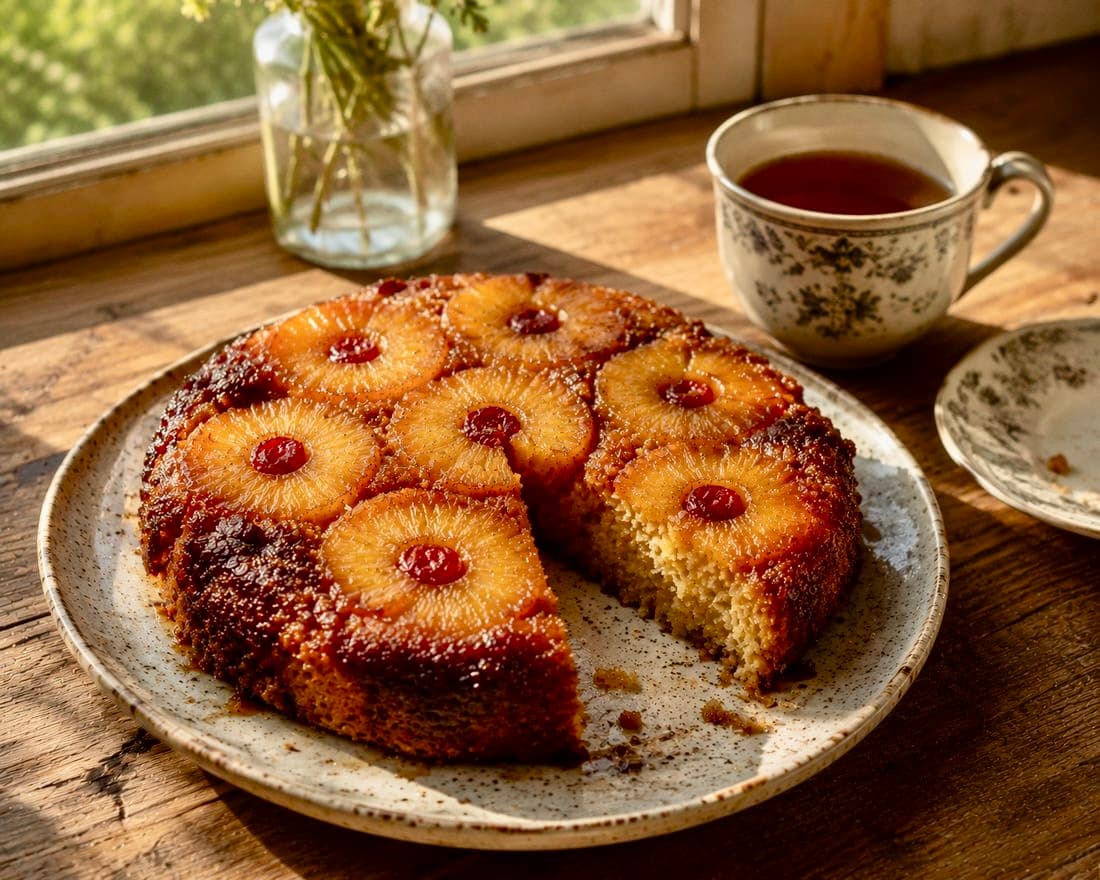
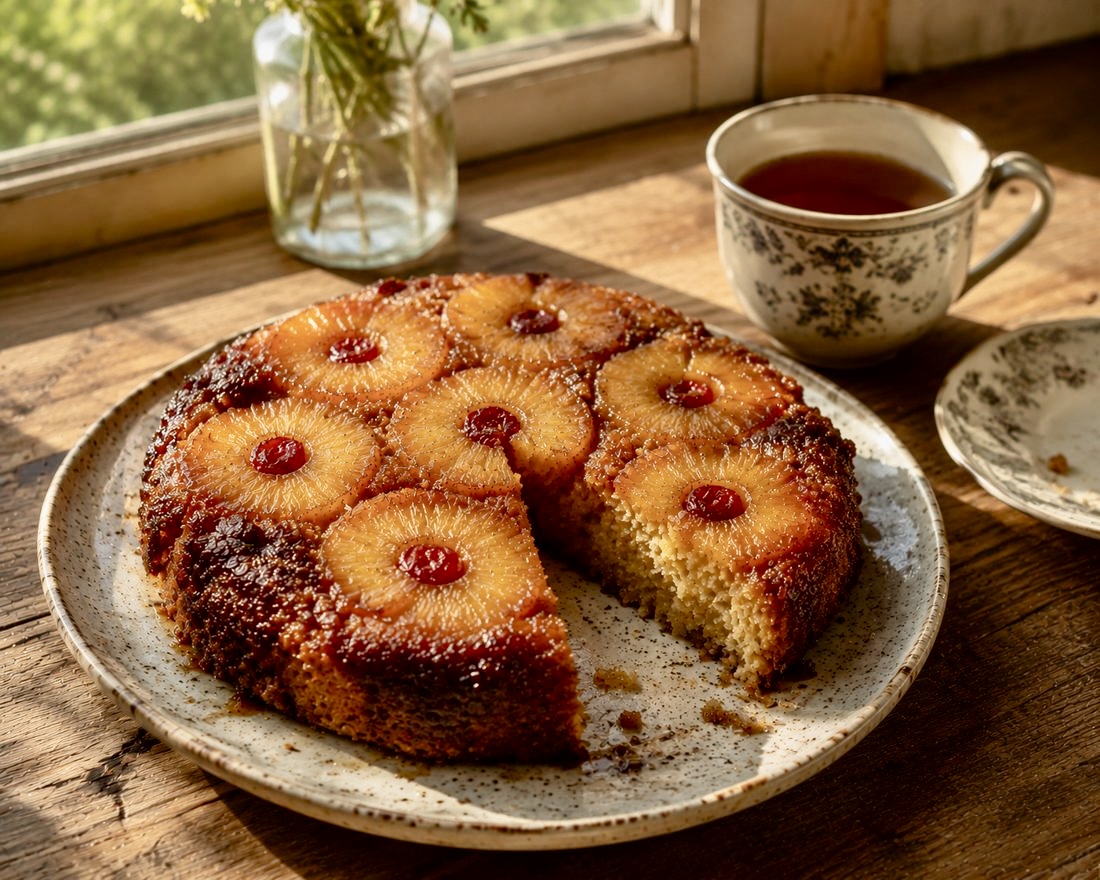
Pineapple upside-down cake has a way of drawing attention the moment it is turned out of the pan. As the cake is inverted, glossy rings of fruit and caramelised sugar are revealed, forming a pattern that feels both decorative and unmistakably homemade. For much of the twentieth century, it was a familiar presence at American gatherings, from church suppers to family tables, valued as much for its cheerful appearance as for its comforting flavour. Today, it is quietly returning, as bakers rediscover recipes that favour simplicity, warmth, and a sense of nostalgia.
Yet the story of pineapple upside-down cake reaches further back than its familiar form suggests. Its origins lie in nineteenth-century skillet cakes and earlier fruit desserts baked directly over heat, shaped by a time when industrial food production was beginning to reshape the American kitchen. By the 1930s, the cake had become so embedded in domestic life that it was sometimes treated as a measure of baking competence—one article from the period suggested that no woman could consider herself a “finished amateur housewife” until she had mastered an upside-down cake. The remark, though reflective of its time, reveals just how central such recipes had become in everyday home baking.
Before the Cake: The Origins of Pineapple
The story begins not with the cake, but with the fruit itself. Pineapple (Ananas comosus) is native to South America, particularly the regions of present-day Brazil and Paraguay, where it was cultivated by Indigenous peoples long before European contact. From there, it spread across Central America and the Caribbean, eventually reaching the island of Guadeloupe, where Christopher Columbus encountered it in 1493.
When pineapples were brought back to Europe, they quickly became one of the most coveted fruits of the 17th and 18th centuries. Their rarity, fragility, and difficulty of cultivation made them powerful symbols of wealth and prestige. Pineapples could not easily be grown in colder climates, and importing them was expensive and unreliable. As a result, only the wealthy elite could afford them.
By the 18th century, wealthy landowners in Britain and Europe began constructing specialised heated glasshouses known as pineries to cultivate pineapples locally. These structures required considerable resources, making the fruit even more closely associated with status and refinement.
The fascination went beyond consumption. Pineapples were often displayed as centrepieces at banquets to impress guests, sometimes not eaten at all. In some cases, they were reportedly rented for social occasions and returned afterwards, allowing multiple households to display the same fruit as a symbol of prosperity. The pineapple became so culturally significant that it appeared widely in decorative arts, from carved gateposts and ceramics to architectural features.
By the 19th century, advances in transportation and agriculture began making pineapple more accessible. However, it was the development of industrial canning that truly transformed the fruit from an elite luxury into an everyday ingredient in American kitchens.
Before Pineapple: The Tradition of Upside-Down Cakes
Although pineapple defines the modern version, the technique itself is much older. Throughout the 18th and 19th centuries, bakers in Europe and America prepared fruit-bottom cakes using apples, cherries, peaches, and other seasonal fruits.
These cakes were often baked in cast iron skillets over open fires or early stoves. Butter and sugar were placed at the base of the pan with fruit arranged on top. As the cake baked, the sugar melted and caramelised, creating a glossy topping once the cake was inverted onto a serving plate.
This method was both practical and resourceful. At a time when elaborate frosting techniques were not widely accessible, upside-down cakes provided a simple way to produce an attractive and flavourful dessert. The caramelised fruit also helped retain moisture, making the cakes especially satisfying.
Early printed references to “upside-down” cakes began appearing in American recipes in the early twentieth century, with one of the first documented uses of the term recorded in 1923 in relation to a prune version of the cake. The concept itself, however, clearly evolved from these earlier skillet traditions.
How Canned Pineapple Transformed the Cake
The defining shift came with the rise of canned pineapple in the early twentieth century.
Fresh pineapple had long been difficult to obtain in most parts of the United States, but this changed dramatically with the growth of pineapple production in Hawaii. In 1901, James Dole founded the Hawaiian Pineapple Company, later known as Dole. Through innovations in canning and large-scale distribution, the company made pineapple widely available and affordable.
By the 1920s, canned pineapple rings packed in syrup had become a fashionable ingredient. They were convenient, visually appealing, and easy to incorporate into recipes. For home bakers, they offered something entirely new — a fruit that was both exotic and accessible.
The circular shape of pineapple rings also made them particularly suited to upside-down cakes, naturally creating a decorative pattern without additional effort.
The 1925 Contest That Defined the Cake
A pivotal moment came in 1925, when the Hawaiian Pineapple Company organised a nationwide recipe contest to promote canned pineapple.
The response was remarkable. More than 60,000 entries were submitted, and over 2,500 of them were variations of pineapple upside-down cake. This overwhelming number demonstrated that the cake was already widely known in American kitchens, even before the contest formalised it.
The competition helped standardise the cake’s structure and cement its popularity across the country. Recipes published after the contest consistently featured pineapple rings arranged at the base, maraschino cherries placed in the centres, brown sugar and butter forming a caramel layer and a soft butter or sponge batter poured over the fruit.
Around the same period, some of the earliest recognisable printed recipes appeared, including a 1924 Seattle charity cookbook entry titled “Pineapple Glacé” and a 1925 Gold Medal Flour advertisement featuring a pineapple upside-down cake recipe similar to modern versions.
The Rise of the Classic Pineapple-and-Cherry Design
By the late 1920s and early 1930s, the cake’s appearance had become standardised. The addition of maraschino cherries was particularly significant. Their bright red colour contrasted sharply with the golden pineapple, creating the distinctive visual pattern that made the cake instantly recognisable.
Maraschino cherries themselves had become widely available in the early twentieth century in their sweetened, preserved form. Affordable and shelf-stable, they complemented the convenience of canned pineapple and contributed to the cake’s decorative appeal.
The result was a dessert that looked festive and elegant while remaining practical for everyday baking.
From Fashionable Dessert to American Classic
During the 1920s, pineapple upside-down cake was considered modern and stylish, reflecting the novelty of canned pineapple. By the 1930s and 1940s, it had become firmly embedded in American domestic life.
It appeared in church and community cookbooks, newspaper columns, and family recipe collections. By the mid-twentieth century, it was a familiar presence at gatherings and celebrations, valued for its balance of simplicity and presentation.
By the 1930s, the cake had become so familiar in American kitchens that it was sometimes treated as a benchmark of home baking. One article from the period suggested that no woman could consider herself a “finished amateur housewife” until she had mastered an upside-down cake — illustrating how central such recipes had become in domestic life at the time.
The cake also reflected broader changes in American food culture. The rise of convenience ingredients and processed foods shaped how people cooked and baked, and pineapple upside-down cake embodied this shift while still feeling homemade and comforting.
Why It Continues to Endure
In the late twentieth century, changing tastes led to a decline in the cake’s popularity as more elaborate desserts came into fashion. Yet in recent years, it has quietly returned as part of a wider appreciation for vintage baking.
Today, many bakers are drawn to recipes that feel authentic and approachable. Pineapple upside-down cake offers exactly that — a dessert with a clear identity, simple preparation, and a connection to earlier generations.
Its caramelised fruit topping, soft crumb, and slightly imperfect finish align closely with modern preferences for baking that feels warm and genuine rather than overly polished.
More than a century after its rise, pineapple upside-down cake remains a reflection of both history and home baking — a cake shaped by changing ingredients, evolving tastes, and the enduring appeal of something simple done well.
If you would like to explore this classic American bake further, you may also enjoy our homemade Classic Pineapple Upside-Down Cake Recipe, featuring caramelised pineapple, buttery sponge, and the traditional cherry topping that has defined this dessert for generations.