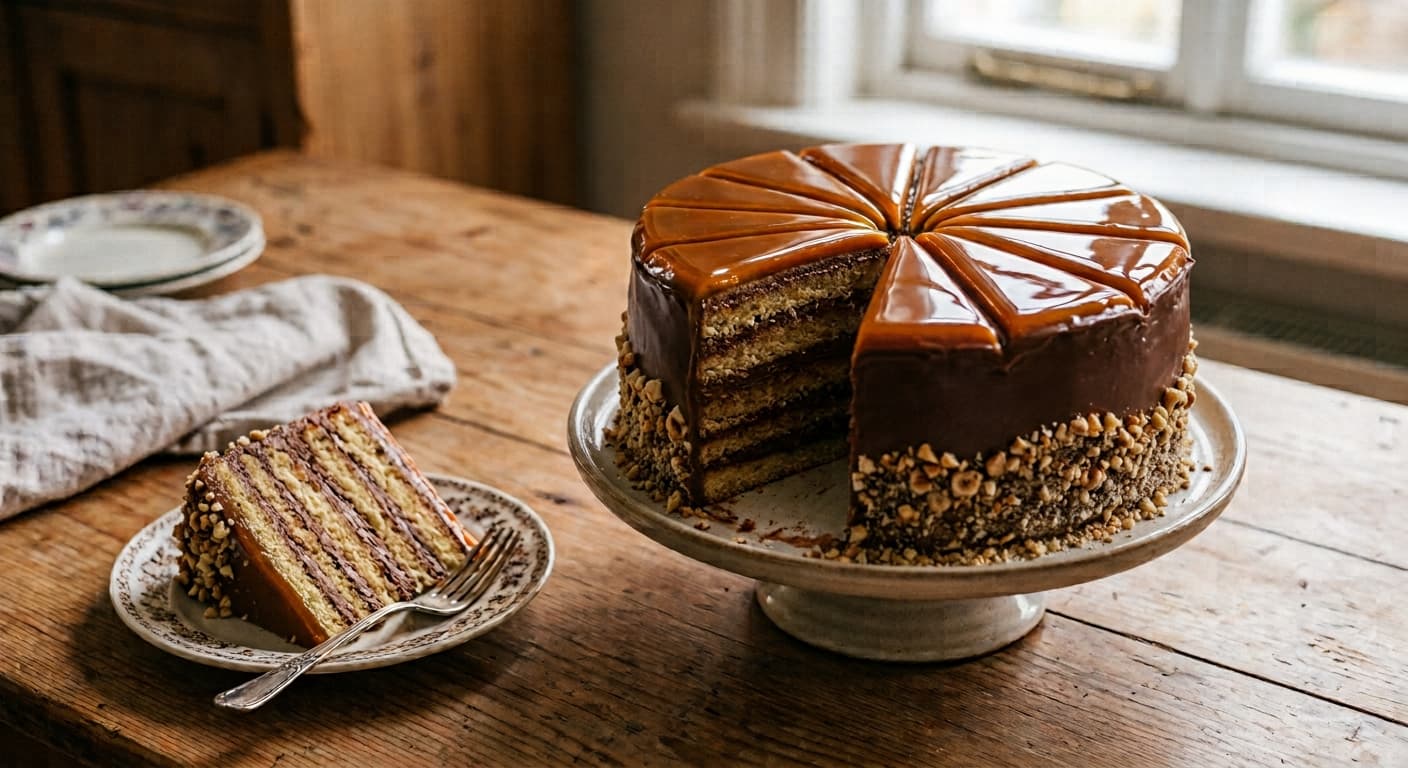
Classic pineapple upside-down cake recipe with caramelised topping, soft butter cake, and simple step-by-step instructions.
There is something quietly nostalgic about a pineapple upside-down cake. With its glossy rings of pineapple, jewel-like cherries, and soft butter cake beneath, it is a bake that feels both simple and celebratory. Popularised in the early 20th century alongside canned pineapple, this cake became a staple of home kitchens — easy to prepare, visually striking, and deeply comforting.
Unlike modern layered cakes, pineapple upside-down cake is baked in a single tin and turned out while still warm, allowing the caramelised topping to settle into a rich, sticky glaze. The result is a tender, buttery sponge infused with the flavours of caramel and fruit.
If you have read our history article on this bake, you will recognise how it reflects a moment when convenience ingredients began shaping home baking. If not, you can exploreThe History and Origins of Pineapple Upside-Down Cake here. Now, let’s bring that tradition into your kitchen.
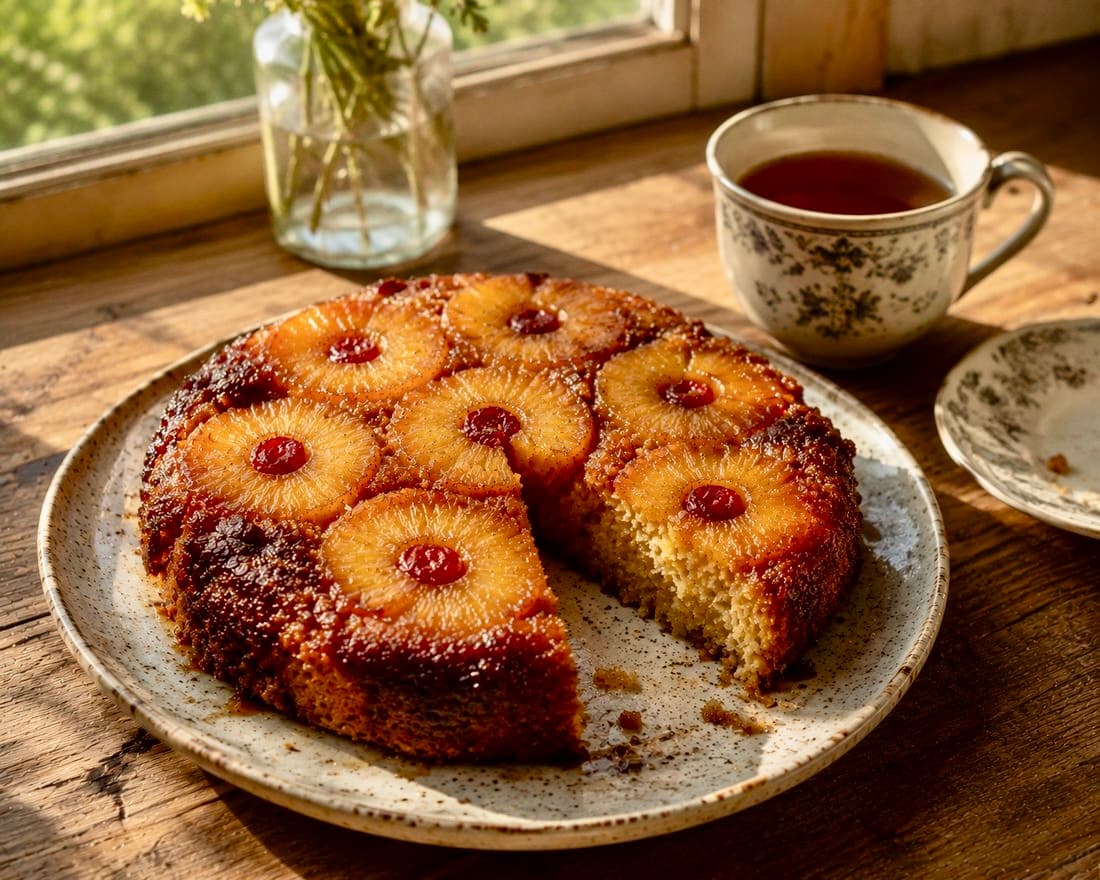
A warm, caramelised pineapple upside-down cake with soft butter sponge and glossy fruit topping, best served slightly warm.
RECOMMENDED TOOLS & TIPS
A good pineapple upside-down cake depends as much on timing and handling as it does on the recipe itself. Because the cake is inverted after baking, every step — from arranging the fruit to turning out the cake — affects the final appearance and texture.
Cake Tin or Skillet
A light-coloured Stainless Steel Round Cake Pan helps the cake bake evenly while preventing the caramel from darkening too quickly. Traditional upside-down cakes were often baked in cast iron skillets directly over heat, which helped create a deeper caramel flavour. A standard 20cm round cake tin is easier for most home bakers, but a well-seasoned cast iron skillet produces a more old-fashioned result with slightly crisp caramel edges.
Although traditional recipes were baked directly in the pan, a circle of parchment at the base can help prevent sticking, especially if the caramel thickens too much during baking. Even with parchment, the cake should still be inverted while warm for the cleanest release.
Pineapple Preparation
Pat Canned Pineapple Slices dry with paper towels before arranging them in the tin. Excess moisture can dilute the caramel and create a wetter surface beneath the fruit. Drying the pineapple slightly helps the topping caramelise more evenly and prevents the cake from becoming soggy around the fruit layer.
Arranging the Fruit
Take a little time arranging the pineapple neatly before adding the batter. Once the cake is inverted, the fruit placement becomes the final decoration. Press the Maraschino Cherries gently into the centre of each ring so they remain stable during baking and turning.
Butter and Sugar for the Caramel
Allow the butter and brown sugar (Turbino Cane Sugar) to melt gently together over low heat, rather than boiling vigorously. The aim is a smooth, fluid caramel base, not a hardened toffee. If cooked too long before baking, the topping may firm up too much and stick to the pan when the cake is inverted.
Stand or Hand Mixer
Creaming the butter and sugar properly creates a lighter sponge that balances the rich caramel topping. Beat until the mixture becomes noticeably paler and fluffier. A dense batter can make the cake heavy beneath the fruit layer. I usually use my KitchenAid Stand Mixer for consistency, although a Hand Mixer works perfectly well for this recipe.
Room Temperature Ingredients
Softened butter and room temperature eggs help the batter emulsify properly, creating a smoother texture. Cold eggs can cause the mixture to curdle slightly, which may lead to a less even crumb. If the batter looks split, continue mixing gently and it should come back together once the flour is added.
Mixing Technique
Once the flour is added, mix only until combined. Overmixing develops gluten and can make the cake slightly tough or rubbery. The batter should look smooth and thick without becoming overly elastic.
Cooling and Inverting the Cake
This is the most important stage of the recipe. Allow the cake to rest in the tin for about 10 minutes after baking — not much longer. If left too long, the caramel begins to firm up and may stick to the pan. Place the serving plate firmly over the tin, then invert confidently in one motion. A hesitant turn is usually where upside-down cakes become right-side disasters.
Serving Tip
Pineapple upside-down cake is especially good slightly warm, when the caramel is still soft and glossy. A spoonful of lightly whipped cream or vanilla ice cream pairs beautifully with the buttery sponge and caramelised fruit.
Preheat the oven to 180°C. Grease a 20cm round cake tin and line the base with parchment.
4
Prepare the topping. Melt the butter and brown sugar together in a saucepan over low heat until smooth. Pour the mixture into the base of the prepared tin and spread evenly.
5
Arrange the pineapple rings over the caramel. Place a cherry in the centre of each ring and in any gaps between them, if you like.
6
Prepare the cake batter. In a mixing bowl, cream the softened butter and caster sugar until pale and fluffy.
7
Add the eggs one at a time, mixing well after each addition. Stir in the vanilla extract.
8
In a separate bowl, combine the flour, baking powder, and salt. Add this to the batter in two additions, alternating with the milk. Mix until just combined and smooth.
9
Gently spread the batter over the arranged pineapple, taking care not to disturb the pattern.
10
Bake in the preheated oven for 40–45 minutes, or until a skewer inserted into the centre comes out clean.
11
Allow the cake to cool in the tin for 10 minutes. Run a knife around the edges, then carefully invert onto a serving plate while still warm.
12
Let the caramel settle before slicing and serving.