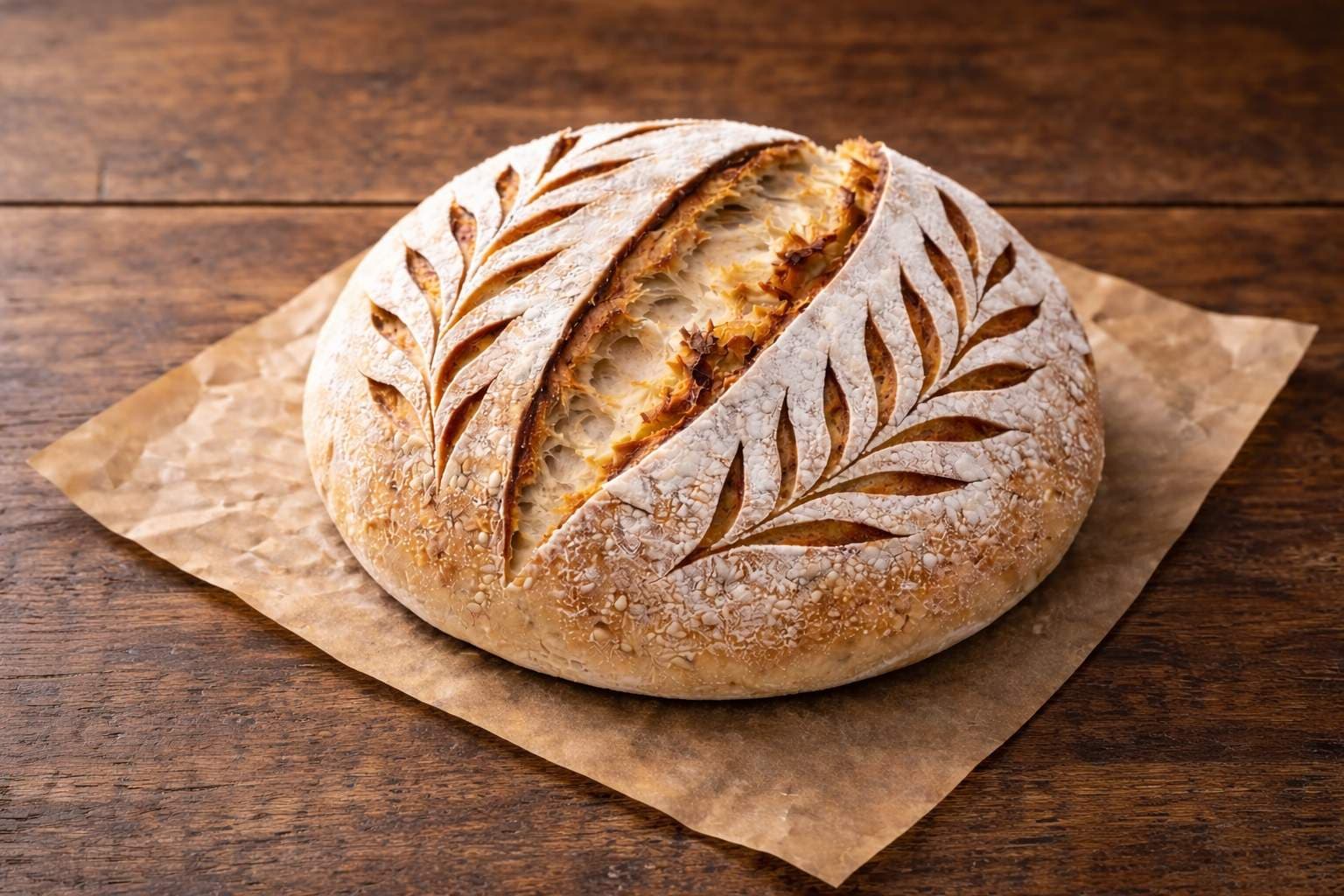
Long before bread became an aesthetic object: photographed, dusted with flour, and admired for its “ear”, the slash across a loaf was a matter of survival.
Scoring was not decoration.
It was control in a world without thermometers, steam injectors, or temperature dials.
To understand those beautiful cuts, we have to step back to medieval Europe and even earlier.
Bread in the Age of Communal Ovens
From ancient Rome through the Middle Ages, most households did not own ovens.
Bread was baked in communal, wood-fired masonry ovens. Families would prepare dough at home, then bring it to a shared oven to bake alongside others’ loaves.
These ovens were fierce and uneven. Heat depended on the type of wood burned, how long the fire had been raging, the thickness of the stone walls and how quickly the oven cooled.
Once the loaves were loaded, there was no adjusting temperature.
When dough entered that intense heat, it expanded violently. Steam and fermentation gases pushed outward. Without a deliberate weak point, the crust would rupture unpredictably.
The slash became that weak point. Scoring allowed the baker to “tell” the loaf where to open. It was engineering before science named it so.
Marking Ownership in Medieval Europe
There was another reason for cuts — identity. When dozens of loaves were baked together in communal ovens, bakers needed a way to recognise their own bread.
Historical records from France and parts of Germany show that families used distinct marks: crosses, lines, initials, or symbolic shapes to identify their loaves.
In some regions, these marks were registered with local authorities or guilds.
The cut was not just functional. It was a signature.
Guilds and the Codification of Technique
By the 12th and 13th centuries, professional baking guilds had formed across Europe.
In France, the boulanger guild regulated bread production in cities. In England, the Assize of Bread (first issued in the 13th century) even controlled bread weight and pricing.
With regulation came standardisation.
Certain breads required certain shapes and slashes: long diagonal cuts for elongated loaves; a central cross for round country breads; and decorative scoring for feast-day loaves.
Scoring became part of professional identity, a mark of competence and pride.
Religious and Symbolic Influences
In Christian Europe, bread held sacred meaning.
The cross slash, still common on rustic boules, was not purely practical. It also reflected religious symbolism. Cutting a cross into the dough before baking was seen as invoking blessing and protection.
In some rural traditions, the first loaf of a new harvest season was marked distinctly as an offering or thanksgiving.
Even today, you can see remnants of these practices in traditional holiday breads across Europe.
From Hearth to Steam Ovens
The Industrial Revolution changed baking dramatically.
Commercial steam-injected ovens in the 19th century allowed bakers to control crust development more precisely. Steam delayed crust formation, giving loaves better oven spring.
Yet scoring did not disappear.
Instead, it became even more refined. With controlled steam, the slash opened cleanly and dramatically, creating the lifted crust edge now known as the “ear.”
The aesthetic dimension of scoring grew stronger.
By the late 20th century, as artisan baking revived in response to industrial bread production, scoring became a visible symbol of craftsmanship.
The Tool: Evolution of the Blade
Originally, scoring was done with small household knives, Straight razors or Sharp agricultural blades.
The modern bread lame, a razor blade mounted on a handle, emerged in professional bakeries to allow swift, shallow cuts without dragging the dough.
The curved blade design, popularised in the 20th century, enhanced the dramatic lift of crust during oven spring.
It is a small tool, but it represents centuries of adaptation.
The Science Behind Tradition
Today, we understand what medieval bakers learned by experience. Scoring weakens surface tension in the gluten network.
When heat hits the loaf, yeast accelerates briefly, gases expand, Water converts to steam and the outer layer begins to set.
The slash directs expansion upward instead of outward. What once felt like craft intuition is now explained by thermodynamics and gluten structure.
But the instinct came first.
From Necessity to Art
Today, bread scoring has entered a new phase.
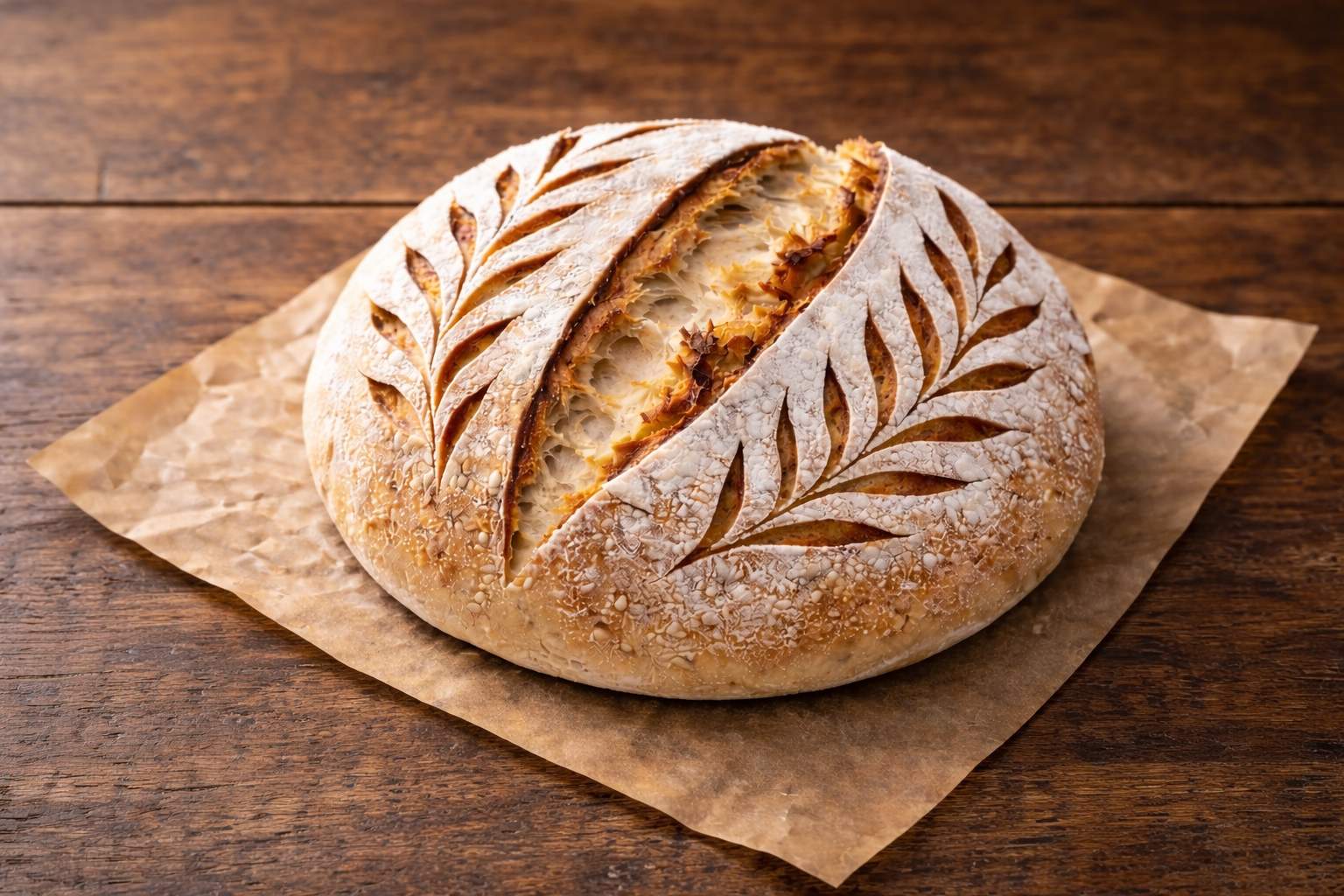
Modern sourdough bakers create intricate designs: leaves, geometric motifs, wheat sheaves, all transforming loaves into edible canvases. Yet beneath the artistry lies the same fundamental purpose that guided medieval households: control, function, and clarity of structure.
Even the most decorative loaf relies on well-placed primary cuts to manage oven spring. A beautifully scored loaf is not merely decorative. It is well-engineered.
Why Bread Scoring Still Matters
When we score a loaf today, we participate in a practice that spans centuries. We are not simply decorating dough. We are directing heat, shaping expansion, and marking identity.
In a small but meaningful way, we echo the bakers who once stood beside communal ovens, waiting for their marked loaves to emerge from the fire. Bread scoring reminds us that even the simplest gestures in baking carry history within them.
Ready to bake and score your own rustic loaf at home? Try this Easy Bread Loaf for Scoring recipe with a classic cross for balanced oven spring.
If you enjoy exploring the deeper roots of baking, you may also like my articles on The Evolution of Baking Tools, The Evolution of Baking Techniques: A Historical Perspective, and The Evolution of the Rolling Pin, which explore how equipment and methods evolved alongside bread itself.
Bread Scoring: Common Questions
Why do bakers score bread?
Bakers score bread to guide oven spring, prevent uncontrolled bursting, and shape the final structure of the loaf.
How deep should bread scoring be?
Most cuts are around 0.5–1 cm deep, depending on hydration and loaf style.
Was bread scoring originally decorative?
No. In medieval Europe, scoring helped families identify their loaves in communal ovens.