
The Rise of Mini Cakes: Why Smaller Desserts Are Taking Over
Not long ago, cake meant scale.
A centrepiece. A celebration. Something sliced, shared, and often left unfinished.
Today, that idea is quietly changing.
Rather than being a passing trend, the rise of mini desserts reflects a broader shift in how people experience food. Industry publications such as Pastry Arts Magazine and So Good Magazine have noted the growing popularity of small-format desserts, while platforms like Eater and Fine Dining Lovers point to the influence of tasting menus and multi-course dining experiences.
But this is not just about size.
It reflects a deeper change in how we eat, how we celebrate, and what we now expect from dessert.
A Shift Not in What We Bake — But How We Consume
One of the most significant changes in baking today is not flavour, but format.
Mini desserts are part of a broader movement towards portion-based indulgence; a way of enjoying treats without committing to a full slice or a large cake. What was once a niche, seen in the refined world of petit fours and afternoon tea, has expanded into a dominant category of modern desserts.
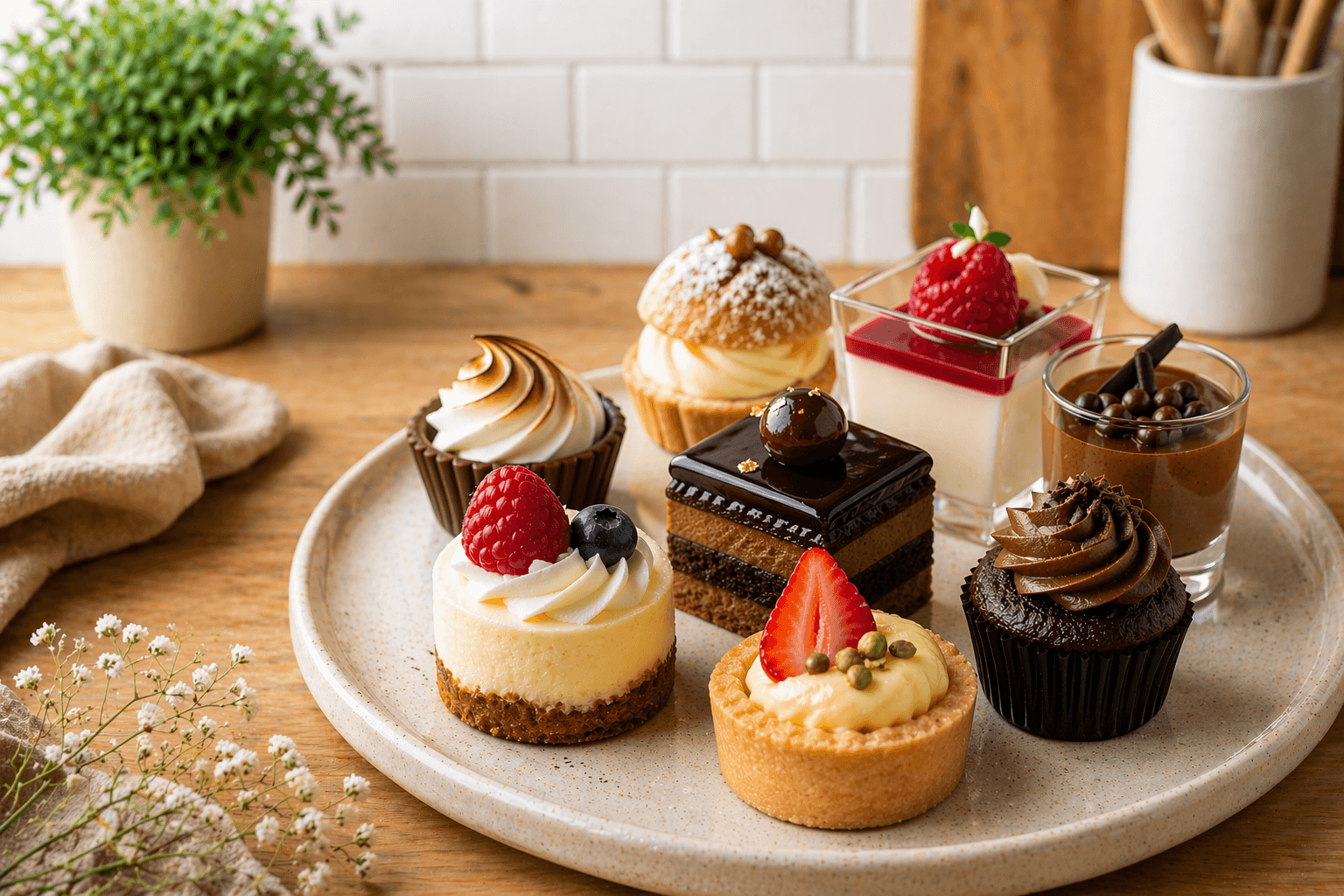
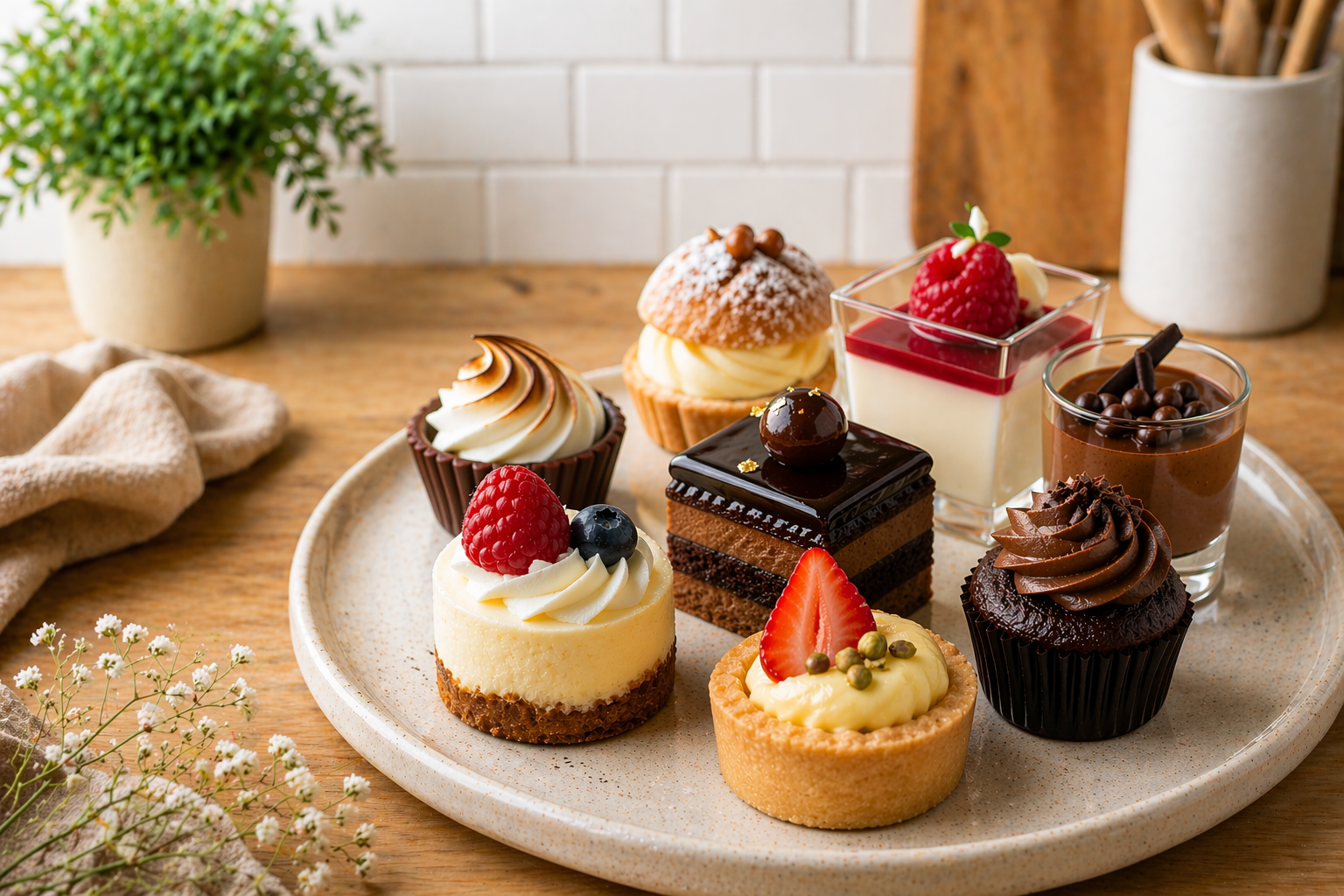
Mini layer cakes, bite-sized cheesecakes, dessert cups, and small entremets are now common in bakeries and cafés. Even traditional bakes are being reimagined in smaller forms, from brownies cut into neat squares to individually portioned tarts and loaves.
The question is no longer whether cakes are still popular.
They are.
The question is why we now prefer them smaller.
The Psychology of “Just Enough”
At the heart of the mini cake trend is a simple but powerful idea: indulgence without excess.
Consumers are increasingly drawn to desserts that feel satisfying but controlled. Mini cakes offer exactly that balance — enough to enjoy, without the heaviness or guilt often associated with larger portions.
This shift allows cake to move beyond special occasions and into everyday life. Instead of waiting for a celebration, people can enjoy dessert more frequently, in smaller, more intentional ways.
Cake becomes less about occasion, and more about experience.
Variety Over Commitment
A full cake demands a decision.
Chocolate or vanilla. Lemon or strawberry.
A mini cake removes that pressure entirely.
One of the most compelling reasons behind the rise of mini desserts is the ability to enjoy multiple flavours in one sitting. Instead of choosing one dessert, people can experience several — each offering its own texture, flavour, and composition.
This has reshaped how desserts are served.
Tasting platters, mixed dessert boxes, and curated selections of small cakes allow for exploration rather than commitment. The experience becomes more dynamic, more social, and more memorable.
This shift has been widely observed across the pastry industry, where tasting-style dessert formats are becoming increasingly common, as noted in Pastry Arts Magazine.
The Social Media Effect
Mini cakes are not just made to be eaten.
They are made to be seen.
Their small size allows for precision — clean layers, delicate finishes, and refined decoration. Each piece becomes a miniature version of a full cake, often more visually striking than its larger counterpart.
As noted in Pastry Arts Magazine, the visual appeal of bite-sized desserts has played a significant role in their popularity, particularly in an era where presentation and shareability matter as much as taste.
Affordable Luxury in a Changing Economy
There is also a practical reason behind the rise of mini cakes.
Smaller portions allow bakeries to use premium ingredients while keeping prices more accessible. For consumers, this means enjoying high-quality desserts without committing to the cost, or excess, of a full cake.
In many ways, mini desserts represent a form of everyday luxury — something refined, but still within reach.
Built for Modern Lifestyles
The way we eat has changed.
More people live in smaller households. More food is consumed on the go. More desserts are enjoyed individually rather than shared.
Mini cakes fit naturally into this shift.
They are easy to portion, convenient to store, and ideal for takeaway, gifting, or events. Their flexibility has made them increasingly common across bakeries and café menus.
The Joy and Craft Behind Mini Desserts
For all the discussion around trends and behaviour, there is also a simpler reason why mini desserts endure.
They are, quite simply, joyful.
I have always loved mini desserts. There is something deeply satisfying about being able to taste a wide variety of flavours and textures in one sitting. Instead of committing to a single slice, you can experience several — each offering its own balance and character.
At the same time, what often goes unnoticed is the level of effort behind each small piece.
Mini desserts are not easier to make. In many ways, they are more demanding. Every component — whether it is sponge, mousse, glaze, or filling — must be executed with precision, often at a smaller scale where imperfections are far more visible.
I experienced this first-hand while working in Singapore as a pastry intern at Cé La Vi at Marina Bay Sands. It was an unforgettable period, preparing desserts of all kinds, both large and small.
What stood out most was how frequently mini desserts were used — not as an afterthought, but as a deliberate part of the menu. For tasting platters, events, and seasonal occasions such as Christmas buffets, we would prepare a wide range of bite-sized desserts. Each one had to work individually, but also contribute to a larger, cohesive experience.
That idea of variety stayed with me.
It was reinforced again during pastry school, where one of our final projects centred entirely around mini desserts. We worked in teams to conceptualise a theme, design each dessert, test and refine recipes, gather feedback, and ultimately present them to invited guests.
Each piece was evaluated on its own, but also as part of a complete collection.
It was not just about baking.
It was about creating an experience.
From Professional Kitchen to Personal Creations
That experience eventually carried into my own baking.
When I ran a small baking business, I created a series of Black Forest-inspired mini entremets — each one layered with chocolate mousse, a Griottine cherry, and a hazelnut feuilletine crisp base, finished with a smooth chocolate glaze.
They were small, but each one contained everything you would expect from a full-sized cake.
What made them special was not just the flavour, but the format. Each piece felt complete on its own, while serving them together created a sense of variety and abundance that a single cake could not achieve.
Bringing Mini Desserts Into the Home Kitchen
While mini entremets can be technically demanding, the idea behind mini desserts is accessible to any home baker. For those looking to create a mini dessert spread at home, there are many approachable options.
Mini macarons bring colour and texture. Sablé viennois offer a delicate, buttery contrast. Lemon squares or a mini lemon drizzle cake introduce brightness and balance.
Even a simplified Black Forest-style dessert can be adapted into smaller portions, focusing on chocolate, cream, and cherry.
The goal is not perfection. It is variety, contrast, and enjoyment.
If you would like to try creating your own version at home, you can explore my Black Forest Mini Entremet Recipe, where each component is broken down step by step.
Not a New Idea — But a Reinvention
Mini cakes may feel modern, but the concept is not new. The French petit four, developed in the 19th century, already embraced the idea of refined, bite-sized desserts served in small portions.
What has changed is not the concept, but the context. What was once reserved for formal settings has become part of everyday baking.
Mini desserts are no longer exclusive. They are accessible, adaptable, and widely embraced.
A Smaller Cake — Or a Bigger Change?
At first glance, mini cakes may seem like a simple trend. But they reflect something more significant.
A shift away from excess. A move towards variety and flexibility. A new way of experiencing something that was once reserved for special occasions.
The cake may be smaller. But the change behind it is much larger. And it is only just beginning.
Affiliate Disclosure: This article may contain affiliate links. When you purchase through these links, we may earn a commission at no additional cost to you. This helps support our content creation.