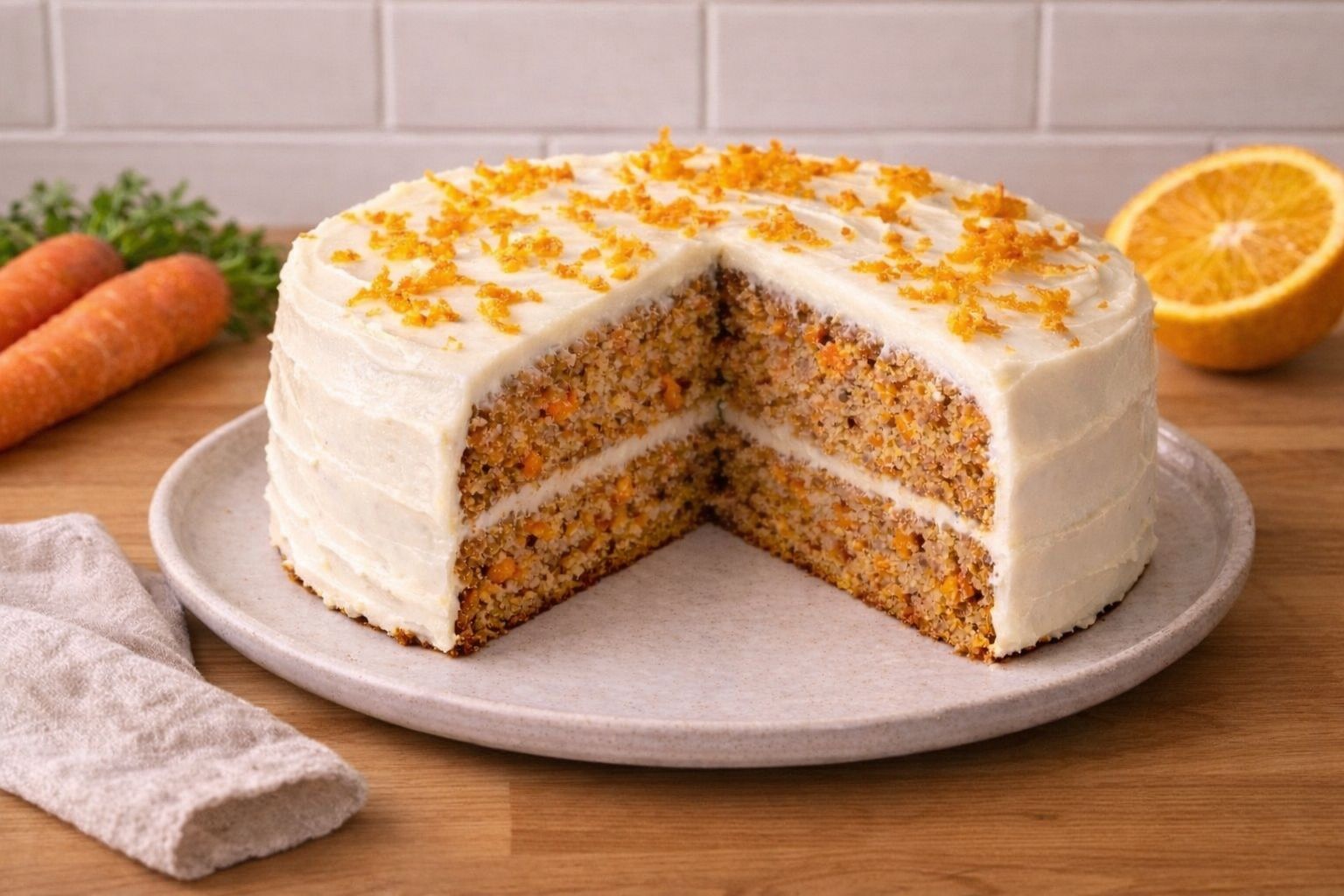

Carrot Cake with Cream Cheese Frosting
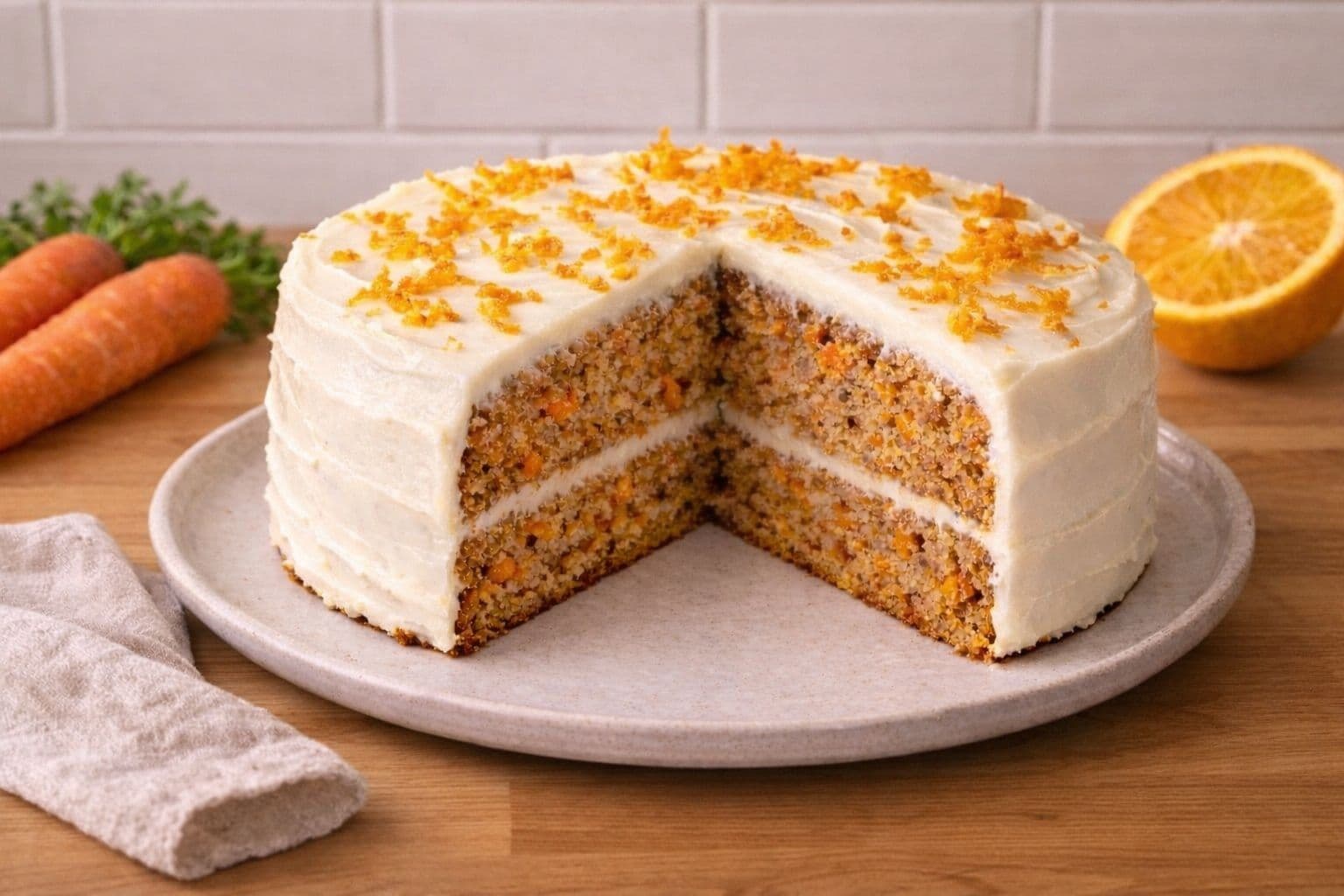
Classic carrot cake with cream cheese frosting and orange zest. A moist, warmly spiced cake inspired by centuries-old carrot desserts.
Carrot cake is one of those bakes that surprises people with how deeply comforting it is. Despite its humble ingredient, grated carrots, the cake is wonderfully moist, warmly spiced, and rich with flavour.
Historically, carrot desserts date back centuries. In medieval Europe, when sugar was expensive and difficult to obtain, cooks often relied on naturally sweet vegetables such as carrots to sweeten puddings and cakes. Over time, those early carrot puddings gradually evolved into the carrot cake we recognise today.
If you’re curious about the story behind this bake, you can explore its background in The Surprising History of Carrot Cake.

Modern carrot cake became especially popular in the mid-20th century, particularly in Britain and North America, where cream cheese frosting became the now-classic pairing.
This recipe produces a soft, tender crumb packed with grated carrots and finished with a smooth cream cheese frosting and a sprinkle of fresh orange zest for brightness.
Recommended Tools
Carrot cake is a very forgiving bake, but a few simple tools can make the process easier and help achieve the best texture. Below are the tools I used when preparing this recipe.
— A Box Grater is essential. Grate the fresh carrots on the fine side of a box grater so they incorporate smoothly into the batter and keep the cake moist. Finely grated carrots blend smoothly into the batter and release their natural sweetness while baking. Pre-shredded carrots from the supermarket tend to be dry and coarse, so grating them fresh makes a noticeable difference to the moisture and flavour of the cake.
— A pair of 8 × 2-inch Aluminium Round Cake Pans is ideal for baking carrot cake layers evenly. These versatile pans are commonly used for sponge cakes, and having two allows both layers to bake simultaneously. Many carrot cake recipes prefer 8-inch pans because they produce slightly thicker layers, which helps the cake stay moist and creates a taller, more impressive layered cake. Once cooled, each cake can be sliced into two or three thinner layers to create a tall, elegant layered cake.
— Lining the base of the cake pan with Unbleached Parchment Paper helps the cake release cleanly after baking and prevents it from sticking. Lightly greasing the pan before placing the parchment circle helps it stay flat and ensures the cake layers come out neatly.
— For the cream cheese frosting, use an Electric Hand Mixer to beat the butter and cream cheese until smooth and fluffy. This creates a lighter frosting that spreads easily over the cake layers. The butter and cream cheese should be softened rather than overly warm so the frosting remains smooth and stable. For best results, beat the butter first until creamy, then add the cream cheese and mix just until combined before adding the icing sugar. This tip is useful because it helps prevent runny frosting and produces a better texture.
— An Offset Spatula is one of the easiest tools for spreading frosting neatly across a cake. The angled blade allows you to smooth the frosting without disturbing the crumb, making it easier to create clean sides and an even surface. For best results, hold the spatula lightly and rotate the cake as you spread the frosting to achieve a smoother finish. A small offset spatula is useful for detailed work, while a longer one helps frost the top of the cake more evenly.
— If you enjoy decorating cakes, a Cake Turntable can make frosting much easier by allowing you to rotate the cake smoothly while working. This helps you spread the frosting more evenly and achieve cleaner sides and edges. For best results, keep your spatula steady and gently turn the cake stand as you smooth the frosting across the cake.
Storage & Serving Tips
Carrot cake keeps very well because of its moist crumb and cream cheese frosting. Once frosted, store the cake covered in the refrigerator for up to 3–4 days. The flavours often deepen overnight, so the cake may taste even better the next day.
Before serving, allow the cake to sit at room temperature for about 20–30 minutes. This softens the frosting slightly and allows the flavours of the cake and spices to develop fully.
If you would like to store the cake longer, individual slices can be wrapped tightly and frozen for up to 2 months. Thaw the slices overnight in the refrigerator, then bring them to room temperature before serving.
Tip: If storing the cake in the refrigerator, cover it well to prevent the cream cheese frosting from absorbing other food odours.
Carrot Cake with Cream Cheese Frosting
Ingredients
- FOR THE CAKE:
- 260 g plain flour
- 200 g brown sugar
- 100 g caster sugar
- 1 tsp baking powder
- 1 tsp baking soda
- 1 tsp ground nutmeg
- 1½ tsp ground cinnamon
- ½ tsp salt
- 240 ml vegetable oil
- 4 large eggs
- 1 tsp vanilla extract
- 260 g finely grated carrots
- Zest of 1 orange
- 80 g chopped walnuts (optional)
- FOR CREAM CHEESE FROSTING:
- 200 g cream cheese, softened
- 120 g slightly salted butter, softened
- 250 g icing sugar
- 1 tsp vanilla extract
- FOR THE TOPPING:
- Zest of 1 orange
Instructions
- 1
Prepare the workstation.
- 2
Gather all the equipment and ingredients.
- 3
Preheat the oven to 180°C. Grease and line two 20 cm (8 inch) round cake tins.
- 4
In a large bowl, mix together the flour, brown sugar, caster sugar, baking powder, baking soda, cinnamon, nutmeg and salt.
- 5
In another bowl, whisk together the oil, eggs, zest and vanilla extract until smooth.
- 6
Pour the wet ingredients into the dry ingredients and mix until just combined.
- 7
Fold in the grated carrots and chopped walnuts (if using).
- 8
Divide the batter evenly between the prepared cake tins.
- 9
Bake for 25 to 30 minutes until a skewer inserted into the centre comes out clean.
- 10
Allow the cakes to cool in the tins for 10 minutes, then turn them out onto a wire rack to cool completely. I recommend cling wrapping the cake layers in the fridge overnight as it will make it easier to frost the cake.
- 11
- 12
Prepare the Frosting: The next day, place the butter and icing sugar in a mixing bowl and beat until smooth and creamy. Add half of the cream cheese and beat until incorporated. Add the remaining cream cheese gradually and mix until smooth. Stir in the vanilla extract and beat briefly until the frosting becomes light and spreadable. Avoid overbeating, as cream cheese frosting can become too soft.
- 13
For a smoother finish when frosting the cake, apply a thin crumb coat first to seal in any loose crumbs. Chill the cake for about 15–20 minutes, then spread the remaining frosting evenly over the cake for a clean, even finish.
- 14
Assemble the Cake: Place one cake layer on a serving plate. Spread a generous layer of cream cheese frosting over the top. Place the second cake layer on top and frost the top and sides of the cake.
- 15
Baker’s Tip: Carrot cake stays wonderfully moist and often tastes even better the next day. Once frosted, store the cake in the refrigerator and bring it to room temperature before serving for the best flavour and texture.
- 16
Finish with a sprinkle of fresh orange zest.
- 17
Slice and serve.

Featured in our shop: Philips Hand Mixer (450W, 5 Speeds plus Turbo, White)