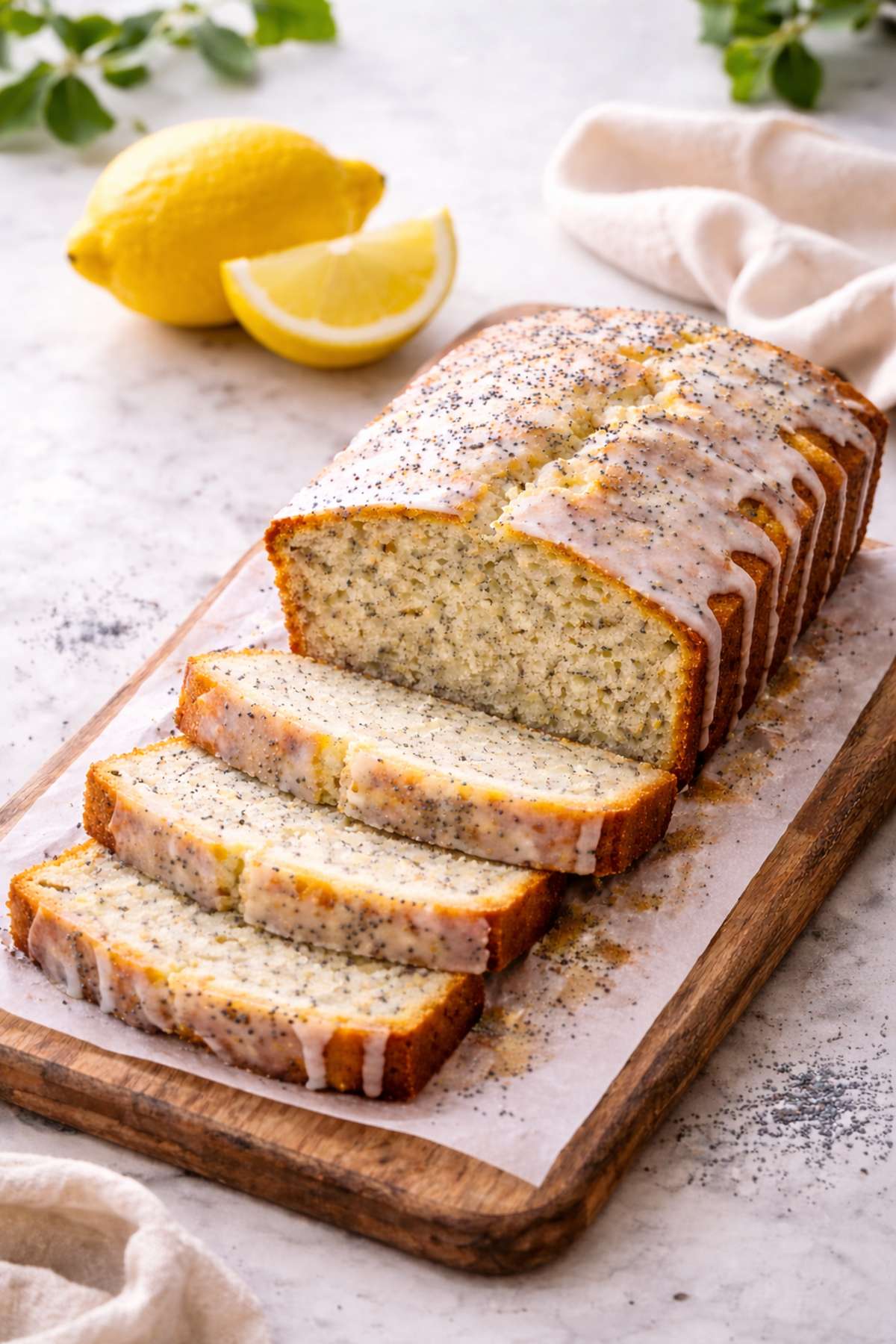
A moist lemon poppy seed cake with a light glaze, bright citrus flavour, and delicate texture, based on an easy recipe for home baking.
Lemon and poppy seeds have been paired in European baking for centuries — long before this cake became a modern favourite. This recipe brings that classic combination into a soft, fragrant loaf you can make at home.
The brightness of lemon lifts the richness of butter and eggs, while poppy seeds add a subtle texture that makes each slice more interesting.
This recipe below is designed to be simple, reliable, and suitable for everyday baking, whether as a loaf or baked in a Bundt pan for a more decorative finish.
Recommended Tools & Tips
Using the right tools and fresh ingredients helps bring out the best texture and flavour in this lemon poppy seed cake, ensuring a soft crumb and even bake.
Use fresh, good-quality Poppy Seeds for the best flavour and texture. Their mild, nutty taste can fade over time, so it is worth ensuring they are fresh rather than stale. When evenly distributed through the batter, they provide a gentle crunch that contrasts with the soft crumb of the cake, while subtly carrying and enhancing the lemon flavour throughout.
I use my KitchenAid Stand Mixer when creaming the butter and sugar, as it helps achieve a light, airy batter that forms the foundation of the cake. It has lasted for years and handles everything from sponge cakes to brioche dough without strain, making it a reliable tool in my kitchen. While I rely on a stand mixer for most tasks, an Electric Hand Whisk remains useful for smaller batches and quick mixing jobs.
For consistent results, a Digital Food Scale helps ensure accurate measurements, which is essential for achieving the correct texture.
A Nordic Ware Heritage Bundt Pan creates a beautifully defined shape and promotes even baking, giving the cake a more polished finish. Its fluted design adds clean definition and elegant structure, allowing the cake itself to stand as the centrepiece. For best results, grease the pan thoroughly and dust it lightly with flour, ensuring every curve is coated so the cake releases cleanly without any pieces sticking.
If preferred, a standard loaf pan works just as well, producing a more classic, everyday presentation. I use a 9×4 inch Pullman Loaf Pan for this bake. Its fitted lid also allows me to bake square-sided sandwich loaves, making it an especially versatile addition to my kitchen.
When preparing the lemon, I use this Microplane to zest it finely, taking care to avoid the bitter white pith beneath the skin. This ensures a clean, bright citrus flavour throughout the cake.
A flexible Silicone Spatula is useful for folding in the lemon zest and final ingredients, helping to keep the batter light and evenly combined. To fold, cut down through the centre of the batter, sweep across the bottom, and lift the mixture up and over. Turn the bowl slightly and repeat this motion, working gently until the ingredients are just incorporated. Avoid stirring or beating, as this will deflate the batter and result in a denser cake.
Finally, a Cooling Rack is essential for allowing the cake to cool evenly after baking. Once removed from the pan, placing the cake on a rack allows air to circulate around it, preventing condensation from forming underneath. This helps maintain a light texture and keeps the crust from becoming soggy, especially important before adding the glaze.
Storage and Serving Tips
This lemon poppy seed cake keeps well at room temperature for up to 2 days when stored in an airtight container. If your kitchen is warm, store it in the refrigerator to maintain freshness, but allow the cake to come to room temperature before serving to restore its soft texture and full flavour.
For longer storage, the cake can be frozen for up to 2 months. For best results, freeze the cake without the glaze, wrap the cake tightly in cling film to seal in moisture, then cover with foil to protect it during freezing. Thaw overnight in the refrigerator, then bring to room temperature and add a fresh glaze before serving for a clean finish.
If the cake has already been glazed, it can still be frozen, although the glaze may become slightly sticky or lose its smooth appearance after thawing. The flavour will remain unchanged.
To serve, slice with a sharp knife for clean cuts. This cake pairs well with tea or coffee, and its bright citrus flavour makes it especially suitable as a light afternoon bake or simple dessert.
You may also be interested in exploring other lemon-based bakes, from the refined elegance of tarte au citron to the everyday comfort of lemon drizzle cake and and the bright, tangy simplicity of lemon bars, alongside the classic structure of lemon meringue pie, each offering a different perspective on how lemon has shaped baking across regions and traditions.
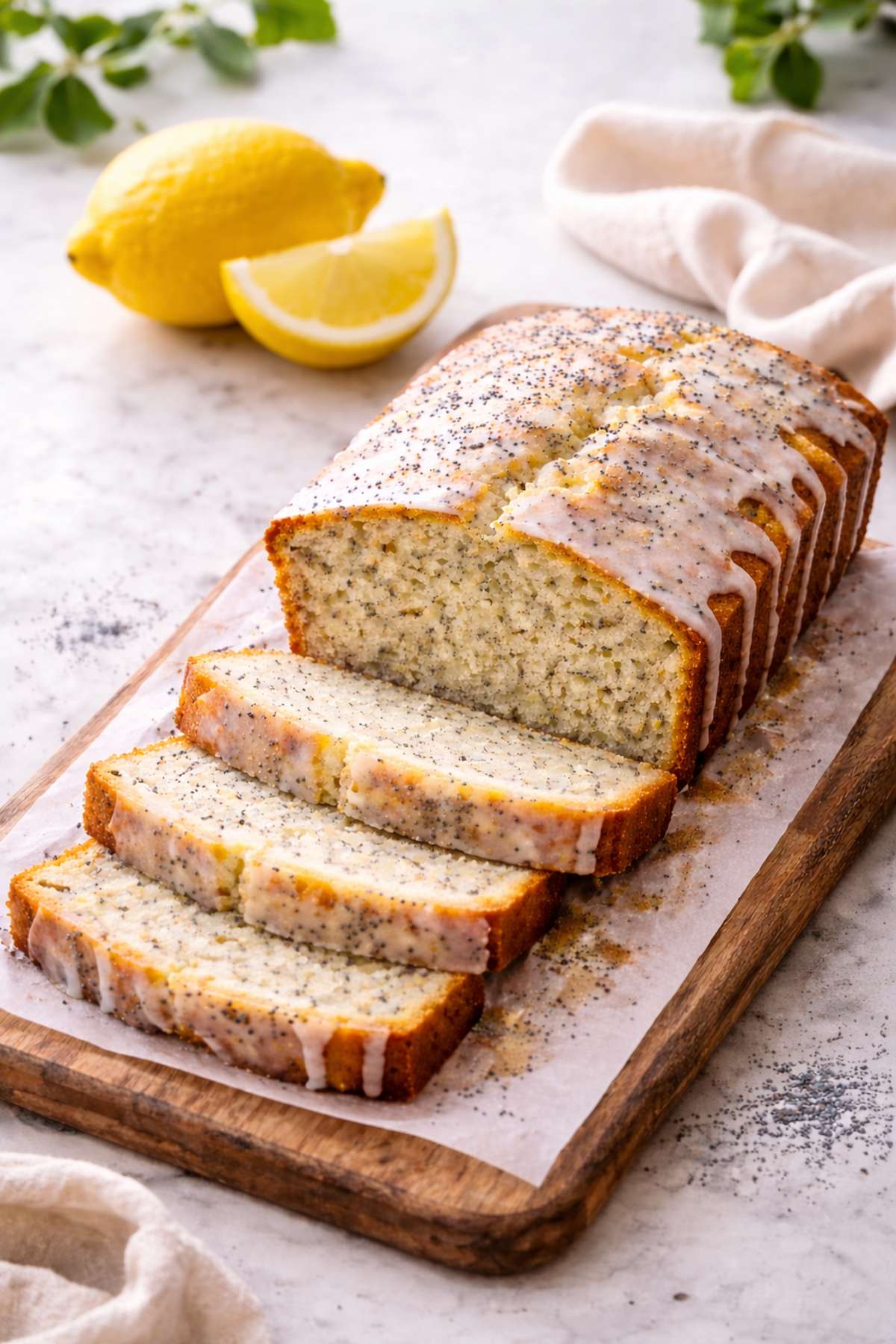
A homemade lemon poppy seed loaf cake with a light glaze, sliced to reveal a soft, moist crumb.
Preheat the oven to 170°C (fan) or 180°C (conventional). Grease and flour a Bundt pan or line a loaf tin with parchment paper.
4
Using a stand or hand mixer with a paddle attachment, cream the butter and sugar until pale and fluffy.
5
Add the eggs one at a time, beating well after each addition.
6
In a separate bowl, whisk together the flour, baking powder, salt, and poppy seeds.
7
Using a spatula or a stand or hand mixer on low speed, add the dry ingredients in two additions, alternating with the milk and lemon juice. Mix gently after each addition until just combined. Be careful not to overmix.
8
Fold in the lemon zest.
9
Pour the batter into the prepared pan and level the surface.
10
Bake for 40–50 minutes, or until a skewer inserted into the centre comes out clean.
11
Allow the cake to cool in the pan for 10–15 minutes before turning out onto a rack to cool completely.
12
Prepare the glaze by mixing icing sugar with lemon juice until smooth and pourable.
13
Drizzle the glaze over the cooled cake and allow it to set before slicing.