Around the World in 80 Bakes: Stop #75 — Bebinca
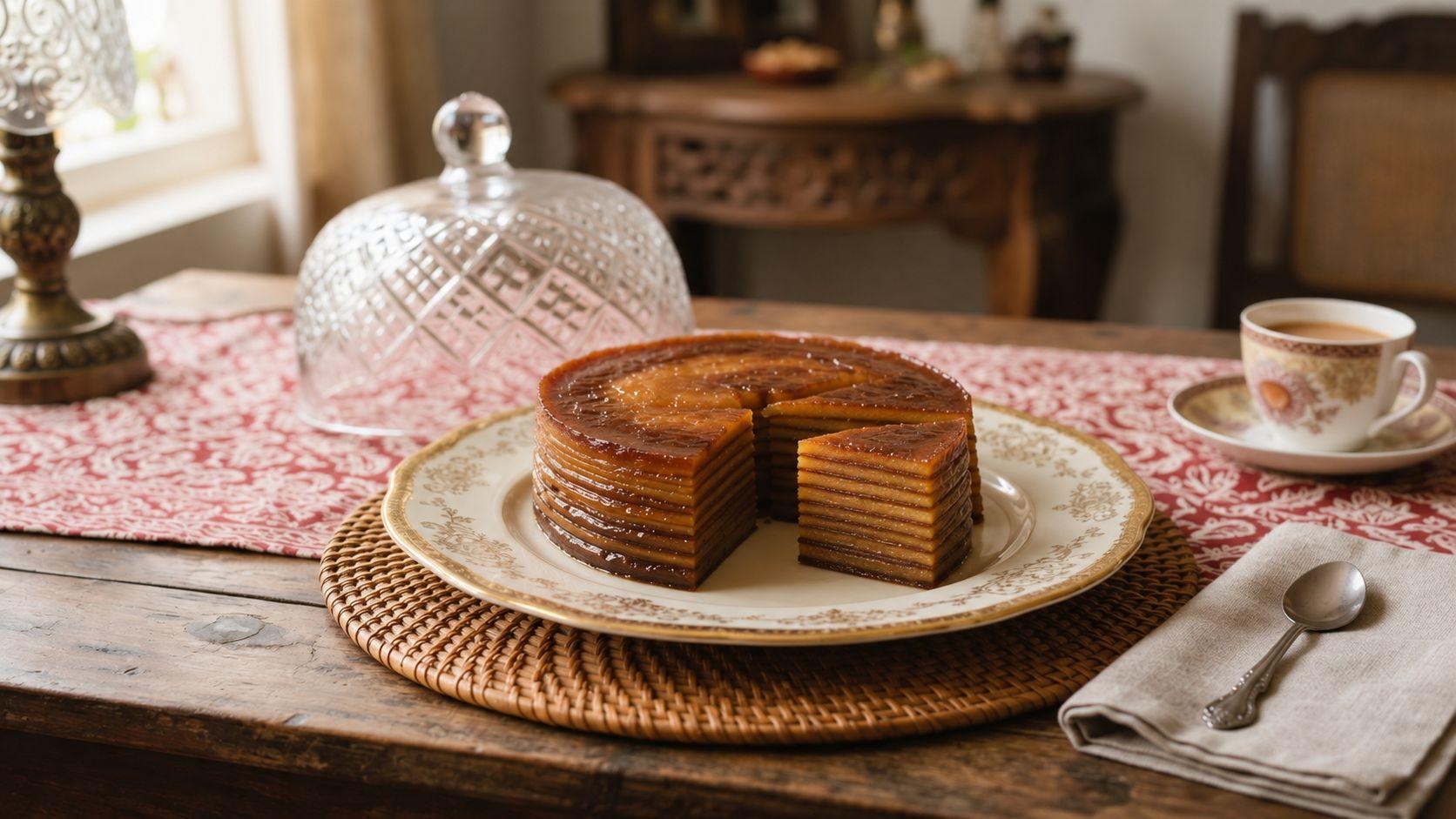
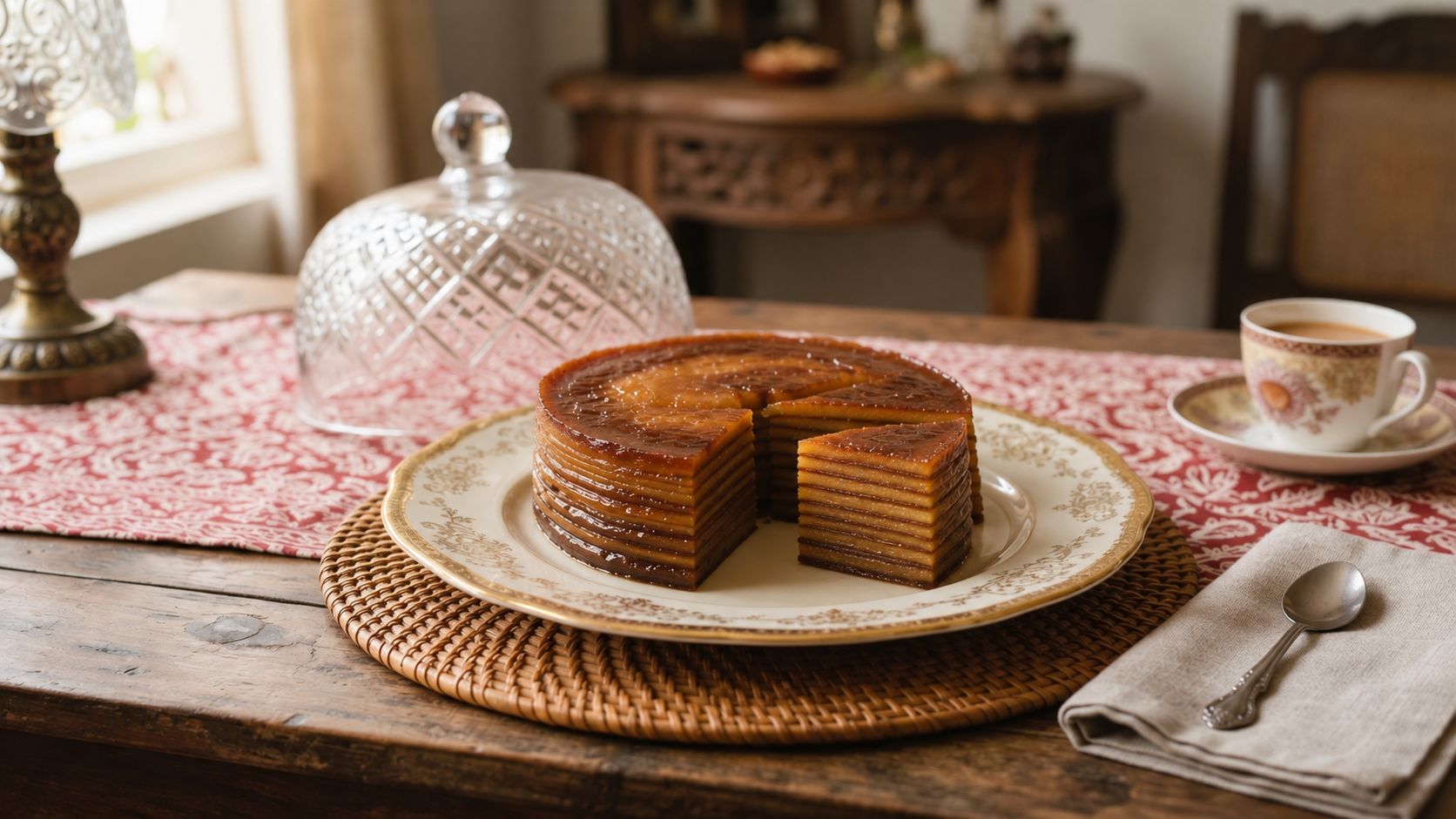
With its alternating shades of gold and caramel brown, Bebinca is one of India’s most distinctive traditional desserts. Made with coconut milk, egg yolks, sugar, flour and ghee, this rich Goan speciality has a dense, tender texture with a delicate fragrance of nutmeg. Unlike conventional layer cakes, its layers are baked successively in the same vessel.
Affectionately known as the Queen of Goan Desserts, Bebinca is particularly associated with Christmas and other celebrations within Goa’s Catholic communities. Its origins offer a fascinating insight into the culinary exchanges between India, Portugal and Southeast Asia.
The Indo-Portuguese Culinary Heritage of Goa
Located on the western coast of India, Goa became a Portuguese colonial settlement in 1510. Portuguese rule lasted until 1961, leaving a significant imprint on the region’s architecture, religious traditions and cuisine.
As an important centre of maritime trade, Goa maintained connections with Europe, Africa and other parts of Asia. Ingredients, recipes and culinary techniques travelled along these trading routes, contributing to the development of a distinctive Indo-Portuguese cuisine.
Portuguese confectionery was particularly noted for its generous use of egg yolks and sugar, a practice closely associated with convent kitchens. In Goa, European confectionery techniques encountered an established culinary tradition in which coconut and other tropical ingredients featured prominently.
Bebinca exemplifies this meeting of culinary traditions. The use of egg yolks recalls Portuguese confectionery, while coconut milk and ghee give the dessert its distinctive regional character. Its precise origins, however, remain a subject of debate.
The Legend of Sister Bebiana
One of the most enduring accounts of Bebinca’s origins centres on the 17th-century Convent of Santa Mónica in Old Goa.
According to oral tradition, a nun named Sister Bebiana created the dessert using surplus egg yolks. The nuns reportedly used egg whites to starch their religious garments, leaving the yolks available for making sweets.
In an account recorded by Goan historian Fátima da Silva Gracias in her book Cozinha de Goa: History and Tradition of Goan Food, Sister Bebiana prepared a seven-layered pudding representing the seven hills of Lisbon and Old Goa. Coconut milk was said to have been used in place of a more expensive almond-based ingredient.
When the pudding was presented to nearby missionary priests, they reportedly suggested increasing its size to twelve layers. The dessert was subsequently named in honour of its creator.
The Museum of Christian Art, housed within the historic convent, continues to recount the story as part of Goa’s oral culinary heritage.
Although there is no conclusive documentary evidence establishing Sister Bebiana as the inventor of Bebinca, the legend remains closely associated with the dessert and its perceived origins in Portuguese convent confectionery.
Possible Connections with Southeast Asia
An alternative explanation for Bebinca’s origins points towards Southeast Asia.
In her 2004 essay The Journey of Goan Food, Gracias identifies Bebinca as an adaptation of sweets known as bebingka in Malaysia, the Philippines and Indonesia. This interpretation places the dessert within the broader movement of culinary traditions across Asian maritime trading routes.
Similar names survive today in Filipino bibingka and Malaysian bingka. Although these desserts differ considerably in ingredients, texture and preparation, their names suggest an interesting avenue for exploring historical culinary exchanges.
Goan Bebinca also bears a striking resemblance to Indonesian kue lapis legit, widely enjoyed in Singapore as kueh lapis. Both are prepared by cooking successive layers of batter, producing distinctive horizontal bands.
Their compositions, however, differ. Bebinca is characterised by coconut milk and ghee, while kue lapis legit is typically enriched with generous quantities of butter and eggs.
In his article Love Is a Many-Layered Thing, published by Singapore’s National Library Board, food writer Christopher Tan explores the development of kue lapis legit and its relationship with spekkoek, a layered cake associated with the Dutch colonial period in Indonesia.
While these similarities are intriguing, a direct historical relationship between Bebinca and kue lapis legit has not been conclusively established. The exact route by which Bebinca acquired its name and distinctive preparation method remains uncertain.
The Art of Layered Baking
Bebinca typically consists of between seven and sixteen layers, although the number varies according to individual recipes and family traditions.
Traditionally, the dessert was prepared in an earthenware vessel using charcoal or firewood. Heat from below cooked the base, while hot embers placed above the vessel supplied the overhead heat needed to brown subsequent layers.
A thin portion of batter is poured into the vessel and cooked until set and golden brown. The surface is then brushed with ghee before another portion of batter is added. This process is repeated until all the batter has been used.
Some recipes incorporate caramel into a portion of the batter to create a more pronounced contrast between alternating layers.
Unlike sponge cakes, Bebinca does not depend on raising agents or whipped egg whites to achieve its characteristic texture. Its relatively dense consistency comes from the combination of egg yolks, coconut milk and flour.
Modern ovens equipped with an overhead grill have largely simplified the traditional cooking arrangement. Nevertheless, preparing Bebinca remains a time-consuming process that requires careful judgement. Each layer must be sufficiently cooked to support the next without becoming excessively dry or burnt.
The ability to produce thin, evenly cooked layers is a hallmark of a skilfully prepared Bebinca.
A Christmas Tradition in Goa
For Goa’s Catholic communities, the weeks preceding Christmas are traditionally a time for preparing an assortment of festive sweets collectively known as kuswar.
These include kulkuls, small curled pieces of fried dough; neureos, sweet pastries often filled with coconut; bolinhas, coconut biscuits; and dodol, a confection commonly made with coconut milk and jaggery.
Bebinca is among the more elaborate sweets prepared for the occasion. The considerable time involved in making it reflects the importance placed on homemade festive delicacies.
On Christmas Day, assortments of sweets are traditionally exchanged among relatives, friends and neighbours. This custom extends the celebration beyond individual households and reinforces a sense of community.
Bebinca is also served at Easter, weddings and other special occasions, making it an integral part of Goan celebratory cuisine throughout the year.
Recognition of Goa’s Culinary Heritage
On 1 August 2023, Goan Bebinca received Geographical Indication (GI) registration in India. The application, submitted by the All Goa Baker’s & Confectioners Association in April 2021, formally recognised the dessert’s geographical association with Goa.
This recognition highlights the cultural value of a regional speciality whose preparation requires knowledge and skills passed down through generations.
Today, Bebinca is widely available in Goan bakeries, confectionery shops and restaurants. It is commonly served in small slices, either on its own or accompanied by vanilla ice cream.
Whether its origins lie in a Portuguese convent, Southeast Asian culinary traditions or a combination of influences, Bebinca has acquired a distinctly Goan identity. Its enduring presence at family celebrations reflects the importance of preserving regional baking traditions in an increasingly commercialised culinary world.
References
Gracias, Fátima da Silva (2004). The Journey of Goan Food. Seminar, Issue 543.
Government of Goa, Department of Information and Publicity. History of Goa.
Museum of Christian Art. Culinary Experiences with MoCA: The Legend of Bebinca.
Mint Lounge (2021). Bebinca, a Goan Sweet, Might Get a GI Tag.
Tan, Christopher (2021). Love Is a Many-Layered Thing. BiblioAsia, National Library Board, Singapore.
Fernandes, Sharon (2014). Kusvad at Mãe's. The Indian Express.
The Indian Express (2023). Bebinca: Layered History of the Queen of Desserts.
O Heraldo (2022). Traditional Goan Christmas Sweet Makers Showcase Sweet-Making Recipes at Christmas Sweet Bazaar.
Onmanorama (2023). Bebinca: A Christmas-Special Portuguese Delicacy.
Intellectual Property India (2023). Goan Bebinca – Geographical Indication Registration, Application No. 746.