Around the World in 80 Bakes: Stop #66 — Butterkuchen
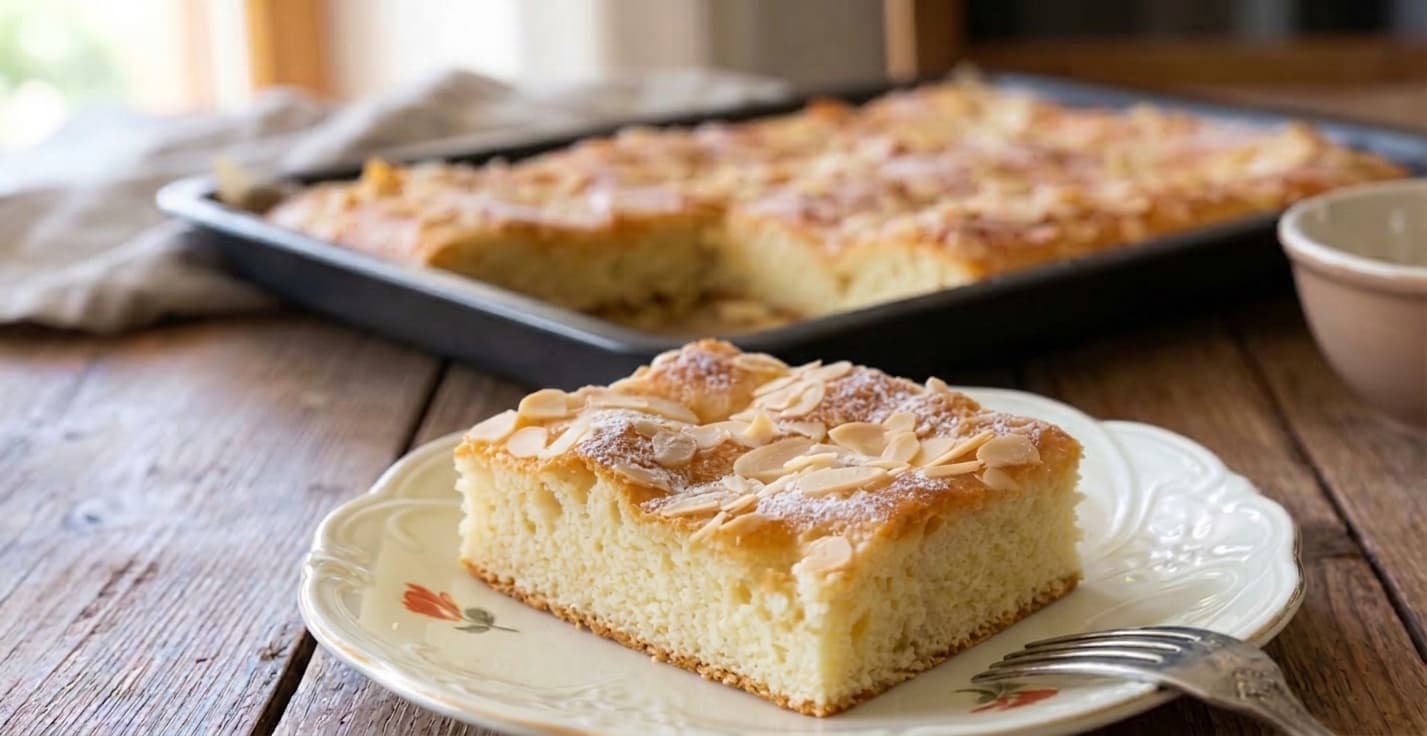
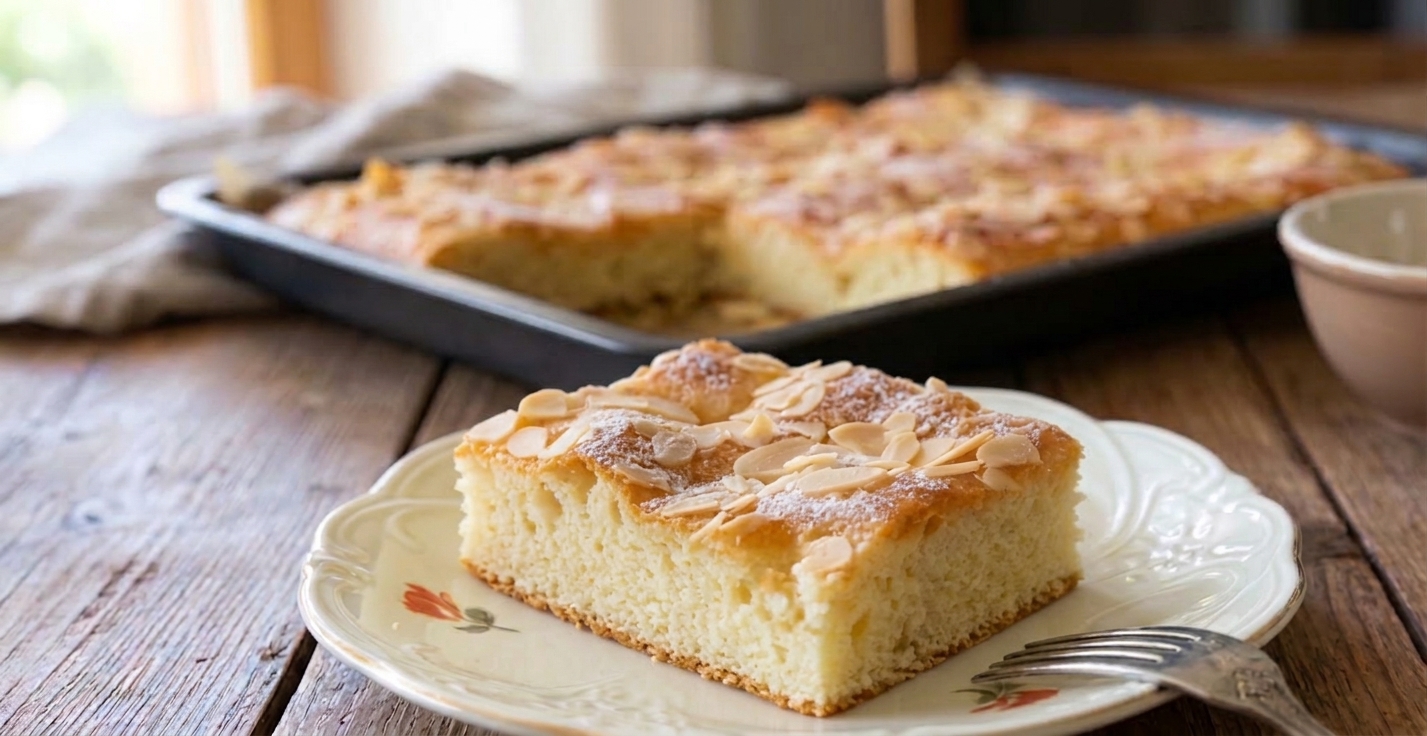
Butterkuchen is one of Germany’s simplest traditional cakes. A soft yeast dough is spread across a baking tray, dotted with butter and generously covered with sugar. Almonds, cinnamon or both may be added, but the cake’s appeal lies largely in its simplicity.
In parts of northern and western Germany, this modest bake has accompanied families through christenings, weddings, funerals and other important occasions. It is therefore sometimes known as Freud-und-Leid-Kuchen — “cake of joy and sorrow”.
What Is Butterkuchen?
The name Butterkuchen translates simply as “butter cake”. Unlike many cakes bearing that name, however, traditional Butterkuchen is made from a soft yeast dough rather than a conventional cake batter.
The dough is spread across a rectangular baking tray and small indentations are pressed into its surface. Pieces of butter are placed in the hollows before the cake is generously sprinkled with sugar and, frequently, flaked or chopped almonds.
As it bakes, the butter melts into the dough, creating the cake’s characteristic dimpled surface. The sugar forms a delicate crust while the interior remains soft and bread-like.
Butterkuchen is also known as Zuckerkuchen, meaning “sugar cake”. In Mecklenburg and Westphalia, it may be called Platenkuchen. Regional variations include cinnamon, cardamom, nuts and streusel, while some versions have fruit or cream fillings.
The Uncertain Origins of Butterkuchen
Like many traditional household bakes, Butterkuchen cannot be traced to a particular inventor or place of origin.
The earliest written use of the name cited by the historical Deutsches Wörterbuch, begun by Jacob and Wilhelm Grimm, dates to 1693. The reference does not reveal what the cake contained or whether it resembled the version baked today, but it shows that the name was in use by the late 17th century.
A recognisable recipe appeared in the third edition of the Braunschweigisches Kochbuch, published in 1812. Under the heading “A Good Butter Cake”, it followed the same basic method still used today, although its dough was flavoured with grated lemon zest, cinnamon and mace.
The recipe confirms that a recognisable form of Butterkuchen had been recorded in Brunswick, in present-day Lower Saxony, by the early 19th century.
A Northern German Favourite
Although its exact birthplace is unknown, Butterkuchen became particularly associated with northern Germany. It remains a familiar part of the region’s Kaffeetafel: a table laid with coffee and cakes for family members and guests.
In Lower Saxony, Butterkuchen was traditionally prepared for important family occasions. Baked on a large tray and easily divided into small portions, it was a practical way to serve many people.
Why Is It Called “Funeral Cake”?
Butterkuchen was served at christenings and weddings as well as after funerals. This gave rise to the regional names Beerdigungskuchen, meaning “funeral cake”, and Freud-und-Leid-Kuchen, or “cake of joy and sorrow”.
The custom has not disappeared entirely. A 2019 account of funeral gatherings in Bremen described Butterkuchen as a simple cake served on both joyful and sorrowful occasions. After a funeral, sharing food gave mourners an opportunity to sit together, exchange memories and find comfort in company.
Its association with funerals therefore came from its practical role at communal gatherings, rather than from any sombre symbolism attached to the cake itself.
When Butterkuchen Must Contain Butter
In modern Germany, Butterkuchen is more than a casual name. Under the guidelines of the German Food Code, commercially produced Butterkuchen must contain at least 30 kilograms of butter or the equivalent amount of butterfat for every 100 kilograms of milled cereal products used.
German food authorities also state that no other fat should be used in a product sold as Butterkuchen. If other fats are included, the name may be considered misleading under food-labelling regulations.
It is an unusually precise modern rule for such a simple cake, but a fitting one: without butter, Butterkuchen would lose both its defining flavour and its name.
A Cake for Every Occasion
Butterkuchen may lack the dramatic appearance of Black Forest gâteau or the intricate rings of Baumkuchen, but its importance lies elsewhere. Its history is not the story of a famous inventor or a grand pastry kitchen, but of an unassuming cake that became part of German family and community life.
Discover how to make this traditional German bake with our Butterkuchen Recipe.
References
Deutsches Wörterbuch by Jacob and Wilhelm Grimm, “Butterkuchen”.
J. D. Knopf and J. Chr. Förster, Braunschweigisches Kochbuch für angehende Köche, Köchinnen und Haushälterinnen, third edition, 1812.
Duden, “Butterkuchen”.
Lower Saxony State Office for Consumer Protection and Food Safety, “Feine Backwaren mit Butter – Alles Butter oder nicht?”
Lower Saxony Regional Specialities Database, “Butterkuchen, Zuckerkuchen”.