
Around the World in 80 Bakes: Stop #71 — Croquembouche
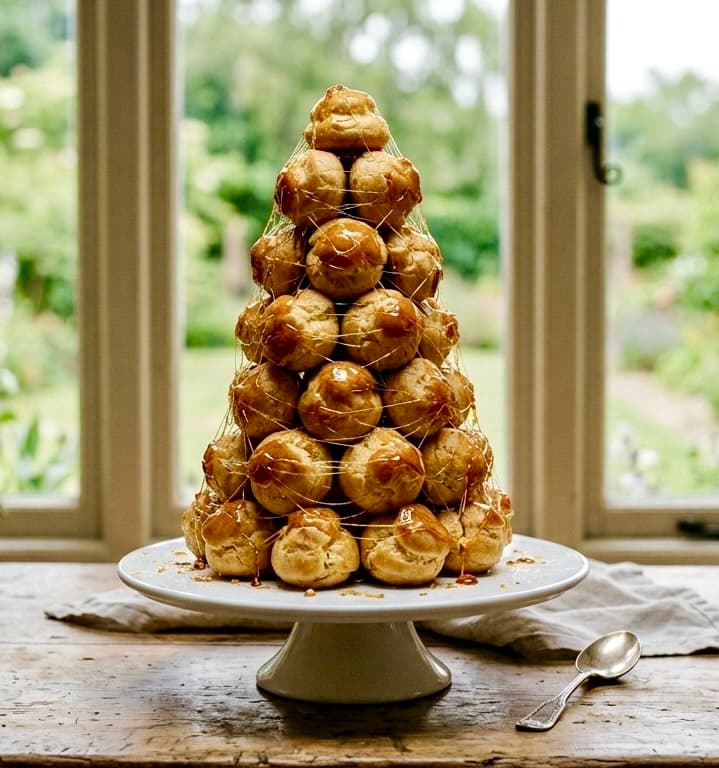
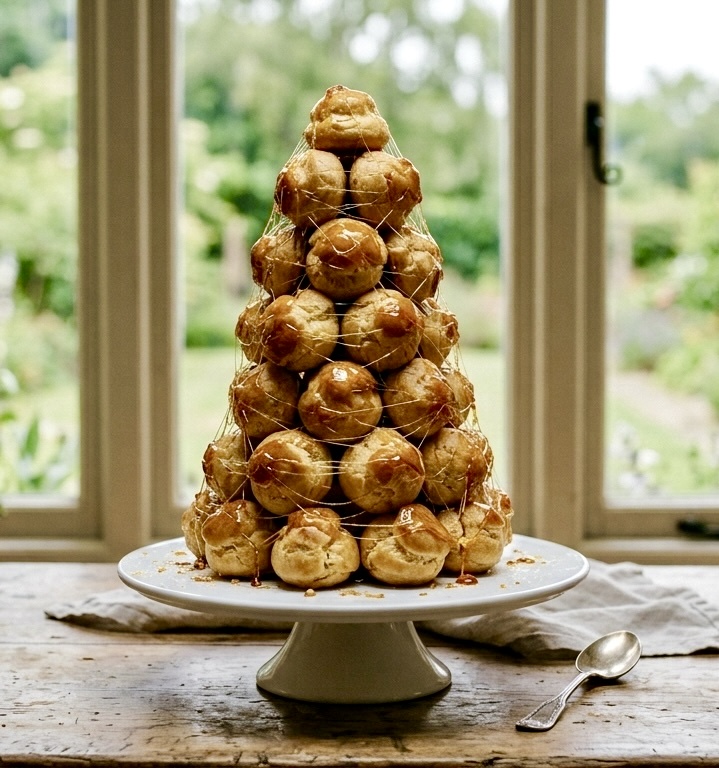
A tower of golden choux buns, crisp caramel and delicate spun sugar, croquembouche is a French celebration dessert traditionally served at weddings and baptisms. Cream-filled pastries are joined into a cone, creating a centrepiece that combines brittle sugar, light pastry and smooth cream.
Today, croquembouche usually takes the form of a cone of cream-filled choux buns, held together with caramel. Its history, however, reaches back to a broader tradition of elaborate sugar-bound confections. Earlier versions could include fruit, chestnuts or pieces of cake, reflecting a taste for desserts designed to impress as much as to satisfy.
The modern form and its broader origins
The name derives from the French expression croque-en-bouche, meaning something that crunches in the mouth. That bite comes from hardened sugar, which could glaze orange segments, chestnuts or small pastries before they were arranged into elaborate displays.
The appeal lay in transforming separate morsels into a splendid construction. Height, detail and careful assembly demonstrated both the maker’s skill and the host’s generosity at a formal meal. In this sense, croquembouche emerged from the same culture of architectural pastry as the broader French pièce montée: an elaborate assembled centrepiece designed for visual impact.
The modern choux tower therefore represents the narrowing of an older category. What began as a flexible style of sugar-glazed and assembled confection gradually became associated with the cone of cream-filled choux buns familiar today.
This broader background provides the context for the earliest written references, which reveal how flexible the name once was.
Viard, Carême and the early written record
André Viard mentioned croquembouche in Le Cuisinier impérial, published in 1806. This is the earliest known printed reference commonly associated with the name. It confirms that the term was in culinary use by that date, but does not establish who created the dessert, identify the first preparation or define a standard recipe.
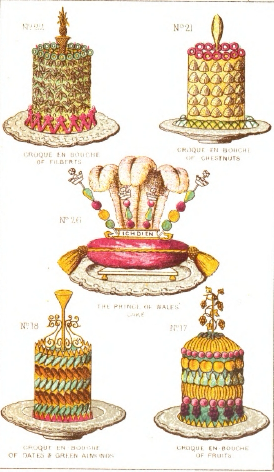
Marie-Antoine Carême’s Le Pâtissier royal parisien, published in 1815, provides a fuller record. Carême included several preparations under the croquembouche name, using orange segments, génoise, puff pastry, caramel-glazed chestnuts and green walnuts. These recipes show that the term still covered a range of decorative confections rather than one fixed formula.
Together, Viard’s reference and Carême’s recipes place croquembouche within a broader world of sugar-bound and assembled pastries. They suggest that early croquembouche described a type or style of decorative preparation, not yet the standardised cone of choux buns familiar today. Carême recorded and elaborated this tradition, but the name was already in use before his 1815 book, and no surviving source identifies a single creator.
\
The gradual rise of the choux tower
The familiar form uses small choux buns filled with crème pâtissière, joined with caramel and stacked into a cone. Caramel supplies both the crunch and the structural bond, turning individual pastries into a dramatic tower.
The surviving evidence does not show a single moment when this form was invented. Instead, it suggests a gradual narrowing of a broader category of assembled confections. Viard’s 1806 mention establishes an early written occurrence of the name, while Carême’s 1815 recipes and illustrations document its flexibility and the development of architectural pastry displays toward the recognisable choux tower.
Neither source proves that its author originated the dessert. The modern form is better understood as the result of adaptation: a varied tradition of glazed fruit, nuts and pastries gradually became associated with choux, cream and the conical structure that now defines croquembouche.
That transformation depended not only on appearance but also on a practical technique: caramel had to make the tower stable while preserving its delicate texture.
Held together with caramel
Caramel gives croquembouche its characteristic crunch and holds the tower together. Each bun is attached with a little caramel, which hardens as it cools. The rows become progressively smaller until they reach the top of the cone.
Spun sugar adds a delicate finishing touch, while nougatine — nuts set in caramelised sugar — may form the base or decorative details. These elements turn small cream-filled pastries into an elaborate centrepiece.
A celebration worth sharing
Traditionally served at French weddings and baptisms, croquembouche brings a sense of occasion to the table. Its golden tower provides an impressive centrepiece, assembled from individual pastries that guests can enjoy together.
As the tower is taken apart, the elaborate construction gives way to a simple pleasure: crisp caramel, light choux and smooth cream. That combination of spectacle and enjoyment helps explain its lasting place at the celebration table.