
Parfait is one of those desserts that arrives with a name already full of promise.
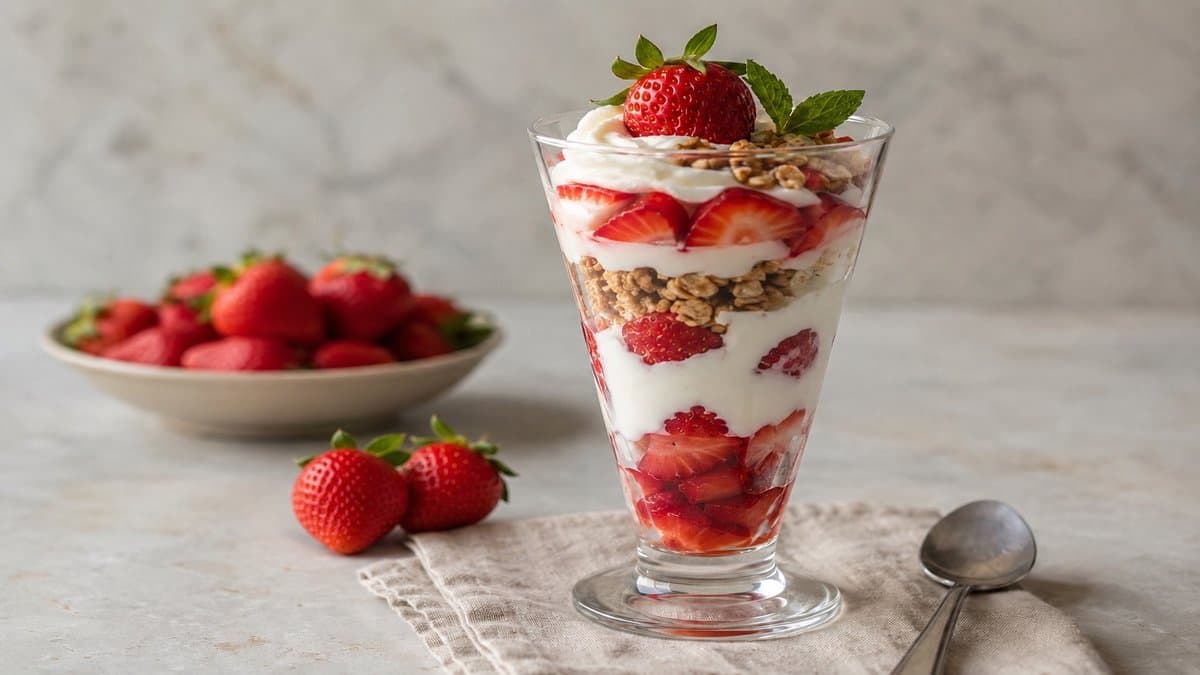
The word parfait means “perfect” in French. Today, it may bring to mind a tall glass layered with strawberries, yoghurt and granola, or perhaps an elaborate Japanese café dessert topped with cream, fruit and ice cream. But the original parfait was not a breakfast cup. It was a frozen French dessert made with cream, eggs, sugar and syrup, then frozen into a smooth, rich preparation.
That difference matters. The strawberry parfait we know today is not one single dessert with one fixed recipe. It is a dessert with several lives: French, American, Japanese and modern breakfast-style.
National Strawberry Parfait Day is observed on 25 June, close to the height of strawberry season in many parts of the Northern Hemisphere. The food holiday itself is modern, but the dessert behind it has a much deeper story.
1867: The French Beginning of Parfait
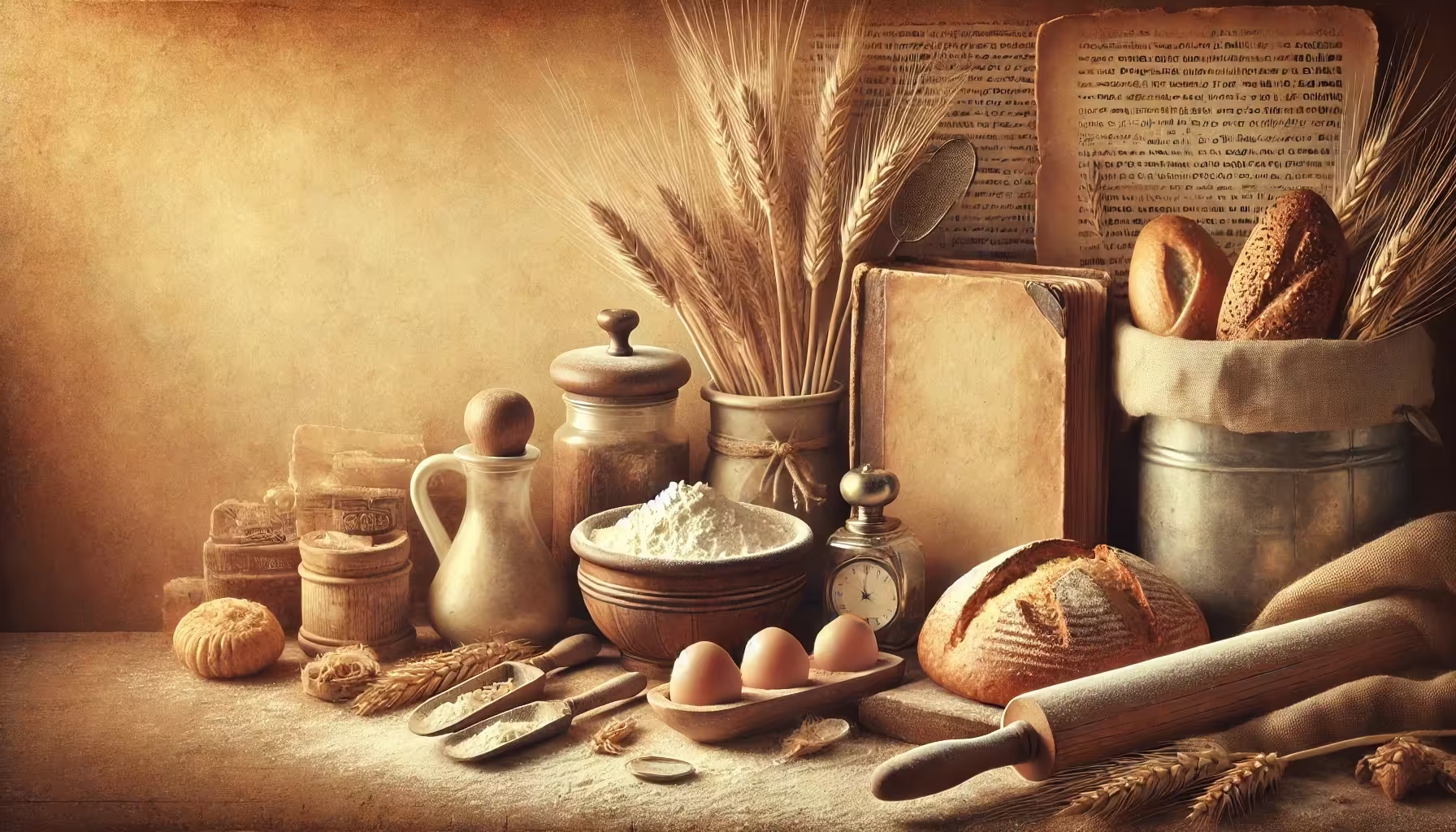
One of the earliest printed references to parfait appears in Jules Gouffé’s Le Livre de Cuisine, first published in 1867. Gouffé included a recipe for “parfait au café”, a coffee-flavoured frozen dessert made using a parfait mould.
This tells us something important about what parfait originally meant. It was not simply a layered dessert. It was a frozen preparation, shaped in a mould, with a texture that had to remain smooth despite being frozen.
In French cooking, parfait came to refer to a dessert made from a rich base of eggs, sugar syrup and cream. The mixture could be flavoured with coffee, chocolate, fruit, liqueur or nuts before being frozen.
The goal was smoothness. A good parfait should not be icy or coarse. It should be creamy, rich and even-textured — “perfect” in both name and feel.
Strawberry Enters the Story
Strawberry was a natural flavour for this kind of dessert.
Ripe strawberries bring colour, fragrance and acidity, all of which balance the richness of cream and eggs. In a frozen French parfait, strawberries could be puréed, sweetened or folded into the base. They made the dessert lighter in flavour without removing its sense of luxury.
The strawberry itself also has a history that fits neatly with parfait’s French roots. The large garden strawberry familiar today developed from the crossing of American strawberry species in Europe, particularly the Virginia strawberry and the Chilean strawberry. France played an important role in the development of the modern cultivated strawberry, which later became one of the most beloved dessert fruits.
By the 18th and 19th centuries, strawberries were increasingly associated with warm-weather eating. Served with cream, sugar or in chilled desserts, they became a sign of seasonal abundance. A strawberry parfait brought that summer fruit into the elegant world of frozen French sweets.
1896: Parfait in Fannie Farmer’s American Cookbook
Parfait entered American cookery as part of the same family of frozen desserts. One important milestone was Fannie Merritt Farmer’s The Boston Cooking-School Cook Book, first published in 1896.
Farmer’s cookbook helped shape modern recipe writing through its use of standardised measurements and clear instructions. In accessible editions of the book, parfait appears in the frozen dessert section, with recipes such as Angel Parfait, Café Parfait and Maple Parfait.
These recipes show that, at the end of the 19th century, parfait in America still meant something close to its French form. It was a frozen dessert made with cream, eggs, sugar or syrup, and flavouring. It was not yet mainly associated with yoghurt, granola or breakfast.
The American parfait had arrived, but it had not yet become the layered glass dessert we recognise today.
1918: Strawberry Parfait in American Home Cookery
By the early 20th century, strawberry parfait was becoming more visible in American domestic cookery. Food-history sources often point to a 1918 recipe for strawberry parfait in The Neighborhood Cook Book, published by the Council of Jewish Women.
Community cookbooks like this were important because they recorded the recipes that home cooks shared, adapted and repeated. A strawberry parfait in this context suggests that the dessert had moved beyond formal French-style cookery and into ordinary household use.
At this stage, the strawberry parfait was still likely closer to a rich frozen dessert than a modern yoghurt parfait. It would have been chilled, creamy and seasonal, using strawberries to add freshness and colour.
The American Glass Parfait
The next major change was visual.
In the United States, parfait gradually developed into a layered dessert served in a tall clear glass. Instead of being frozen in a mould and sliced, it was built upwards. Whipped cream, ice cream, fruit, syrup, nuts and sometimes liqueurs could be arranged in visible layers.
The glass became part of the dessert. The classic parfait glass was tall and slender, often with a short stem, and was designed to show off the layers. A long spoon was used to reach down through the dessert.
This changed the meaning of parfait. It no longer referred only to the frozen base. It also described the structure: a tall, layered dessert where colour, height and contrast mattered.
Strawberries were especially suited to this new presentation. Their bright red colour stood out against cream and vanilla ice cream. Their juice created a natural syrup. Their slight sharpness helped balance the sweetness of the other layers.
The Yoghurt and Granola Version
Over time, the American parfait became more flexible. It could still be a dessert made with ice cream and whipped cream, but it could also be made with yoghurt, granola, nuts and fresh fruit.
This yoghurt version changed the parfait’s identity again. It looked like dessert, but it could be served as breakfast, brunch or a lighter snack. Instead of richness and indulgence, it suggested freshness, convenience and a more health-conscious way of eating.
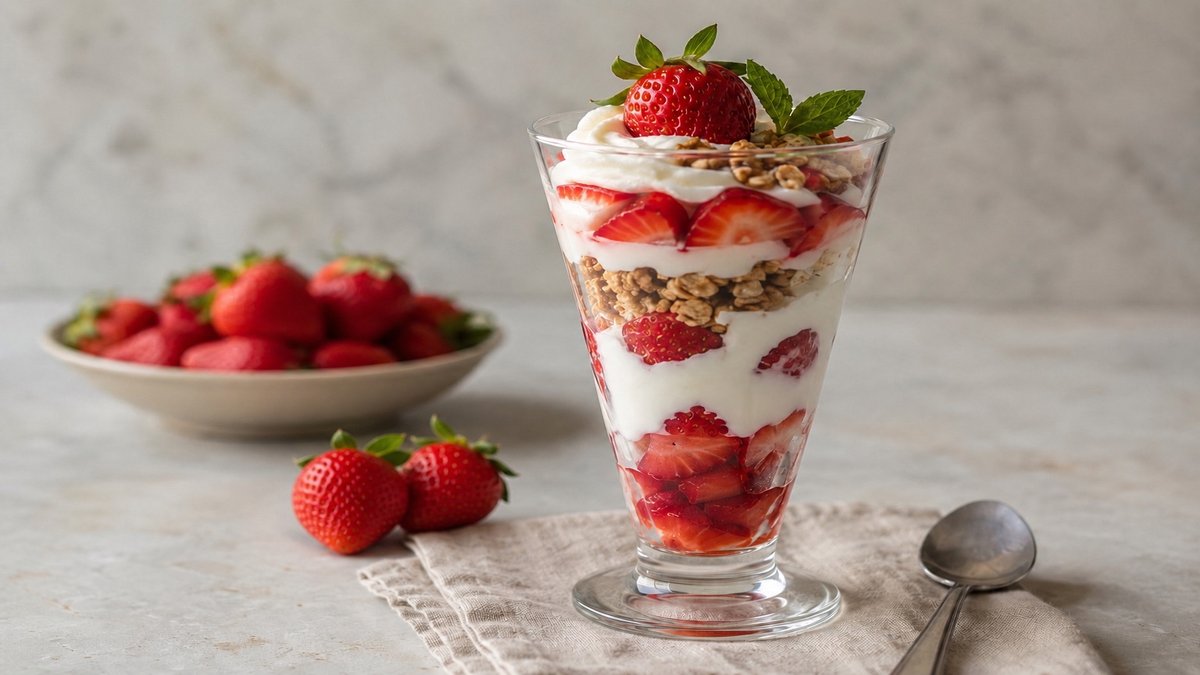
The strawberry yoghurt parfait became especially popular because it was easy to assemble and visually appealing. Creamy yoghurt, juicy strawberries and crisp granola gave the dessert — or breakfast — the same layered pleasure as an ice cream parfait, but in a simpler everyday form.
This is why the word parfait can now mean different things depending on where you are. In France, it usually points back to the frozen cream-based dessert. In the United States, it may mean either the traditional French-style dessert or the layered American version. In modern cafés and supermarkets, it often means fruit, yoghurt and granola.
The Japanese Pafe: A Dessert Becomes Architecture
One of the most striking branches of parfait history developed in Japan.
Western-style desserts became increasingly popular in Japanese cafés, restaurants and department stores during the 20th century. Japan adapted the parfait into pafe, a tall, elaborate dessert that often feels closer to edible architecture than a simple fruit cup.
A Japanese parfait may include ice cream, whipped cream, fresh fruit, jelly, sponge cake, custard, cornflakes, chocolate sauce, matcha, mochi, chestnut paste or seasonal fruit purée. It is carefully built in a tall glass so that every layer is visible.
Strawberry parfaits are especially beloved in Japan, where strawberries are often treated as premium seasonal fruit. During strawberry season, cafés and patisseries create special parfaits featuring sliced berries, strawberry sauce, cream, ice cream and decorative toppings.
The Japanese pafe keeps the layered drama of the American parfait, but makes it more elaborate, precise and seasonal. It shows how a French frozen dessert could travel through American-style presentation and become something distinctively Japanese.
Why Strawberries Work So Well in Parfait
Strawberries remain one of the classic parfait fruits because they give the dessert everything it needs.
They are colourful, fragrant, soft and slightly sharp. They pair beautifully with cream, yoghurt, ice cream, custard and sponge cake. They also release juice easily, creating a natural sauce without much cooking.
A strawberry parfait works best when it preserves contrast. The creamy layer should soften the fruit, not bury it. The crunchy layer should add texture, not dominate. The strawberries should still taste like strawberries.
That balance is what links the different versions of the dessert. Whether frozen in a mould, layered with ice cream, arranged in a Japanese café glass or spooned into a breakfast jar, parfait depends on contrast: creamy and fruity, soft and crisp, sweet and fresh.
A Dessert with Several Identities
The strawberry parfait has lasted because it is adaptable.
In France, it can be frozen, rich and elegant. In America, it can be a tall glass dessert layered with cream, ice cream and fruit. In Japan, it can become a dramatic café showpiece. In modern home kitchens, it can be a quick yoghurt-and-granola breakfast.
Each version reflects the culture that shaped it. The French parfait valued smooth frozen texture. The American parfait valued height, glassware and visible layers. The Japanese pafe valued abundance, seasonality and design. The modern yoghurt parfait valued convenience and freshness.
That is what makes strawberry parfait more interesting than it first appears. It is not simply strawberries and cream in a glass. It is a dessert that has changed with cookbooks, cafés, breakfast trends and the way people like food to look before they eat it.
Why Strawberry Parfait Still Feels Modern
Strawberry parfait continues to feel fresh because it suits the way we eat now.
It can be rich or light, elegant or casual, nostalgic or modern. It can be served in a mould, a tall glass, a jar or a bowl. It can be dessert, breakfast or an afternoon treat.
Most of all, it celebrates the strawberry without hiding it. A good strawberry parfait lets the fruit remain the centre of attention.
National Strawberry Parfait Day may be a modern food-calendar observance, but the dessert has genuine history behind it. Its story moves from 19th-century French frozen creams to American cookbooks, tall glass sundaes, Japanese café culture and today’s yoghurt breakfast bowls.
The strawberry parfait began with the promise of something “perfect”. Its real charm is that it never stayed still.
For another classic summer strawberry dessert, read our article on The Origins and History of Strawberry Shortcake.
References: Jules Gouffé, Le Livre de Cuisine; Fannie Merritt Farmer, The Boston Cooking-School Cook Book; The Neighborhood Cook Book by the Council of Jewish Women; Britannica Dictionary, “Parfait”; Wikipedia, “Parfait”; TasteAtlas, “Parfait”; Japan National Tourism Organization, “Japan’s Art of Sweets: Parfait”; Royal Horticultural Society, “A Transatlantic Tango: The Story of the Strawberry”; University of Vermont, “History of the Strawberry”; National Day Calendar, “National Strawberry Parfait Day”.