Around the World in 80 Bakes: Stop #70 — Hup Toh Soh (Chinese Walnut Biscuits)
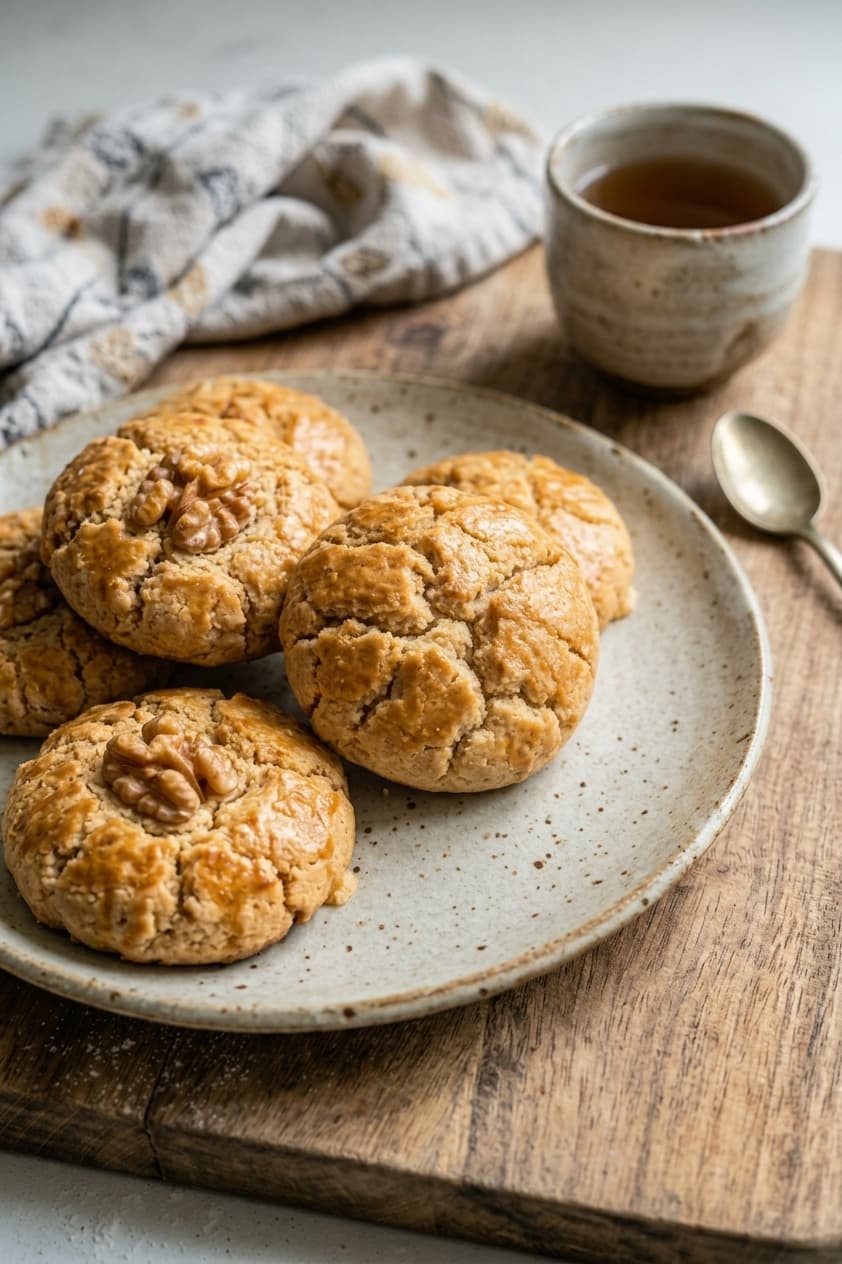
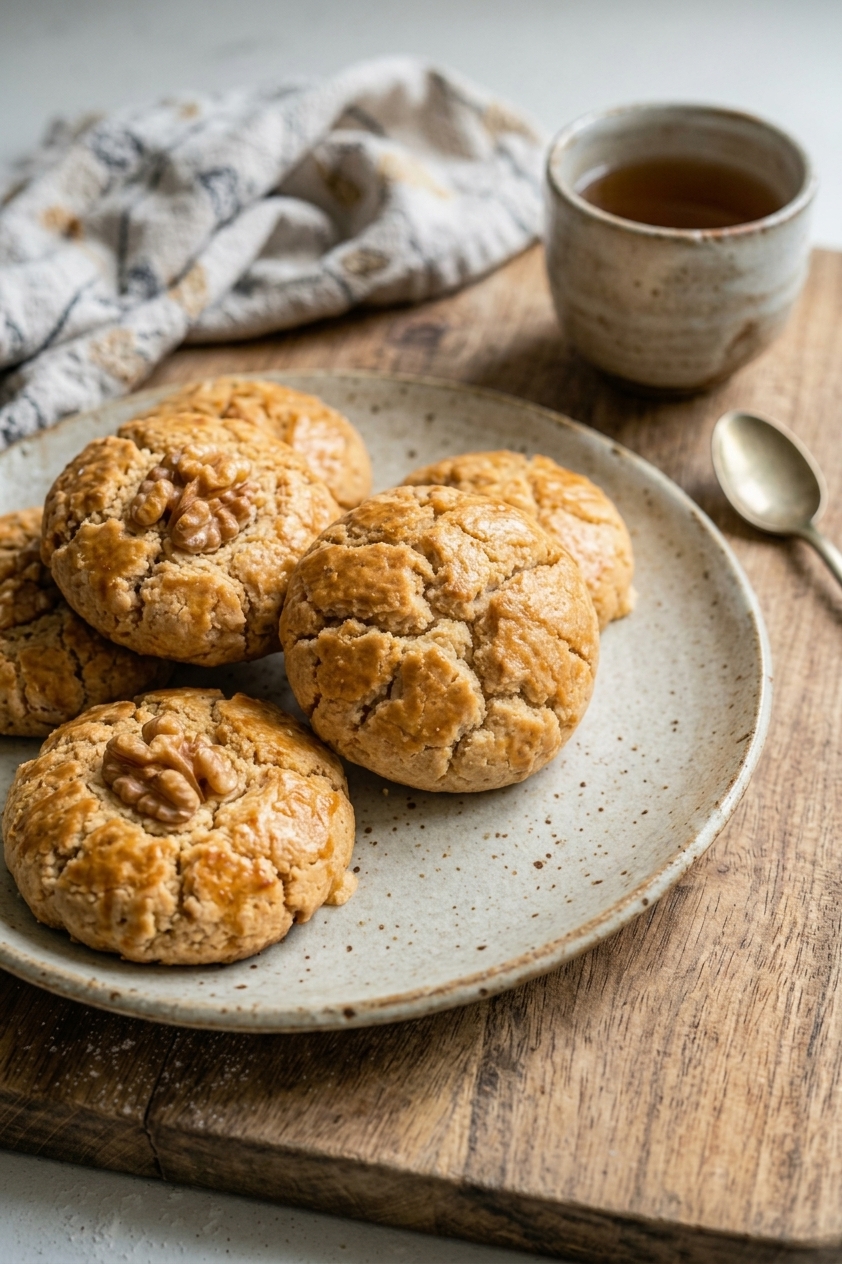
A golden surface, a scattering of cracks and a crumb that breaks easily between the fingers: hup toh soh is a biscuit whose charm lies in its simplicity. Known in English as Chinese walnut biscuits, these small bakes offer a crisp bite followed by a rich, crumbly texture.
Their name also presents a puzzle. Some recipes contain ground or chopped walnuts; others contain none at all. Behind this familiar biscuit is a story of regional baking, changing recipes and origins that are easier to retell than to prove.
A Chinese Biscuit with a Cantonese Name
Hup toh soh is the Cantonese name for walnut biscuits, also written as hup tou sou or hup toh sou. Hup toh means walnut, while soh describes the crisp, crumbly quality expressed by the character 酥. The name appears as 合桃酥 or 核桃酥; the Mandarin reading of 核桃酥 is hé táo sū.
Related biscuits are known more broadly as tao su (桃酥). Chinese accounts describe versions in Jiangxi, Beijing, Tianjin and Shandong, with differences in ingredients and preparation. Hup toh soh belongs within this varied Chinese biscuit tradition, while its Cantonese name is familiar in Hong Kong and parts of Southeast Asia.
The Story of the Pottery Kilns
One of the best-known origin stories leads to Jiangxi, around Leping and the porcelain-producing area of Jingdezhen. According to the legend, a pottery worker mixed a simple dough and baked it using the heat of a kiln. In one version, he added crushed walnuts. Fellow workers copied the idea, finding the biscuits convenient to carry and eat during their working day.
Often placed in the Tang dynasty, this is a popular origin legend rather than a verified account of the biscuit’s invention. It gives tao su a memorable association with the pottery region, although the precise beginnings of hup toh soh remain undated.
With Walnuts or Without
The variety becomes particularly clear when looking at ingredients. Some bakers mix finely chopped walnuts into the dough or press a walnut half into the centre. Others make a plain biscuit under the same name.
Both forms are sold today. Singapore supplier Guan Chun Ding lists a Malaysian-made hup thor soh with no walnuts in its published ingredients. Kee Wah Bakery’s large bridal walnut biscuit includes them. The walnut-free form is therefore an established version of the biscuit, rather than simply an omission in a home recipe.
Lard is used in traditional recipes, while butter and vegetable oil feature in contemporary versions. Shape varies too, from flatter biscuits to rounder ones topped with a nut.
Together, these versions show how much variety can sit beneath one familiar name. For the home baker, the choice is often guided by the flavour and texture of the biscuit they know best.
From Bakery Counters to Festive Tables
Hup toh soh has a place in Chinese New Year baking, while larger bridal versions are sold for wedding celebrations. Smaller biscuits are equally suited to an everyday cup of tea.
Its presence in Southeast Asia is visible in the Malaysian-made biscuits sold in Singapore and in home recipes shared by regional food writers. The Cantonese name remains in use alongside the English description, Chinese walnut biscuits.
The skills behind the biscuit are also being shared with new audiences. In August 2024, veteran baker Man Fuk-on demonstrated walnut-biscuit making at the Hong Kong Culture Festival’s Intangible Cultural Heritage Mart.
Hup toh soh brings an everyday side of Chinese baking to the table. Its appeal lies in familiar ingredients and a distinctive crumb: a biscuit that can be offered as a festive gift, baked at home or enjoyed quietly with tea.
References
Greedy Girl Gourmet, “Chinese Walnut Cookies (Hup Toh Soh)”: Cantonese terminology, festive context and an oil-based recipe.
Chinese Wikipedia, “桃酥饼”: related names and regional variations; used cautiously, not as proof of ancient origins.
Taste of Asian Food, “Chinese walnut cookies”: a modern retelling of the kiln-worker legend.
Guan Chun Ding, “Hup Thor Soh”, and Kee Wah Bakery, “Large Bridal Walnut Cookie”: product descriptions and ingredient lists.
The Woks of Life, “Chinese Walnut Cookies”: butter adaptation and shaping variations.
South China Morning Post, Kylie Knott, 26 September 2024: reporting on Man Fuk-on’s workshop.