
Around the World in 80 Bakes: #74 — Joulutorttu
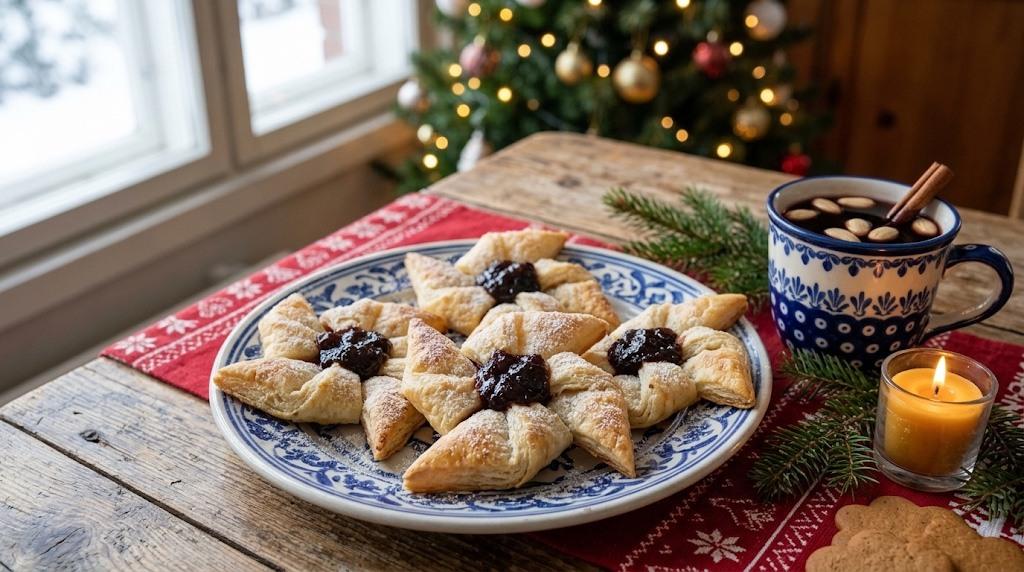
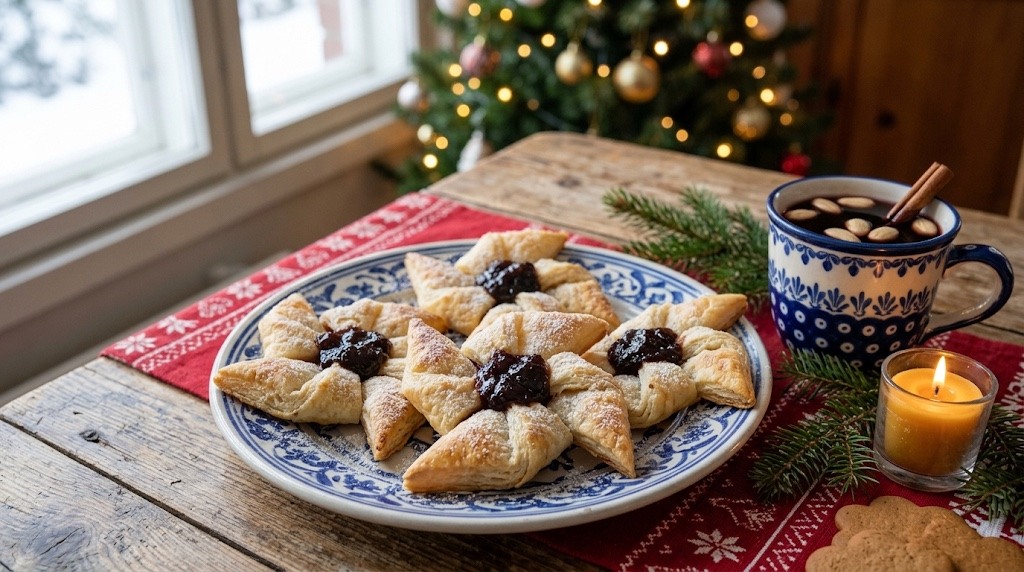
With golden pastry points, a dark centre of plum jam and a dusting of icing sugar, joulutorttu is a familiar sight in Finland during November and December. Its name means “Christmas tart” while the star-shaped version is also known as tähtitorttu, or “star tart”.
Today, ready-made pastry and plum jam make it easy to prepare a tray at home. For earlier generations, joulutortut were a luxury that took time, skill and ingredients not everyone could afford. Their journey from affluent households to Christmas coffee tables across Finland tells a story of changing fortunes and resourceful home baking.
European Roots
According to Finland’s Hotel and Restaurant Museum, joulutorttu probably reached Finland through Sweden, entering the kitchens of manor houses and parsonages. Round puff-pastry tarts with sweet or savoury fillings were already being made in the 18th century, but their association with Christmas developed around the 1820s.
An earlier example of this pastry tradition appears in Cajsa Warg’s Swedish cookbook of 1755. Food writer Inga Blåfield-Aaltonen, interviewed by Yle, describes a recipe in which thin pastry rounds were baked and then layered with jam. Although different from today’s folded Christmas stars, the recipe reflects an established Nordic taste for buttery pastry paired with fruit preserves.
From Festive Luxury to Coffee Table
By the late 19th century, affluent households served warm apple- and plum-filled tarts dusted with icing sugar at the end of Christmas dinner. As the tradition spread, the pastries also became part of festive tea and coffee gatherings.
Making them required ingredients, equipment and money. Prosperous rural households could draw on their own supplies of butter, flour and apples. In towns, ingredients usually had to be bought, and some homes lacked a baking oven. Those who could afford it could buy their Christmas tarts from a local baker.
Early 20th-century newspapers document both a growing trade in Christmas pastries and advice for home bakers. In her study of these publications, Asta Sutinen highlights instructions stressing good ingredients, careful rolling and a cool room. Producing light, flaky pastry took practice, making a well-baked tray of Christmas tarts a source of pride.
How the Star Took Shape
The star shape was documented by 1908 in the influential Finnish cookbook Kotiruoka. Its inventor is unknown, though the Hotel and Restaurant Museum suggests the Star of Bethlehem as a possible inspiration.
The familiar pinwheel is formed by cutting diagonally inwards from the corners of a pastry square, then folding alternate tips towards the centre. Half-moon tarts, made by folding filled pastry circles in half, remain a traditional alternative to the familiar star.
Why Plum Filling Endures
The classic dark filling is often made from prunes, or dried plums, cooked into a thick purée. Blåfield-Aaltonen notes that imported dried plums were used in festive soups and preserves. Their thick consistency made them particularly suitable as a pastry filling, helping them stay in place during baking.
The concentrated fruit flavour balances the buttery dough. Bakers differ in where they place the filling: some tuck it beneath the folded tips, while others spoon it on top.
Keeping Christmas Through Shortages
During times of scarcity, cookery writers suggested ways to keep Christmas baking within reach. Writing for Finland’s Cultural History Society, Asta Sutinen cites a December 1939 article in Kotiliesi that recommended replacing rich puff-pastry tarts with yeast buns shaped to resemble them. Other economical recipes added potato to make the flour go further.
Fillings were adapted too. A 1937 article in Toveritar encouraged readers to use locally grown fruit preserves and suggested carrot when suitable fruit was unavailable. These practical substitutions helped families preserve a familiar Christmas tradition despite limited ingredients.
A Household Christmas Favourite
As living standards rose and wartime shortages receded, joulutortut became a treat more families could afford during the 1950s. The arrival of ready-made pastry in the 1960s made baking them at home easier still.
Today, joulutortut also take the form of angels, roses and snowflakes, while savoury versions include fillings such as smoked salmon or reindeer. Alongside these variations, the traditional plum-filled stars and half-moons remain part of Finnish Christmas baking.
References
Pelkonen, Anni. “Puoliympyröitä ja tähtitorttuja – joulutortun monimuotoinen historia.” Hotelli- ja ravintolamuseo.
Sutinen, Asta. “Adventtikalenteri 4: Joulutortut.” Kulttuurihistorian seura, 19 December 2021.
Veirto, Tuija. “Joulutorttu on tuotekehittelyn huippua.” Yle, 13 December 2011. Includes an interview with Inga Blåfield-Aaltonen.
Suomalaisen Kirjallisuuden Seura (Finnish Literature Society). “Jouluruoka.” Tietävä: Juhlakalenteri.
ThisisFINLAND. “A Finnish Christmas Cookbook.”