Around the World in 80 Bakes: Stop #69 — Korvapuusti
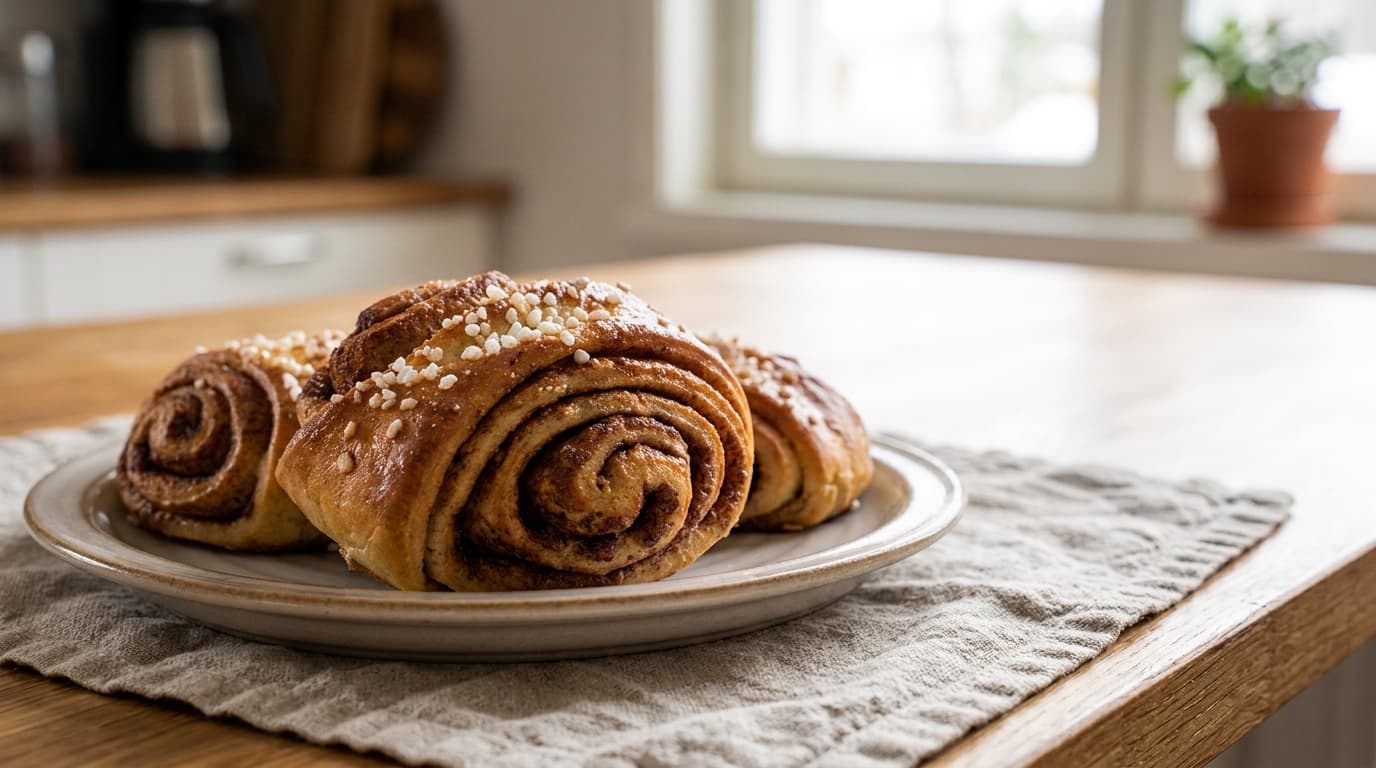
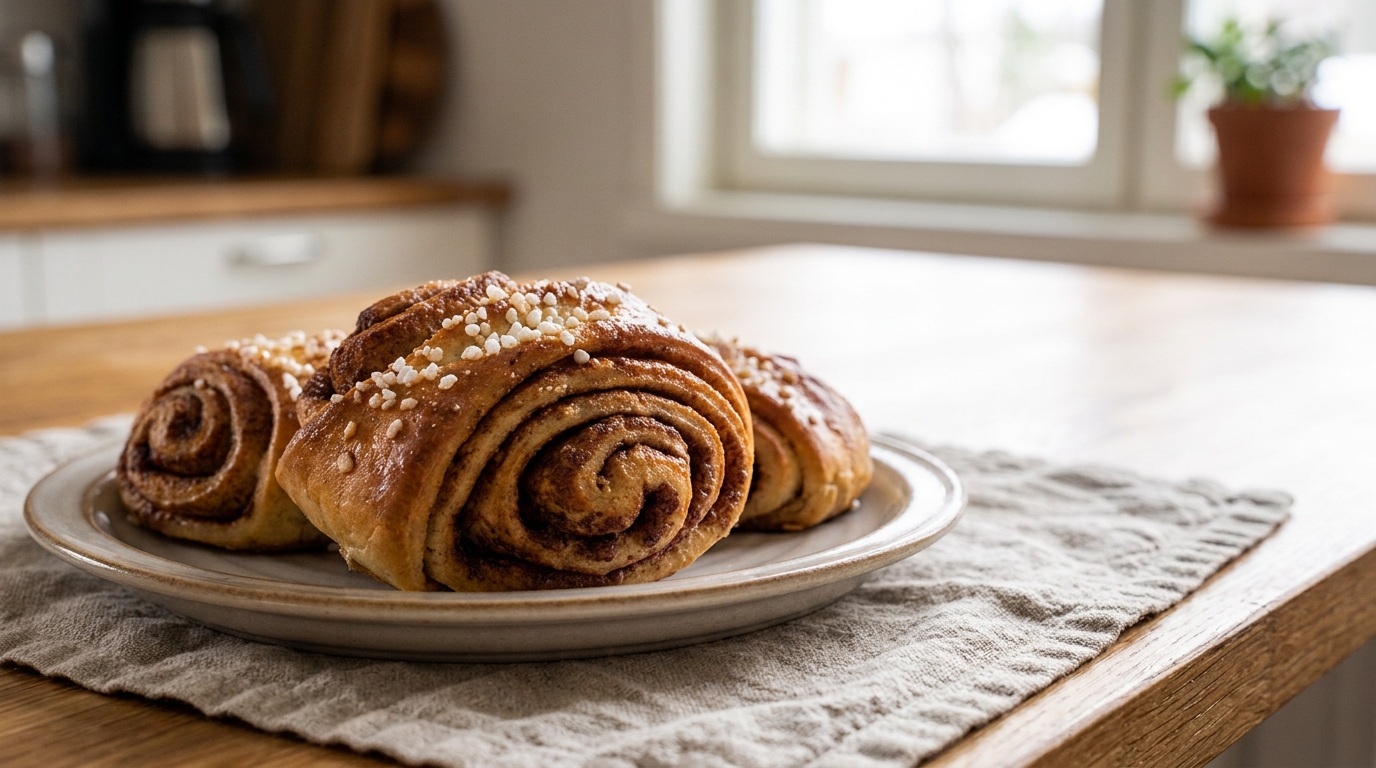
In a Finnish bakery, a korvapuusti is easy to recognise. Its golden sides flare out from a pressed centre, cinnamon peeks through the folds, and pearl sugar catches the light. The name, however, might make you pause. Why would anyone call a soft, sweet bun a “slap on the ear”?
The answer takes us through several languages, 19th-century bakeries and a time when the wheat, sugar and butter in an ordinary coffee bun were luxuries. Even its annual celebration has a story of its own. Korvapuusti Day falls on 4 October, though the bun had been around long before anyone gave it a day in the calendar.
Why is it called korvapuusti?
The name korvapuusti means a cuff or slap on the ear. It described the blow long before it described the bun. Look at a Finnish korvapuusti, though, and the connection begins to make sense: pressing the centre of the rolled dough pushes its cinnamon-filled sides out into shapes that resemble ears.
The name has travelled through several languages. According to the Institute for the Languages of Finland, the Finnish word is a translation of the Swedish örfil, which also means a slap on the ear. The Swedish word, in turn, came from Low German. Even puusti, an old Finnish word for a cuff on the ear, was borrowed from Swedish.
The pastry meaning appears to have developed in Finland. In Finland Swedish, örfil seems to have referred to a bun by at least the 1850s, and Finnish later adopted that meaning for korvapuusti. In Sweden, the usual name for a cinnamon bun is kanelbulle; örfil did not acquire the same pastry meaning there.
The precise moment the bun acquired its name may be lost, but the name itself has endured. What began as an expression for a slap on the ear now brings to mind warm cinnamon, cardamom and a bun whose folds look just a little like ears.
Before the bun was an everyday treat
Korvapuusti grew out of Finland’s tradition of pulla, sweet bread made with wheat flour. Wheat pastries reached Finland through Sweden in the 18th century, but flour, sugar and butter made them expensive to bake. For a long time, a sweet bun belonged more readily on a wealthy household’s table than beside an everyday cup of coffee.
As coffee became more common in the late 19th century, sweet wheat baking gradually became part of the coffee table too. In rural areas, people often bought pulla from town bakers or markets rather than making it at home. Cookbooks, baking courses and home economics schools later helped spread the skills needed to bake it.
Korvapuusti was known in Porvoo by the 1850s, according to the Hotel and Restaurant Museum. Its first baker is unknown, but that early mention shows the bun had a place in Finland long before it became an everyday coffee-table favourite.
How it became a Finnish favourite
A korvapuusti begins with soft, yeasted wheat dough, usually scented with cardamom. Butter, sugar and cinnamon are spread over the dough before it is rolled and cut into pieces. Each piece is pressed across the middle, making the sides rise and the cinnamon layers show. Brushed with egg and sprinkled with pearl sugar, it bakes into the familiar Finnish bun with its broad, ear-like shape. A Swedish kanelbulle often shows its spiral on top, while a Finnish korvapuusti shows its cinnamon layers at the sides.
During the Second World War, shortages made rich baking difficult. Afterwards, wheat and sugar became easier to obtain, and sugar rationing in Finland ended in 1954. By the end of the decade, pulla was firmly established in Finnish homes. Korvapuusti could now be baked for an ordinary afternoon coffee, as well as for celebrations — a familiar bun to offer a guest or share around the family table.
Why is Cinnamon Bun Day celebrated on 4 October?
Cinnamon Bun Day began in Sweden in 1999. The Home Baking Council, Hembakningsrådet, introduced Kanelbullens dag to mark its 40th anniversary and encourage home baking. The idea came from its project manager, Kaeth Gardestedt. As the council was founded by companies that sold baking ingredients, the new celebration also had a commercial purpose.
The council chose an autumn date, when many people bake, that did not clash with other food celebrations. Finland began observing the day as Korvapuustipäivä in 2006. Every 4 October, the Swedish kanelbulle and Finnish korvapuusti share a celebration, each with its own name and shape.
With its cardamom-scented dough, cinnamon filling and distinctive ear-like shape, korvapuusti is a pleasure to bake at home. Follow our Korvapuusti Recipe to make this Finnish classic.
References
Institute for the Languages of Finland (Kotus), “Korvapuusti”.
Hotel and Restaurant Museum, “Vehnän, rasvan ja sokerin suloinen liitto – pulla”.
University of Helsinki Almanac Office, “Korvapuustipäivä”.
ThisisFINLAND, “Finnish baking tradition combines cinnamon, cardamom, sugar and love”.