
Around the World in 80 Bakes: Stop #73 — Makowiec
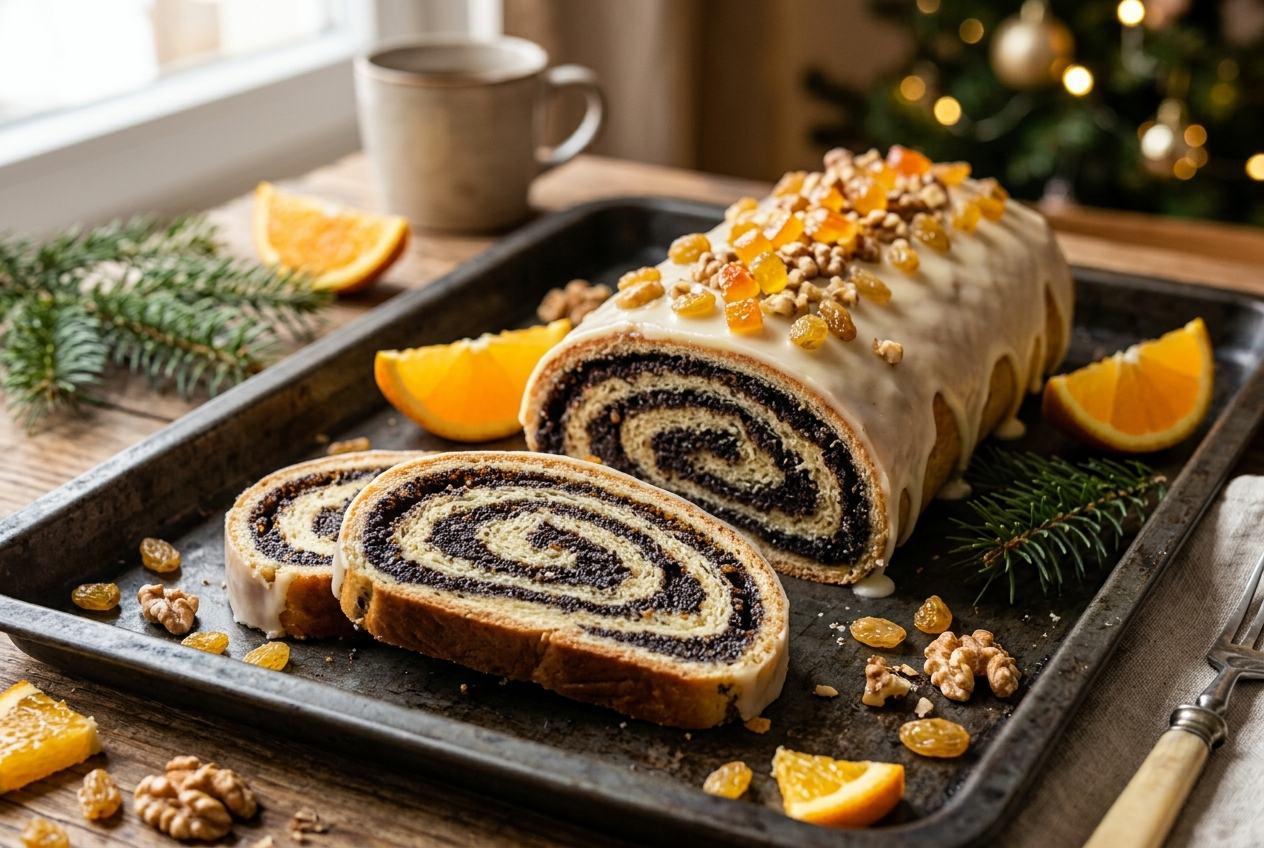
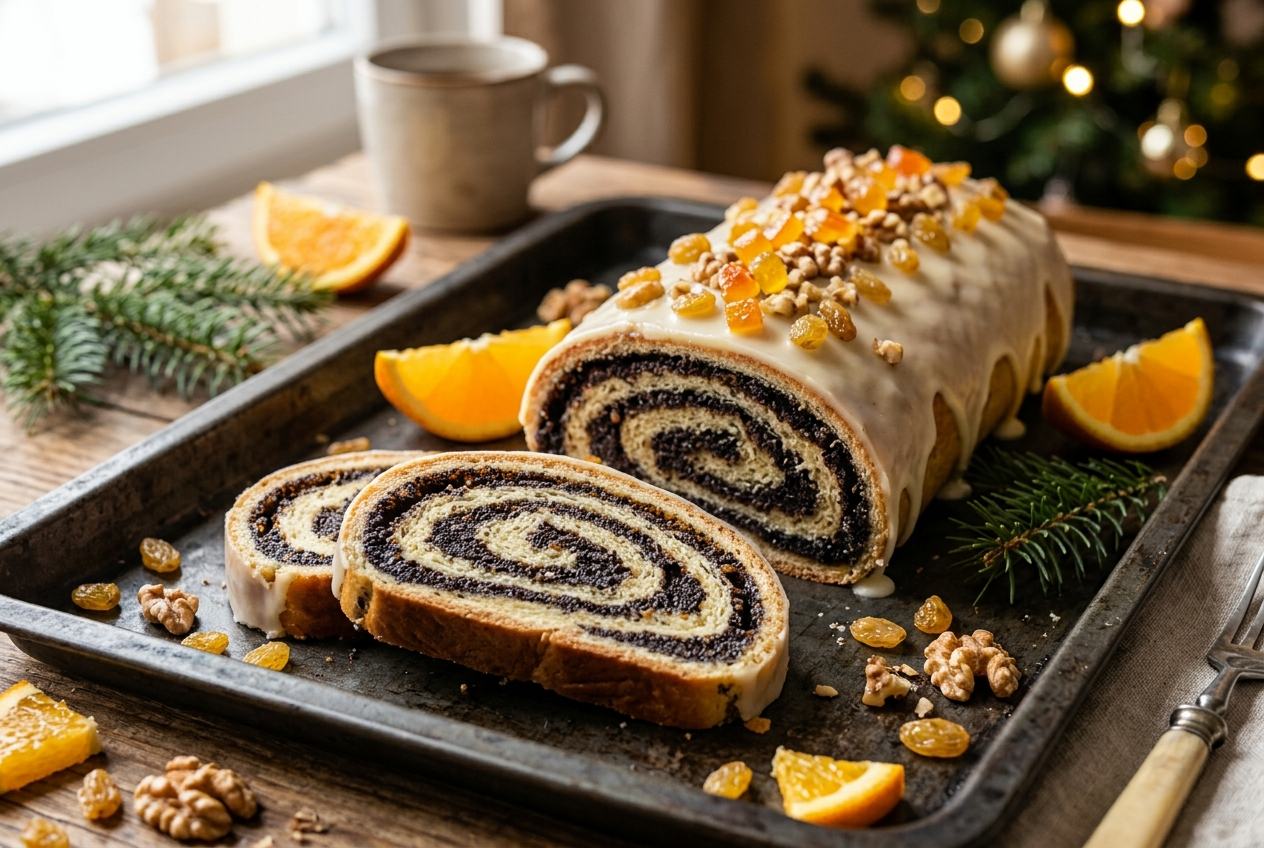
In Poland, Christmas would hardly be complete without makowiec, a traditional poppy seed cake recognised by its distinctive spiral of dark filling wrapped in soft, golden pastry. Rich with ground poppy seeds, honey, nuts and dried fruit, this festive cake has been enjoyed by generations of Polish families.
Yet makowiec is more than a Christmas speciality. Its history is closely connected with the cultural significance of poppy seeds, which have long symbolised prosperity, fertility and good fortune in Polish traditions. Although the precise origins of the rolled cake remain uncertain, its story reflects centuries of culinary customs, religious beliefs and Central European baking influences.
The Origins of Makowiec
The name makowiec comes from the Polish word mak, meaning poppy. It refers to cakes made with poppy seeds, although the best-known version is a rolled yeast pastry filled with a generous layer of sweet poppy seed mixture. This traditional roll is also known as strucla z makiem.
Poppy seeds were used in European cooking long before makowiec appeared. Cultivated since antiquity, the opium poppy (Papaver somniferum) was valued for its edible seeds and oil. In Poland, poppy seed oil was already being pressed and used in cooking during the 15th century.
An interesting historical reference appears in Compendium Ferculorum, Poland’s first published cookbook, written by Stanisław Czerniecki in 1682. Although the book contains no recipes using poppy seeds, Czerniecki lists them among essential kitchen ingredients and even advises cooks to chop onions as finely as poppy seeds.
The exact period when poppy seeds began to be enclosed in sweet yeast dough is unknown. Makowiec likely developed within the broader Central European tradition of enriched breads and pastries filled with nuts, fruit and seeds.
Poppy Seeds in Slavic Traditions
Long before makowiec became associated with Christmas, poppy seeds held symbolic importance in Slavic culture.
Their abundance made them a natural symbol of fertility and prosperity. A single poppy capsule contains numerous tiny seeds, and eating dishes prepared with them was believed to bring good fortune and plentiful harvests.
Poppies were also associated with death and the spiritual world. In pre-Christian Slavic beliefs, they were connected with the boundary between the living and the dead, and poppy seed dishes sometimes formed part of rituals honouring deceased ancestors.
As Christianity spread through Poland, older customs continued to influence seasonal celebrations. Poppy seeds retained their symbolic significance while becoming closely associated with Christmas and other religious occasions.
These traditions help explain the ingredient’s importance in Polish festive cooking, although they do not establish when makowiec itself was invented.
Makowiec and the Polish Christmas Tradition
Makowiec is particularly associated with Wigilia, the traditional Polish Christmas Eve supper. This important family celebration commonly features 12 meatless dishes, many carrying symbolic meanings connected with religious and agricultural traditions.
Poppy seeds are believed to represent abundance and prosperity, making them a fitting ingredient for Christmas celebrations.
Before the familiar rolled cake became widespread, poppy seeds were already used in traditional festive dishes. Among them was kutia, a mixture of cooked grains, poppy seeds, honey and dried fruit, particularly associated with eastern Poland. In Silesia, families prepared makówki, a layered dessert made with bread, ground poppy seeds, milk and sweeteners.
Makowiec brought these familiar flavours into the tradition of enriched yeast baking. Its preparation was once a labour-intensive undertaking, as the seeds had to be softened and finely ground before being mixed with honey, nuts and raisins.
Polish households traditionally used a makutra, an earthenware bowl with a rough interior, to grind poppy seeds by hand. The prepared filling was then spread over yeast dough, rolled into a cylinder and baked until golden.
Makowiec also featured in Christmas folklore. In some regions, unmarried young women were encouraged to grind poppy seeds on Christmas Eve in the belief that doing so would help them find a husband.
Although the cake is also enjoyed at Easter and other celebrations, Christmas remains the occasion with which it is most strongly identified.
Regional Variations and Central European Influences
Makowiec is prepared throughout Poland, with regional variations reflecting local ingredients and baking customs.
One notable example is makowiec lubartowski, from the town of Lubartów in eastern Poland. Distinguished by its thin layer of yeast dough and exceptionally generous filling, it traditionally contains poppy seeds, local honey, nuts and raisins. The cake was added to Poland’s official List of Traditional Products in 2012.
Other regional varieties include makowiec sędziszowski, known for its soft yeast dough, broad spiral of filling and white icing.
Similar poppy seed rolls are found across Central Europe. Hungary’s mákos bejgli, traditionally served at Christmas, closely resembles Polish makowiec, while related pastries are popular in Slovakia, the Czech Republic and Austria.
These similarities reflect centuries of cultural exchange through trade, migration and shared baking practices. Rather than originating from one identifiable recipe, the various poppy seed rolls developed within overlapping regional culinary traditions.
Makowiec Today
Today, makowiec remains one of Poland’s most recognisable traditional cakes, particularly during the Christmas season.
The classic rolled version continues to be popular, although modern recipes vary in their proportions of dough and filling. Some include walnuts, almonds, raisins or candied orange peel, while others are finished with white icing and chopped nuts.
Electric grinders and ready-made poppy seed fillings have simplified a process that once required considerable time and effort. Nevertheless, many families continue to prepare makowiec from recipes handed down through generations.
The cake’s distinctive spiral and rich poppy seed filling remain enduring symbols of Polish festive baking. Rooted in centuries of culinary customs and cultural beliefs, makowiec continues to connect Polish families with their heritage, especially at Christmas.
References
Mętrak-Ruda, Natalia. The Polish ‘Makowiec’: An Intoxicating Cake? Culture.pl.
Kasprzyk-Chevriaux, Magdalena. The 12 Dishes of Polish Christmas. Culture.pl.
Polish Ministry of Agriculture and Rural Development. Makowiec Lubartowski. Government of Poland.
Polish Ministry of Agriculture and Rural Development. Makowiec Sędziszowski. Government of Poland.
Polish Ministry of Agriculture and Rural Development. Makówki / Makiełki. Government of Poland.