
Around the World in 80 Bakes: Stop #60 — Alfajores
Few sweets are as closely associated with Argentina as the alfajor. Found in bakeries, cafés, supermarkets and neighbourhood kiosks, it is eaten as an everyday treat and carried home by travellers as an edible souvenir.
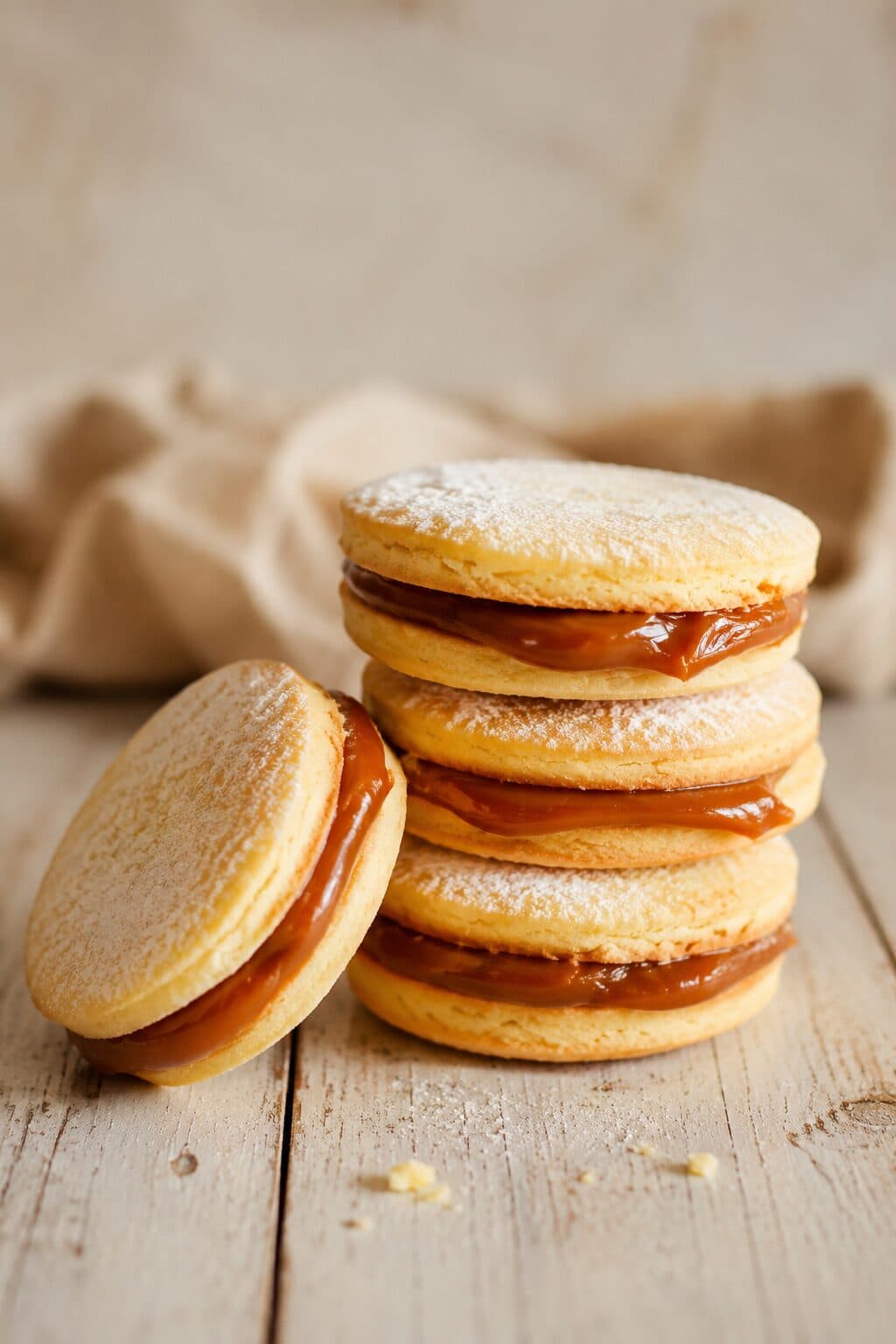
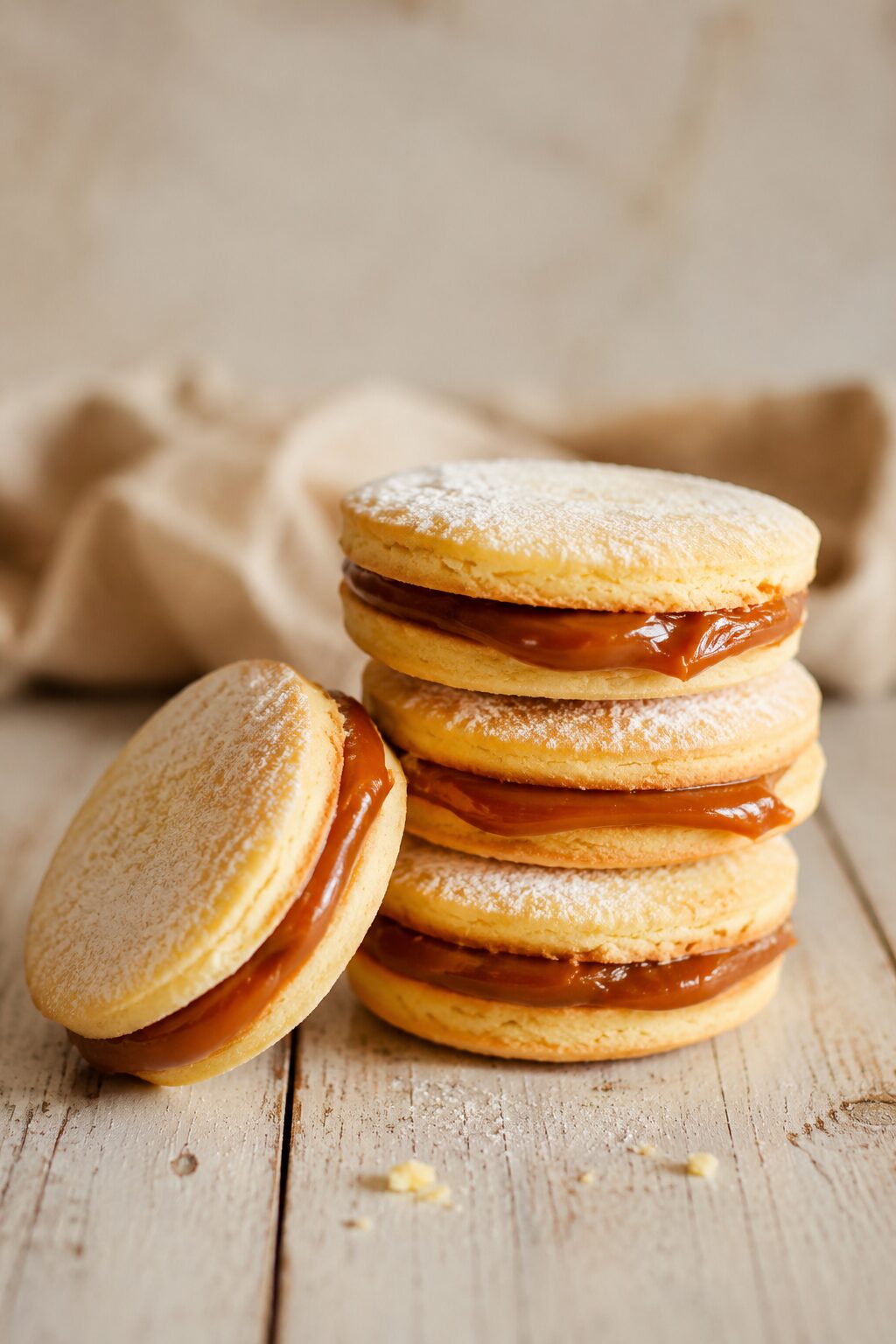
The familiar Argentinian alfajor consists of two tender biscuits joined with dulce de leche. It may be covered in chocolate, glazed with sugar or edged with desiccated coconut. Yet the alfajor did not begin as a sandwich biscuit, nor did it originate in Argentina.
A Sweet with Arabic Roots
The alfajor’s distant ancestor emerged in medieval al-Andalus as a dense confection of honey, nuts, breadcrumbs and spices. Although the precise origin of its name is disputed, both the word and the original sweet reflect the strong Arabic influence on Spanish language and food.
The Spanish Alfajor
A traditional version of this medieval sweet survives in Medina Sidonia in Cádiz, southern Spain.
Alfajor de Medina Sidonia is made by combining heated honey with toasted almonds, hazelnuts, breadcrumbs, flour, sesame and spices. The warm mixture is shaped into small cylinders. It contains neither biscuits nor dulce de leche.
The sweet received protected status in Andalusia in 2004 and was registered as a Protected Geographical Indication in the European Union in 2007. It remains particularly associated with Christmas.
Alfajores Reach South America
Spanish colonisation carried the name and confectionery tradition to the Americas. Alfajores developed in Argentina, Uruguay, Peru, Chile, Paraguay and several other countries, but the recipes did not remain unchanged.
In the Río de la Plata region, the alfajor gradually became a layered bake with a sweet filling. There is no single documented moment when the Spanish honey-and-nut confection became the modern biscuit. Different regions adapted it according to their own ingredients and preferences.
The decisive addition in Argentina was dulce de leche. Its thick, creamy consistency made it ideal for spreading between baked layers, while its caramelised milk flavour gave the alfajor a distinctly Argentinian character.
Santa Fe and Córdoba
Two provinces played particularly important roles in the development of the Argentinian alfajor.
The alfajor santafesino has thin, crisp pastry layers filled with dulce de leche and covered with a pale sugar glaze. Its commercial history is associated with Hermenegildo Zuviría, known as Merengo, who is said to have begun producing alfajores in Santa Fe in 1851.
A popular story links these alfajores with Argentina’s constitutional convention, held in Santa Fe in 1853. Delegates reportedly carried them home after the gathering, helping the regional speciality become known elsewhere. The story remains part of local tradition, although its details are difficult to verify.
Córdoba developed a softer alfajor filled with dulce de leche or fruit preserves. In 1869, French chemist Augusto Chammás and his wife, Mercedes Lezama de Olivera, established a family confectionery business there. Chammás is commonly credited with popularising the round shape that now defines most Argentinian alfajores.
He did not invent the alfajor itself. His contribution was to commercialise an influential new form of a much older sweet.
A National Favourite
During the 20th century, mechanised production and individual wrapping transformed alfajores from regional specialities into an everyday national treat.
The resort city of Mar del Plata became an important centre of production. Holidaymakers bought boxes to take home, establishing alfajores as popular travel souvenirs. Havanna opened its first factory and shop in Mar del Plata in 1948 and helped popularise the chocolate-covered style.
Another beloved version is the alfajor de maicena. Its pale biscuits contain maize starch, giving them a delicate, crumbly texture. They are filled with dulce de leche and rolled in desiccated coconut around the edges.
Today, Argentina has countless regional and modern variations. Fillings range from dulce de leche and fruit preserves to chocolate, coffee and pistachio cream. Industry figures cited by Argentina’s National Institute of Industrial Technology suggest that around one billion alfajores are consumed in the country each year.
Argentina did not create the alfajor’s medieval ancestor, but it reinvented the sweet so thoroughly that it became part of the country’s identity. What began as a mixture of honey, nuts and spices eventually became a tender biscuit filled with dulce de leche—and one of Argentina’s most treasured bakes.
Make these tender dulce de leche-filled biscuits at home with our Argentinian Alfajores Recipe.
References
Real Academia Española, “Alfajor”, Diccionario de la lengua española:
https://dle.rae.es/alfajor
Presidencia de la Nación Argentina, “Alfajores”:
https://www.argentina.gob.ar/node/493708
Código Alimentario Argentino, definition of alfajor:
https://www.argentina.gob.ar/normativa/nacional/resoluci%C3%B3n-196-2001-73890/texto
Junta de Andalucía, “Reglamento de la Indicación Geográfica Protegida Alfajor de Medina Sidonia”:
https://www.juntadeandalucia.es/boja/2004/188/4
Córdoba Turismo, “Alfajores Chammás”:
https://turismo.cordoba.gob.ar/alfajores-chamas/
Havanna, “Nuestra historia”:
https://havanna.com.ar/nosotros/historia