
Around the World in 80 Bakes: Stop #72 — Yorkshire Parkin
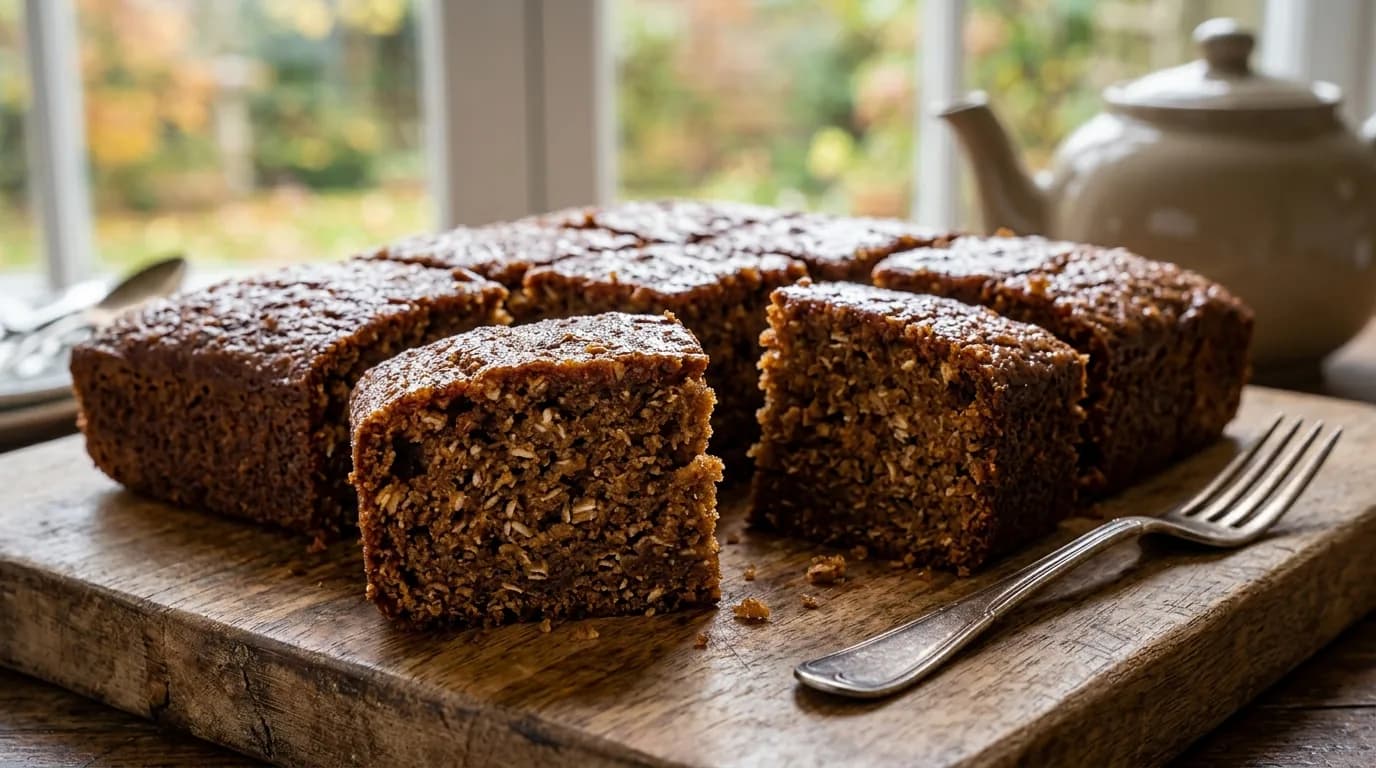
Every November, as the evenings grow colder and Bonfire Night approaches, a traditional ginger cake makes its appearance in kitchens across Yorkshire. Known as Parkin, this dark, sticky cake is made with oatmeal, treacle and ginger, ingredients that have been part of northern English cooking for centuries.
Unlike most cakes, Parkin is traditionally left to mature for several days after baking. Its texture gradually becomes softer and stickier, making it a cake that rewards patience.
Although closely associated with Bonfire Night on 5 November, Parkin has a much longer history. Its story begins with the oat-based cooking traditions of northern England, where simple ingredients and practical baking methods shaped generations of regional recipes.
The Origins of Parkin in Northern England
Parkin developed from the oatmeal-based baking traditions of northern England, where oats were an important part of the everyday diet.
Yorkshire’s cool, damp climate favoured the cultivation of oats in areas where wheat was less reliable. Oatmeal was consequently used to prepare porridge, bread and cakes, providing an affordable and versatile staple for rural households.
Before domestic ovens became widespread, oatcakes were commonly cooked on heated stones or iron griddles known as bakstones. These cakes were generally flat and dense, made with simple ingredients and baked directly on the heated surface.
Food historian Peter Brears has traced the development of Parkin from thin oatmeal cakes baked on bakstones to the thicker versions that emerged with the increasing use of ovens and bicarbonate of soda during the 19th century.
These changes in baking equipment and ingredients helped establish the softer, raised cake recognised today.
The Earliest Written Records of Parkin
One of the earliest surviving references to Parkin dates to April 1729, when the cake was mentioned in court proceedings in Pontefract, Yorkshire. The proceedings described a case involving oatmeal stolen to make Parkin, with treacle obtained from nearby Elland. The court clerk referred to the finished food as Parkins alias cakes, providing an early record of the regional name and two of its traditional ingredients.
Another reference appears in a Yorkshire diarist’s entry dated 6 November 1750, when he recorded giving his wife a penny to buy treacle for Parkin. The date, immediately following Bonfire Night, is particularly interesting given the cake’s later association with the November celebrations.
How Parkin Developed into a Ginger Cake
During the 18th and 19th centuries, changes in ingredients and baking methods gradually shaped Parkin into the ginger cake familiar today.
Treacle, a syrup produced during sugar refining, provided sweetness and a rich, distinctive flavour. Ginger added warmth and spice, while the oatmeal gave the cake its characteristic density.
Traditional recipes used different fats, including butter, lard (pig fat) and dripping (usually beef fat). Wheat flour was sometimes combined with oatmeal to create a softer texture, and the proportions varied considerably between bakers.
The increasing availability of domestic ovens made thicker cakes easier to prepare. Chemical raising agents, particularly bicarbonate of soda, also became more common during the 19th century, producing a lighter result than earlier unleavened oatcakes.
By the early 20th century, Parkin existed in numerous forms.
A Yorkshire Cookery Book, compiled by Mary Milnes Gaskell and published in 1916, contained 17 Parkin recipes collected from Yorkshire households. The book was produced during the First World War to raise funds for garments for soldiers serving at the front and recovering in hospital.
The recipes reveal considerable differences in ingredients and proportions. Some relied heavily on oatmeal, while others contained more wheat flour. Butter, dripping, lard, treacle and syrup appeared in various combinations.
Commercial bakers also prepared different styles of Parkin. Frederick T. Vine’s Saleable Shop Goods for Counter-Tray and Window, published in 1907, included recipes for individual Yorkshire Parkins as well as a thicker version.
These historical collections show how Parkin evolved through both domestic and commercial baking, with regional preferences and family traditions influencing the finished cake.
Parkin and the Traditions of Bonfire Night
Parkin is particularly associated with Bonfire Night, celebrated in Britain on 5 November. Also known as Guy Fawkes Night, the occasion commemorates the failure of the Gunpowder Plot of 1605, an attempt to blow up Parliament and assassinate King James I.
By the 19th century, Parkin had become a traditional part of the celebrations in northern England. In some Yorkshire communities, particularly around Leeds, 5 November was even known as Parkin Day.
The cake also featured in other early November customs. In Notes on the Folk-Lore of the Northern Counties of England and the Borders, folklorist Sabine Baring-Gould described a Yorkshire tradition known as Parkin Sunday, associated with the period following All Saints’ Day on 1 November. He suggested that the custom of eating Parkin in early November may have originated in the All Saints celebrations.
Yorkshire Parkin and Lancashire Parkin
Although Yorkshire is particularly famous for Parkin, neighbouring Lancashire has its own tradition of making the cake.
Yorkshire Parkin is often characterised by its dark colour and rich flavour from black treacle, while Lancashire versions are sometimes lighter, using more golden syrup or flour.
These distinctions are not absolute. Historical recipes from both counties show considerable variation, with some producing dense, chewy cakes and others a softer, more cake-like texture.
Why Parkin Is Better After Several Days
Unlike most cakes, Parkin is traditionally left to mature for several days before serving.
Freshly baked Parkin can be relatively firm, particularly when made with coarse oatmeal. During storage, moisture gradually redistributes throughout the cake, softening the crumb, while treacle and other sugars help retain moisture and contribute to its characteristic stickiness.
The flavours of ginger and syrup also become more integrated as the cake rests. Traditional recipes generally recommend waiting at least two or three days before serving, although some call for a longer period.
This made Parkin particularly convenient for Bonfire Night, as it could be baked ahead of the celebrations and stored until needed.
Parkin in British Baking Today
Parkin remains a popular autumn bake in Yorkshire, prepared in home kitchens and sold in bakeries and tearooms.
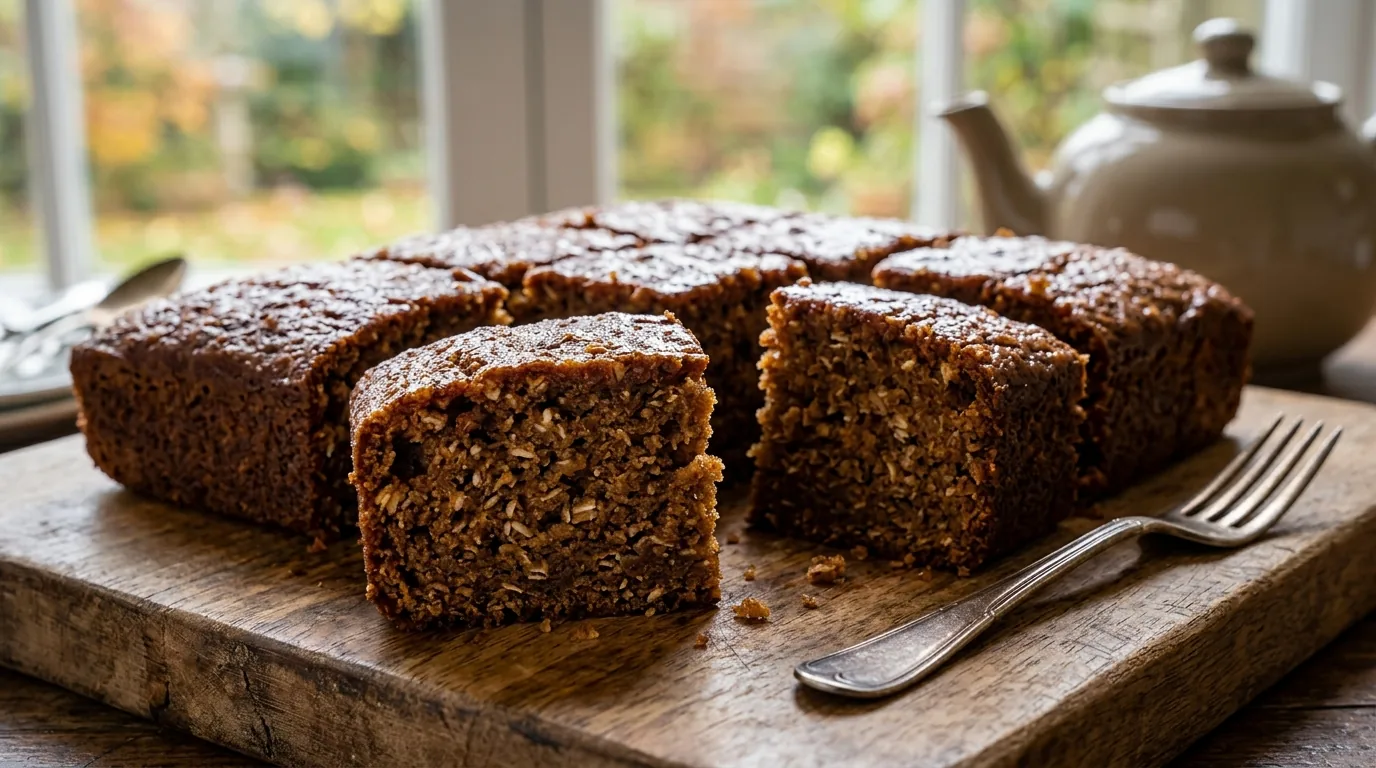
Traditionally baked in a square or rectangular tin, it is cut into slices or squares and often enjoyed with a cup of tea. Some families also serve it warm with butter or custard.
Nearly 300 years after its earliest surviving written references, Parkin continues to be enjoyed as a distinctive part of Yorkshire’s baking heritage, preserving a tradition shaped by generations of home bakers.
References
University of York, Yorkshire Historical Dictionary. “Parkin” and “Treacle”. Historical references from the Pontefract Quarter Sessions (1729) and John Turner’s diary (1750).
Gaskell, Mary Milnes (compiler). A Yorkshire Cookery Book. 1916.
The Spectator. “A Yorkshire Cookery-Book”. 4 November 1916. Contemporary review of Gaskell’s wartime fundraising collection.
Vine, Frederick T. Saleable Shop Goods for Counter-Tray and Window. 1907.
Henderson, William. Notes on the Folk-Lore of the Northern Counties of England and the Borders. 1879 edition. Account of Parkin Sunday attributed to Sabine Baring-Gould.
Traditional Yorkshire Recipes. “Traditional Yorkshire Parkin”. Historical recipes and regional variations.
Yorkshire Ridings Society. “Yorkshire Facts: Yorkshire Parkin”. Regional customs and the association with Bonfire Night.
OAKDEN. “Yorkshire Parkin”. Historical recipes from A Yorkshire Cookery Book and discussion of regional variations.