Around the World in 80 Bakes: Stop #68 — Canadian Butter Tarts
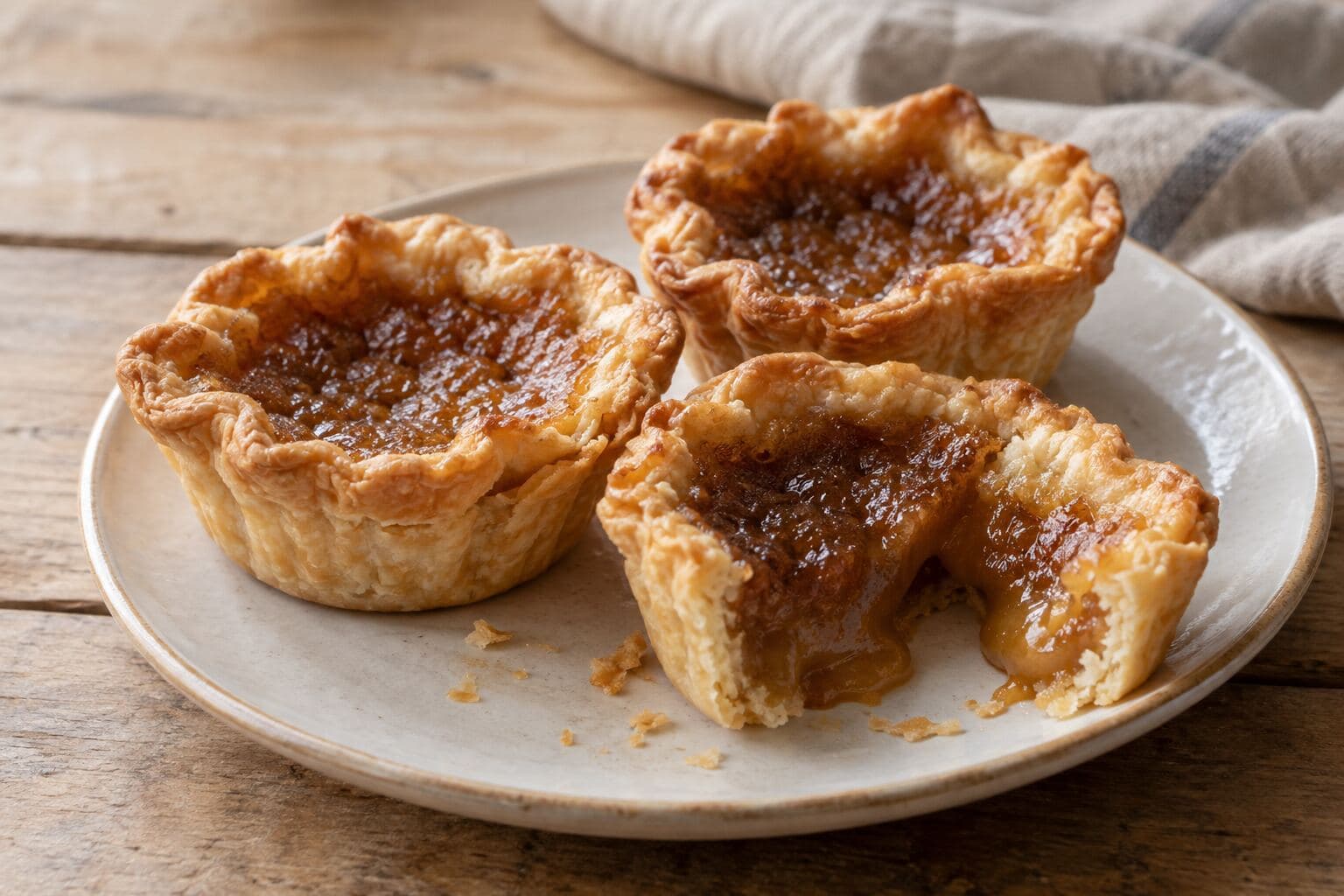
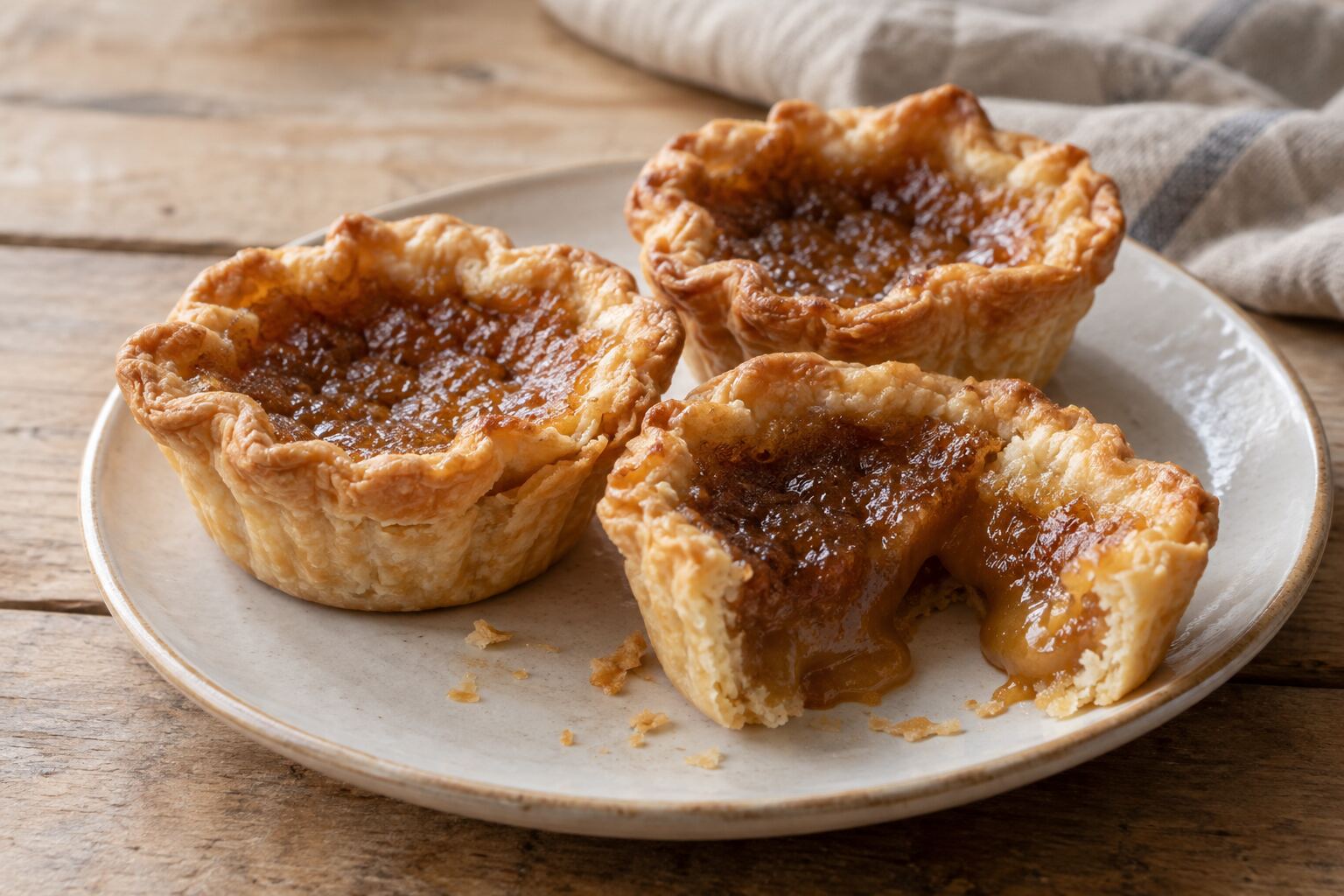
Small enough to hold in one hand yet rich enough to inspire fierce loyalties, the Canadian butter tart is a deceptively simple bake. Its pastry shell holds a filling of butter, sugar, egg and syrup, baked until the surface is crinkled and caramelised. Depending on the baker, the centre may be firm and chewy or soft enough to run onto the plate with the first bite.
Then there is the question that can divide a room of Canadians: should a butter tart contain raisins?
Some regard them as essential. Others prefer pecans or walnuts, while purists insist that nothing should interrupt the buttery filling. Such disagreements are part of the tart’s character. It developed through domestic baking, with recipes passed between households and adjusted according to taste, rather than from one standard formula.
Its exact beginnings remain uncertain, but its recorded history leads to Ontario and a short recipe printed in a fundraising cookbook in 1900.
The Earliest Known Published Recipe
The earliest known published Canadian recipe associated with the butter tart appeared in the Royal Victoria Cook Book, compiled by the Women’s Auxiliary of the Royal Victoria Hospital in Barrie, Ontario.
Barrie’s hospital had opened as the Barrie General Hospital in June 1897. The 13-bed institution was soon renamed Royal Victoria Hospital in honour of Queen Victoria’s Diamond Jubilee. Its Women’s Auxiliary raised money to buy comforts for patients, and selling a cookbook of recipes contributed by local women was one of its fundraising efforts.
On page 88, in the section headed “Pies”, appeared a two-line recipe called “Filling for Tarts”. It was credited to Mrs Malcolm MacLeod, whom archivists later identified as Mary Ethel (Cowie) MacLeod. Like many recipes written for experienced cooks at the time, it did not specify an oven temperature or baking time. It also relied on a separate plain-pastry recipe printed earlier in the book.
The recipe was not called a butter tart, but its filling is recognised as the earliest known published Canadian recipe for the bake. Mary MacLeod was born in rural Ontario on 15 December 1855 and was living with her family at 12 Toronto Street in Barrie at the time of the 1901 census, not far from the hospital. She died in Toronto in 1915.
This record does not prove that Mary MacLeod invented the butter tart, or that it was created in Barrie in 1900. Recipes usually circulate in kitchens before they appear in print. What the cookbook establishes is that a recognisable version was already part of Ontario home baking by the beginning of the 20th century.
Where Did Butter Tarts Come From?
There is no proven single ancestor of the butter tart. Several older European and North American pastries have been suggested as influences because they combine pastry with butter, sugar, syrup, eggs, dried fruit or nuts.
One comparison is the French-Canadian tarte au sucre, or sugar pie. The two share a rich sugar-based filling, although sugar pie is larger and its ingredients and texture vary considerably by recipe.
British traditions offer other possible connections. Treacle tarts use a syrup filling, while pastries from the border country between England and Scotland often contain dried fruit. Scotland’s Ecclefechan tart, made with butter, sugar, eggs and dried fruit or nuts, also bears a resemblance.
Other North American relatives include molasses-rich shoofly pie, backwoods pie and American pecan pie. These similarities show that cooks in several places were working with comparable ingredients, but they do not establish a direct line of descent. The safest conclusion is that the Canadian butter tart developed within a much wider family of sweet filled pastries and acquired its own form in Canadian kitchens.
The Great Butter Tart Debates
Butter tarts have never had one authoritative formula. Some recipes rely mainly on brown sugar, while others include corn syrup, golden syrup or maple syrup. The proportions and baking time determine whether the filling remains runny or sets into a firmer, chewier layer.
The pastry varies too. It may be delicate and flaky, sturdy enough to contain a flowing centre, or slightly thicker and more rustic. Yet the most famous disagreement concerns what, if anything, belongs inside the filling.
Raisin supporters value the fruit’s chewiness and contrast with the sweet centre. Others prefer walnuts or pecans, and many insist that a proper butter tart should be left plain. There is no historical ruling that can settle the argument: both plain tarts and versions containing dried fruit have long been part of Canadian baking.
Canadians are similarly divided over texture. A runny tart releases a glossy stream when bitten or cut, while a firm tart holds together neatly and offers a deeper chew. The preferred version often depends less on formal rules than on the tarts someone remembers from home.
From Ontario Kitchens to Canadian Icon
Butter tarts became particularly associated with Ontario, where they remain fixtures in home kitchens and local bakeries. Their popularity has since spread across Canada, and the small pastry is now widely treated as a national speciality.
It has also inspired a surprising amount of culinary tourism. Communities in Ontario have organised butter tart trails, tours and competitions, while Ontario’s Best Butter Tart Festival in Midland attracts professional and amateur bakers with their own interpretations. In 2019, Canada Post featured the butter tart in its Sweet Canada stamp issue, alongside the Nanaimo bar, blueberry grunt, Saskatoon berry pie and tarte au sucre.
Contemporary versions may include chocolate, bacon, pumpkin spice or salted caramel, but the recognisable foundation remains pastry filled with butter, sugar, egg and syrup. Ordinary ingredients produce a combination of crisp pastry, a caramelised surface and a centre poised somewhere between custard and toffee.
A Small Tart with a Large Identity
The butter tart has no tidy creation story. Possible connections reach into British baking, French-Canadian sugar pies and other North American pastries, but the 1900 Barrie cookbook provides its earliest known published Canadian record.
That modest recipe, contributed to help a local hospital, could hardly have predicted what followed. More than 125 years later, Canadians are still baking butter tarts and debating their ideal contents and consistency. Its variations have not weakened its identity; they have become part of the reason this small, sticky pastry remains so distinctly Canadian.
Bake your own batch with our Traditional Canadian Butter Tart Recipe, featuring flaky pastry and a soft, gooey filling.
References
Women’s Auxiliary to the Royal Victoria Hospital. Royal Victoria Cook Book. Barrie: S. Wesley, 1900.
County of Simcoe Archives. “Mrs. Malcolm MacLeod and Her Recipe for Butter Tart Filling.” 2018.
Jacobs, Hersch. “Structural Elements in Canadian Cuisine.” Cuizine: The Journal of Canadian Food Cultures, Vol. 2, No. 1, 2009.
The Canadian Encyclopedia. “Butter Tart.” 2016.
Canada Post. Sweet Canada Stamp Issue. 2019.