Around the World in 80 Bakes: Stop #58 — Galette
Few bakes celebrate seasonal fruit quite as effortlessly as a galette. A round of pastry is rolled out, piled with ripe fruit and folded loosely around the edges before being baked until golden. There is no tart tin, no perfectly crimped border and little need for precision. Its slightly irregular appearance is part of its charm.
Today, the word galette is often used in English to describe this rustic, free-form tart. Yet in France, the word has a much older and broader history. In fact, the galette we recognise today is only one chapter in a story that stretches back centuries.
An Old French Name
The word galette has been used in French since at least the 13th century. It is related to galet, the French word for a smooth, flat pebble, a reference to the flat, rounded shape of early galettes.
Rather than describing one particular recipe, galette came to be used for various flat, round cakes and breads. An old Norman word, gale, similarly referred to a flat cake.
This explains why ordering a galette in France does not necessarily produce the fruit-filled pastry familiar to many bakers today. The name has long covered a surprisingly varied family of foods.
One Name, Many Galettes
Perhaps the best-known French example is the Galette des Rois, traditionally eaten around Epiphany in January. In much of northern France, it consists of layers of puff pastry filled with almond frangipane. A small fève, traditionally a bean and now often a porcelain figurine, is hidden inside. Whoever finds it in their slice is crowned king or queen.
Travel west to Brittany, however, and galette can mean something entirely different. Breton galettes are thin savoury pancakes traditionally made with buckwheat flour and filled with ingredients such as cheese, ham and egg.
The word, therefore, describes a shape and style more readily than a single pastry.
What About the Rustic Fruit Galette?
Outside France, particularly in modern English-language baking, galette has acquired a more specific meaning: a free-form tart made without a tart tin.
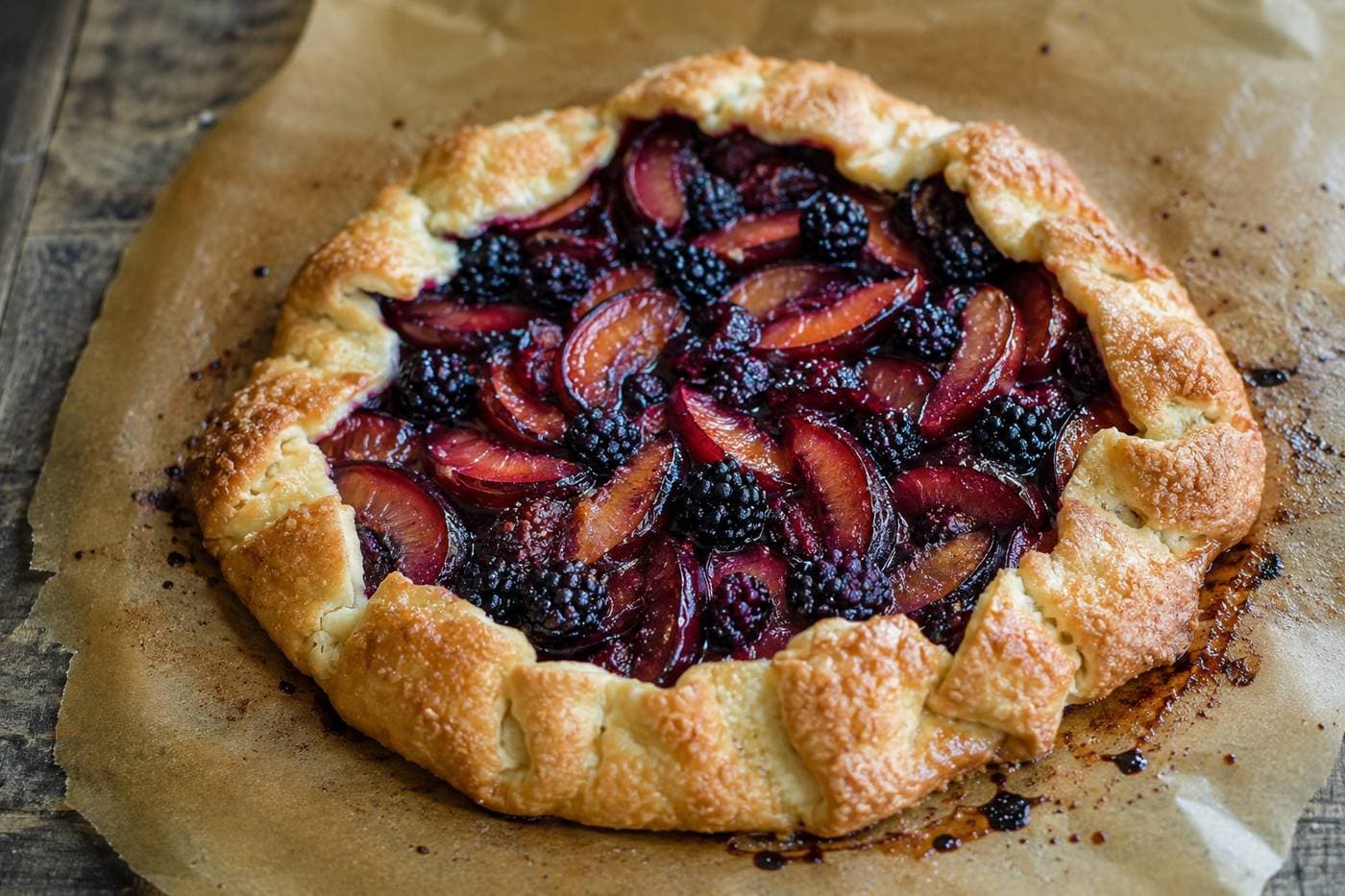
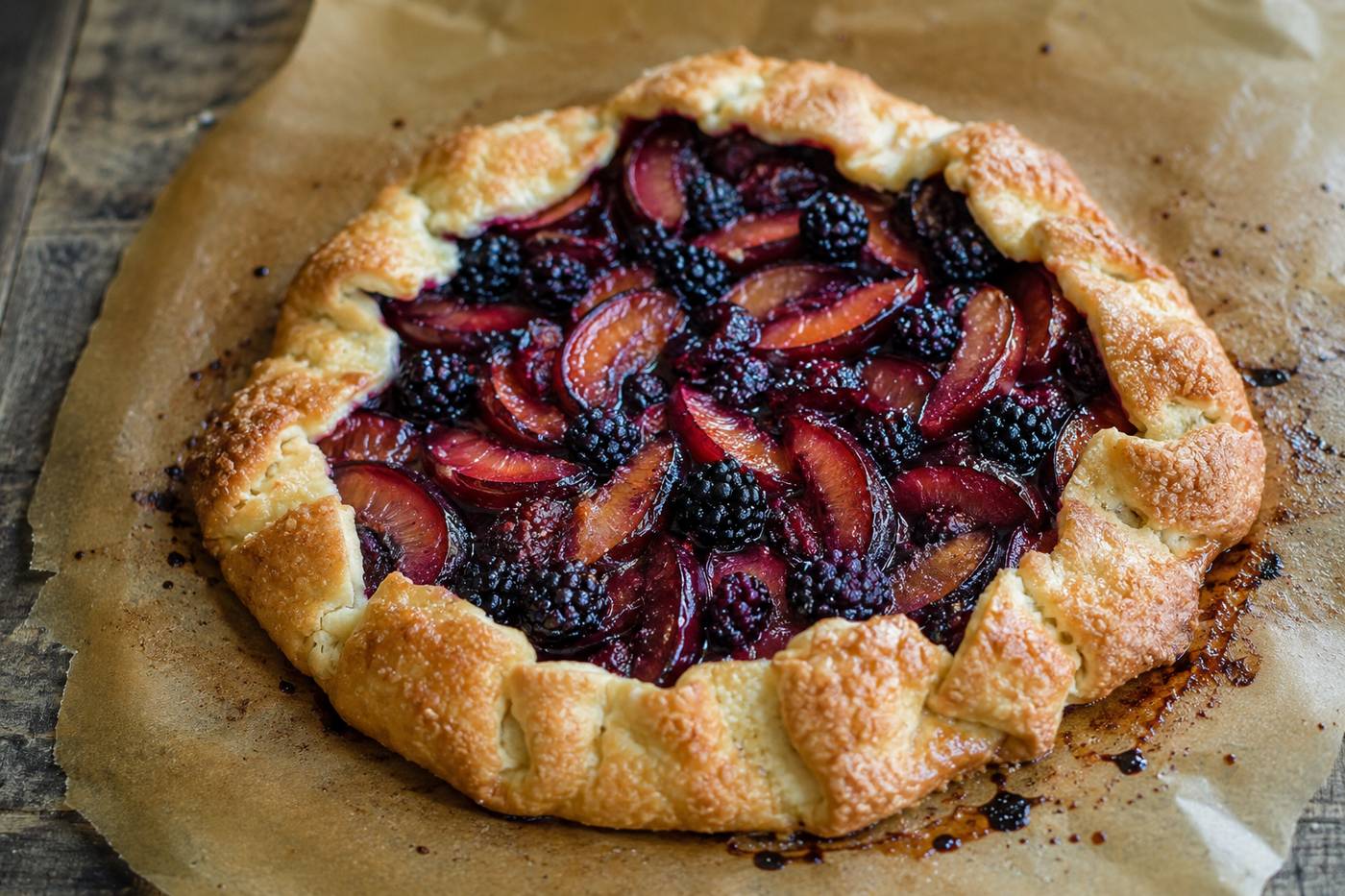
Pastry is rolled into a rough circle, fruit is arranged in the centre and the uncovered edges are folded partially over the filling. The tart is then baked directly on a baking sheet.
Despite its unmistakably French name, this particular image of the rustic fruit galette should not be confused with a single ancient French pastry tradition. The much older French use of galette encompassed many kinds of flat cakes and pastries.
The free-form fruit version became especially familiar to American home cooks through the rise of seasonal, produce-led cooking in the late 20th century. Alice Waters and Chez Panisse in California are frequently associated with helping to popularise rustic fruit galettes in American cooking, where their simplicity suited an emphasis on excellent seasonal ingredients.
Over time, the free-form fruit galette became so familiar in English-language cookbooks, magazines and food websites that, for many bakers today, it is now the first thing that comes to mind when they hear the word.
A Pastry Made for Seasonal Fruit
Part of the enduring appeal of a fruit galette is its flexibility.
Unlike a formal tart, which is shaped by its tin, a galette can accommodate whatever fruit happens to be ripe. Peaches and nectarines work beautifully in summer, while plums and blackberries bring deeper colours and sharper flavours as summer moves towards autumn. Apples and pears take their place when the weather turns cooler.
The folded pastry also serves a practical purpose. It creates a border that helps contain the fruit and its juices while leaving much of the filling exposed to caramelise in the oven.
For generations of modern home bakers, that forgiving construction has become part of the galette’s appeal. Uneven folds and irregular edges do not need disguising. If anything, they make the finished tart more inviting.
From Flat Cake to Free-Form Tart
The history of the galette is unusual because there is no single recipe whose development can be neatly traced through the centuries.
Instead, there is an ancient name that has continually adapted.
From the flat cakes described by the French word centuries ago to buckwheat galettes in Brittany, the elaborate Galette des Rois and today’s fruit-filled free-form tarts, galette has remained remarkably versatile.
Perhaps that is why the modern fruit galette feels so appropriate at the height of the fruit season. It asks for little more than pastry and whatever is ripe, sweet and plentiful — with no requirement that the finished tart look perfectly uniform.
Sometimes, the most appealing bakes are the ones allowed to look homemade.
Ready to bake your own? Try our Plum and Blackberry Galette Recipe, made with juicy late-summer fruit wrapped in crisp, buttery pastry.
References
Centre National de Ressources Textuelles et Lexicales (CNRTL). Galette: Étymologie et histoire.
Académie française, via CNRTL. Galette: Définition.
France.fr. Galette des Rois that Delight Both the Eyes and the Taste Buds.
France.fr. La recette de la couronne des rois de Pierre Augé.
Cloake, Felicity. “How to Cook the Perfect Apricot Galette.” The Guardian, 9 August 2026.