Around the World in 80 Bakes: Stop #65 — Kueh Neng Ko
When I was growing up in Singapore, my mother made kueh neng ko using an old-fashioned spiral whisk with a wooden handle. She beat the eggs and sugar by hand until the mixture became pale and airy, giving the cake the lift it needed to rise.
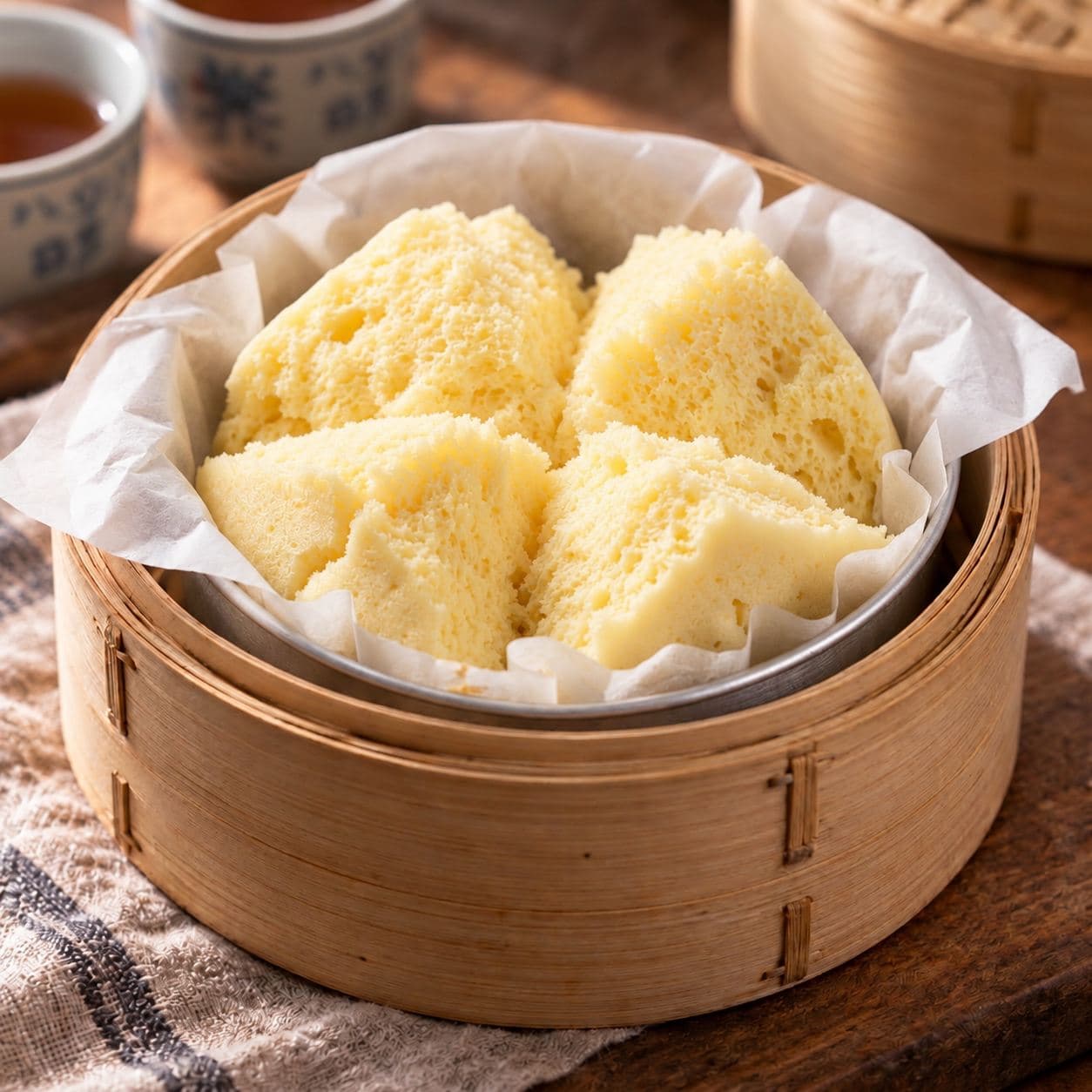
From a few simple ingredients came a tall, golden cake with a soft crumb, a gently sweet flavour and the unmistakable aroma of eggs rising from the steamer.
For many Chinese families in Singapore and Malaysia, kueh neng ko is closely associated with home kitchens, festive occasions and ancestral prayers. Its precise origins have not been documented, but memories and family recipes have kept this old-fashioned cake alive.
What Is Kueh Neng Ko?
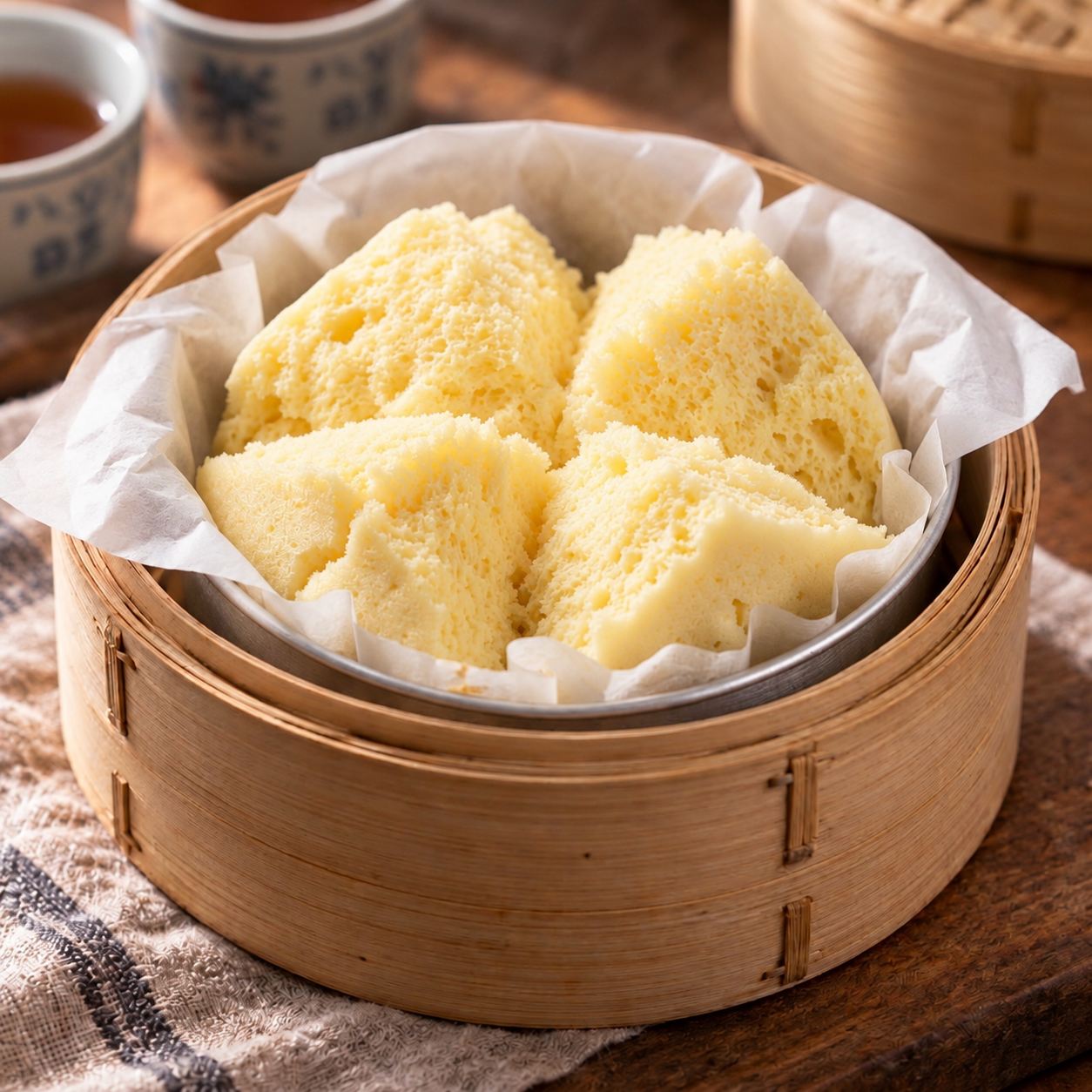
Kueh neng ko is a traditional Chinese steamed sponge cake made principally from eggs, sugar and flour. Some versions include fizzy water or a soft drink, while others rely on eggs beaten until thick and voluminous to help the cake rise.
It is known by several spellings, including kueh neng koh, kuey neng ko and kuey nerng ko. These variations arose because the dialect name was written phonetically using the Roman alphabet.
In Hokkien, kueh neng refers to chicken eggs and ko means cake. The Mandarin name, ji dan gao (鸡蛋糕), also translates simply as “egg cake”.
The term ji dan gao can describe different egg cakes in Chinese-speaking communities, including baked varieties. Kueh neng ko, as remembered by many families in Singapore and Malaysia, usually refers to the large steamed version with a characteristically split top.
A History Without a Clear Starting Point
No reliable historical record identifies when or where kueh neng ko was first made. Unlike a commercial cake associated with a particular bakery or named creator, it appears to have been passed down largely through domestic practice.
Published recipes frequently introduce it through memories of mothers and grandmothers rather than written historical accounts. This helps explain why the cake is familiar to many families even though its early development is difficult to trace.
Kueh neng ko belongs to the wider Chinese practice of cooking cakes and breads with steam. Steaming allowed families to produce soft cakes on a stove without an oven, using equipment already found in many Asian kitchens. However, this broader tradition does not by itself establish how old kueh neng ko is or prove that it originated in one particular region of China.
The most accurate way to understand it is as a traditional Chinese cake preserved in Singaporean and Malaysian family food culture, rather than as a creation with a single known birthplace.
A Cake for Home and Prayer
Kueh neng ko was made not only for eating at home but also for religious and family observances. Accounts from Singapore and Malaysia describe it being prepared for ancestral prayers and as an offering at Taoist temples.
In a 2008 column in The Straits Times, a reader recalled her mother making traditional kueh during festive seasons and asked why her kueh neng ko did not open like a flower. This small reference captures two aspects of the cake that recur in family memories: its connection with festive preparation and the importance placed on its split top.
After prayers, offering foods such as kueh neng ko could be brought back to the table and shared by the family. In this way, the cake belonged to both religious practice and everyday family life.
The Work Behind the Whisk
The traditional method required patience. Eggs and sugar had to be beaten until the mixture became pale, thick and filled with air. Before electric mixers became common in home kitchens, this was done by hand.
My mother used a wooden-handled spiral whisk. Beating the mixture took time and physical effort, but it performed an essential function: the trapped air expanded during steaming and helped create the cake’s light texture.
Because the ingredient list was so simple, success depended heavily on technique. If the eggs were not beaten sufficiently, or if the flour was mixed in too vigorously, much of the incorporated air could be lost and the cake would become dense.
Later recipes introduced ingredients such as fizzy drinks, baking powder or commercial sponge stabilisers. These could make the cake easier to prepare or alter its texture, but many family recipes continued to reflect older habits and personal preferences.
Why the Cake “Smiles”
A well-risen kueh neng ko traditionally has a deep split across its top. This opening is commonly described as the cake “smiling” or “laughing”.
The crack develops when the batter expands rapidly under intense steam. Bakers may encourage it by using strong heat or marking the surface with sugar before steaming.
Within some families, a broad, smiling top came to represent prosperity and good fortune, particularly when the cake was prepared as an offering. A cake that failed to open could therefore be disappointing even if it tasted perfectly good.
This feature also causes kueh neng ko to be confused with huat kueh, another steamed cake valued for its open top. They are not the same. Huat kueh is generally made from a flour-based batter with a raising or fermenting agent and may contain no eggs. Kueh neng ko is distinguished by its egg-rich sponge and characteristic aroma.
A Tradition Worth Remembering
Kueh neng ko is less visible today than many colourful Southeast Asian kuehs. Modern bakeries offer countless sponge cakes, while electric mixers have removed much of the physical labour once involved in making them.
Yet the cake’s simplicity is part of its appeal. It needs no buttercream, elaborate filling or decoration. Its character comes from eggs, sugar, flour and the care taken to turn them into something light.
For me, remembering kueh neng ko means remembering my mother holding that wooden-handled spiral whisk and beating the eggs by hand. The utensil tells its own small part of the story: how an earlier generation made a cake through patience, experience and effort.
Kueh neng ko may not have a neat origin story or a famous creator. Its history survives in family recipes, prayer traditions, old kitchen tools and the memories of those who grew up eating it.
Try our Traditional Kueh Neng Ko Recipe and rediscover the gently sweet, eggy flavour of this old-fashioned steamed sponge cake.
References
Chris Tan, “May the Cake Bloom”, The Straits Times, 21 September 2008.
Our Grandfather Story, “Egg Cakes, the Traditional Way”.
Marvellina, “Traditional Steamed Ji Dan Gao/Kueh Neng Ko”, What To Cook Today.
Kenneth Goh, “Simplest Traditional Jidangao or Steamed Sponge Cake”, Guai Shu Shu.
Foodeverywhere, “Traditional Steamed Egg Cake (aka Kuey Neng Koh)”.