

The Science Behind Why Bakers Add Coffee to Chocolate Cake
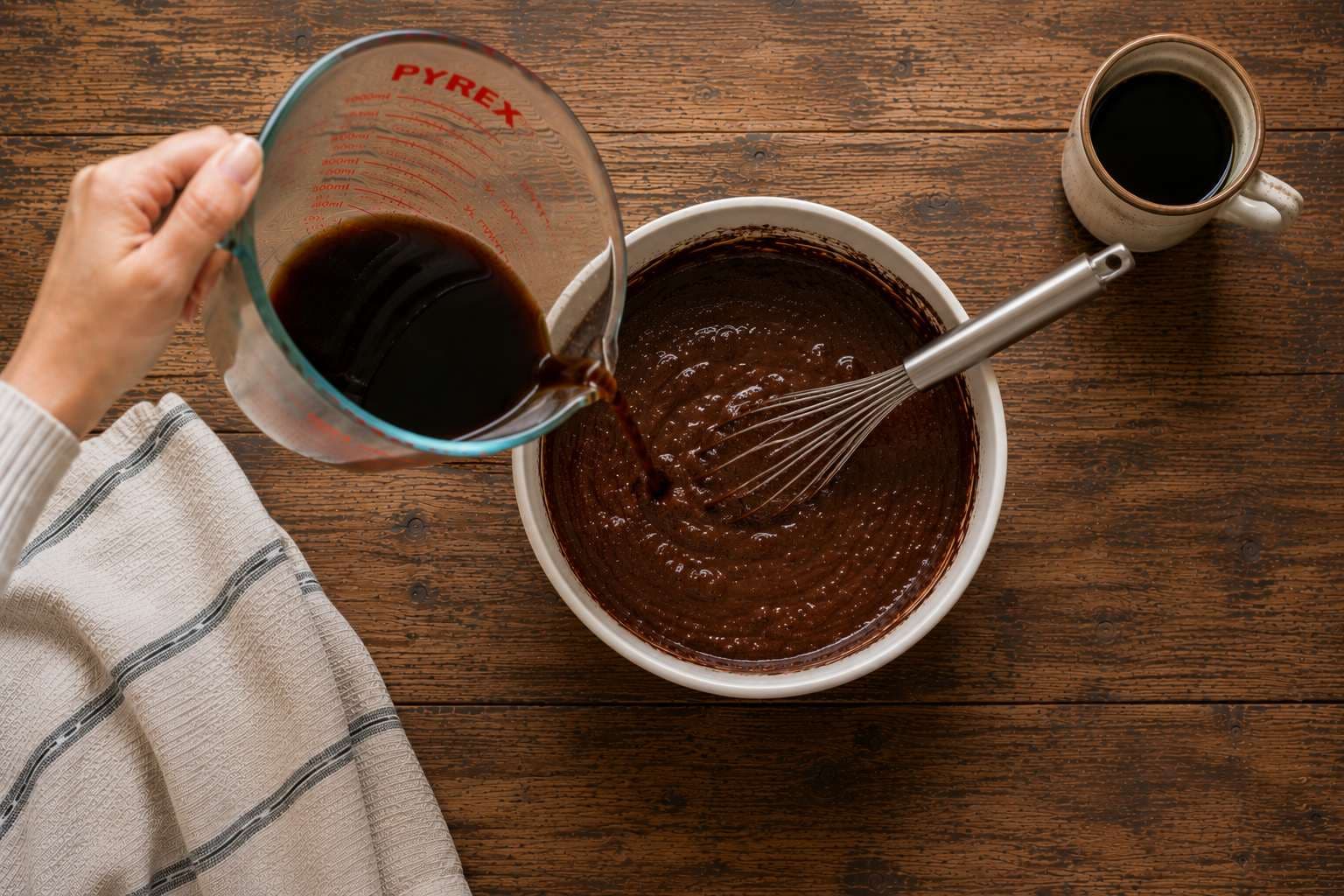
Chocolate cake recipes often include an unexpected ingredient: coffee.
This is not a modern trend or a stylistic choice. It is a functional technique rooted in flavour chemistry, developed as chocolate baking evolved in the 19th century after cocoa powder became widely available.
Coffee does not act as a flavour addition in the usual sense. It alters how chocolate is perceived.
Here is what is actually happening.
Shared flavour compounds
Both coffee and chocolate are chemically complex ingredients formed through roasting.
During roasting, Maillard reactions and caramelisation produce hundreds of volatile compounds responsible for aroma and taste. Many of these overlap between coffee and cocoa, particularly those associated with roasted, nutty, bitter, and caramel-like notes.
When coffee is added to chocolate cake, it reinforces these existing compounds rather than introduce a new flavour direction.
The result is not “coffee-flavoured chocolate,” but a more concentrated perception of chocolate itself.
Bitterness balances sweetness
Chocolate cake relies on a balance between sugar and cocoa solids.
Coffee contains naturally occurring bitter compounds, including chlorogenic acids. In small quantities, these compounds adjust how sweetness is perceived.
It reduces the dominance of sugar, sharpens the definition of chocolate flavour and increases overall flavour contrast.
The mechanism is comparable to salt in baking. The salt is not tasted directly, but it changes how other flavours register.
Blooming the cocoa
This is the most significant functional role of coffee in chocolate cake.
Cocoa powder contains both water-soluble and fat-soluble flavour compounds. These compounds require adequate heat and hydration to disperse fully.
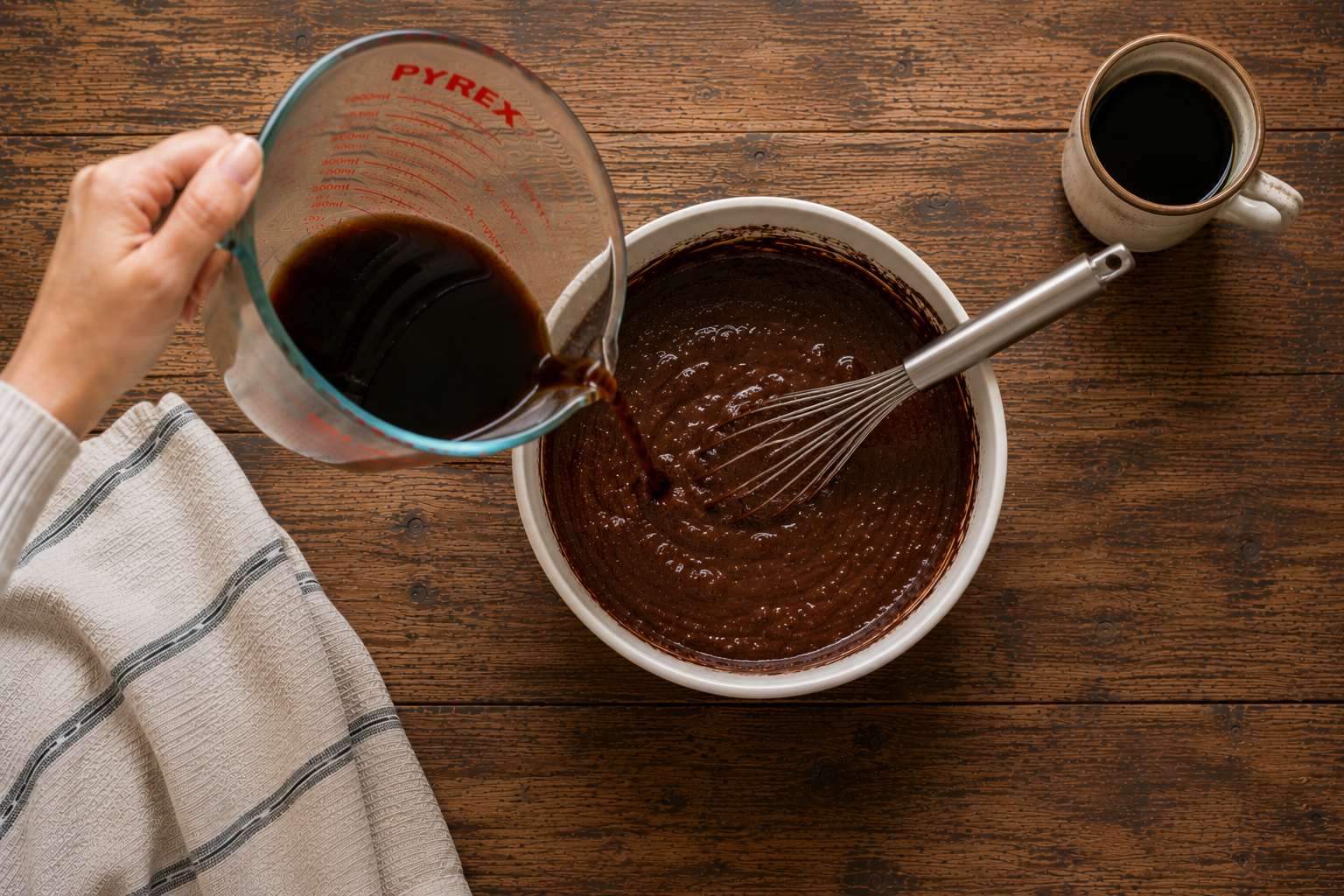
When hot coffee is added, the cocoa particles hydrate more effectively, flavour compounds dissolve and distribute evenly, and the batter develops a deeper, more uniform chocolate profile.
This process, often referred to as blooming, directly affects flavour extraction.
The use of hot liquid is therefore deliberate. It is a controlled step to maximise cocoa intensity.
Aroma amplification
Flavour perception is primarily driven by aroma.
Coffee is highly aromatic, containing volatile compounds that readily evaporate and reach the olfactory receptors. Even when present at low levels, these compounds increase the total aromatic intensity of the cake.
This amplification effect makes the chocolate appear more pronounced, because the brain is receiving stronger sensory input.
The cake does not taste like coffee, but it smells more complex, which translates into a stronger perception of chocolate.
It does not create a coffee flavour in standard use
In typical quantities used in cake recipes, the coffee flavour remains below the threshold of detection.
The cake does not register as mocha. The dominant profile remains chocolate.
Only when the quantity is increased significantly does the flavour shift towards a recognisable coffee note.
At standard levels, coffee functions as a background modifier rather than a primary ingredient.
A functional ingredient, not a novelty
The use of coffee in chocolate cake is a precise application of flavour interaction.
It reinforces shared aromatic compounds, moderates sweetness, improves cocoa extraction, and increases overall aroma intensity.
The outcome is a cake that tastes more distinctly of chocolate without requiring additional cocoa or sugar.
Try It Yourself
To experience the difference directly, try our Moist Chocolate Cake with Ganache (Easy One-Bowl Recipe), where hot coffee is used to deepen flavour while maintaining a soft, tender crumb.
Curious how it all began? Read When Was Chocolate Cake Invented to discover its origins.
Affiliate Disclosure: This article may contain affiliate links. When you purchase through these links, we may earn a commission at no additional cost to you. This helps support our content creation.