
Dobos Torte Recipe: Hungary’s Chocolate & Caramel Layer Cake
Ingredients
- FOR THE SIX SPONGE LAYERS:
- 6 large eggs, separated, at room temperature
- 120 g caster sugar
- 120 g plain flour
- 35 g unsalted butter, melted and cooled until lukewarm
- 1 teaspoon vanilla extract
- 2 small pinches of salt
- Divide these ingredients into two equal sets before starting. Each three-layer batch uses 3 eggs, 60 g sugar, 60 g flour, 17.5 g melted butter, ½ teaspoon vanilla and a small pinch of salt.
- FOR THE CHOCOLATE BUTTERCREAM:
- 4 large eggs
- 180 g caster sugar
- 200 g dark chocolate, approximately 55–60% cocoa solids, finely chopped
- 250 g unsalted butter, softened
- 1 teaspoon vanilla extract
- A pinch of salt
- FOR THE CARAMEL TOPPING:
- 150 g caster sugar
- 45 ml water
- A little unsalted butter, for greasing the knife and spatula
- FOR THE SIDES (OPTIONAL):
- 50 g toasted hazelnuts, cooled and finely chopped
Instructions
- 1
Prepare the oven and tins:
- 2
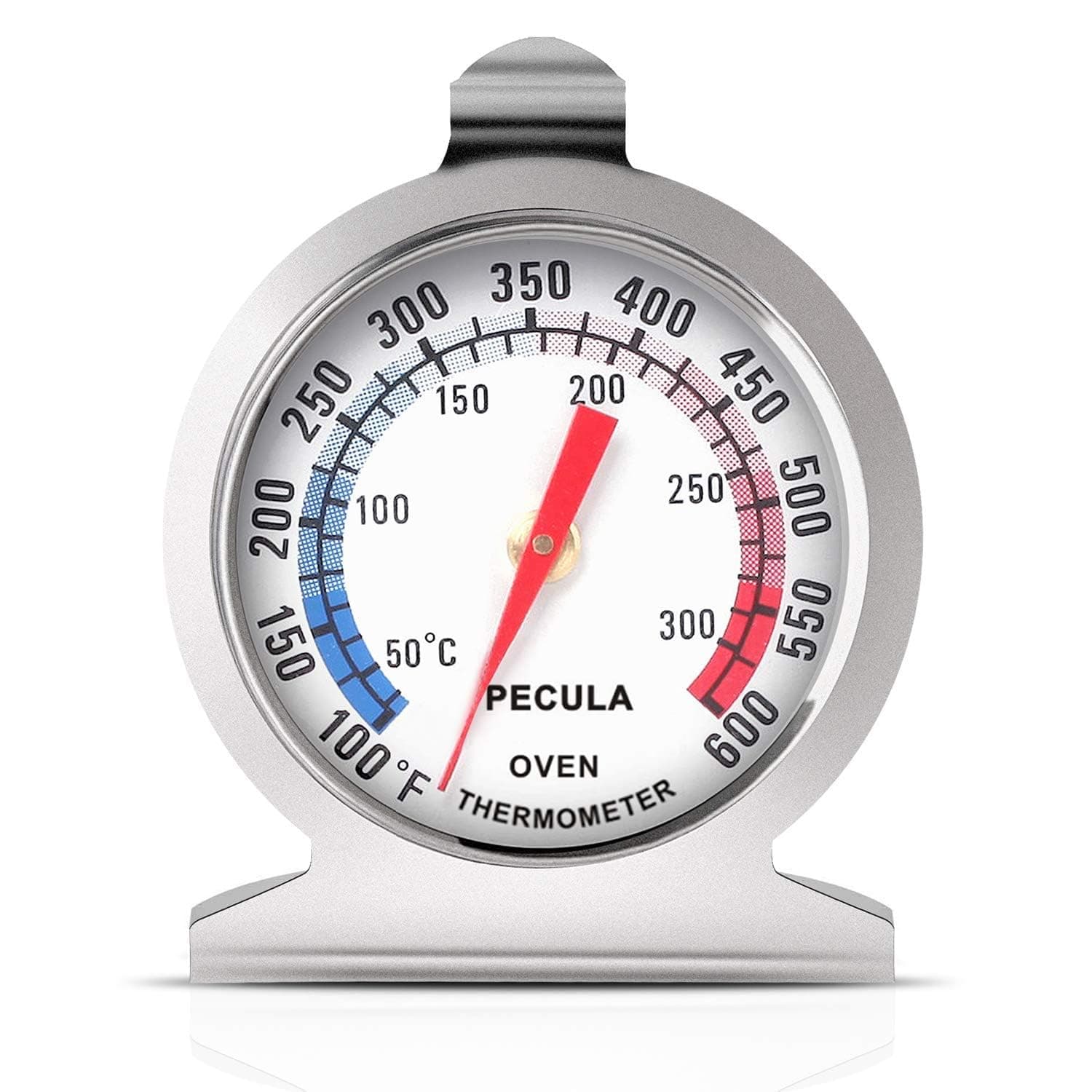
Preheat the oven to 180°C fan. Position the shelves so there is enough space for three matching 20 cm round cake tins, with room for air to circulate around them.
- 3
Cut six circles of baking parchment to fit the bases. Lightly grease all three tins and line each base with one circle. Reserve the other three circles for the second round of baking.
- 4
Make the first batch of sponge batter:
- 5
Beat 3 egg yolks with 30 g caster sugar and ½ teaspoon vanilla until thick and pale. When you lift the beaters, a ribbon of mixture should briefly remain on the surface.
- 6
In a separate, grease-free bowl, whisk 3 egg whites with a small pinch of salt until soft peaks form. Gradually add another 30 g caster sugar and whisk until glossy, with peaks that hold their shape but bend slightly at the tips.
- 7
Fold a third of the whites into the yolk mixture to lighten it, then gently fold in the remainder. Sift in 60 g flour in two additions, folding carefully after each.
- 8
Mix a generous spoonful of batter into 17.5 g lukewarm melted butter, then gently fold this back into the main mixture until no buttery streaks remain.
- 9
Divide and bake the first three layers:
- 10
Weigh the finished batter, excluding the bowl, and divide that weight by three. Weigh an equal portion into each prepared tin.
- 11
Gently spread the batter evenly across each base with a small offset spatula, keeping the centre and edges the same thickness. The layers will look very shallow.
- 12
Bake all three tins together for approximately 6–10 minutes, until the sponges are lightly golden and springy when gently touched. Check from 6 minutes, as these thin layers can dry out quickly.
- 13
If your oven colours them unevenly, swap the tins’ positions once the sponges have set enough to move without disturbing the batter. Remove each tin as its sponge becomes ready.
- 14
Cool and release the sponges:
- 15
Allow the sponges to settle in their tins for 2–3 minutes, then loosen the edges with a thin spatula.
- 16
If using removable-base tins, release each sponge on its base and carefully slide it, still on its parchment, onto a wire rack. Otherwise, gently turn each sponge out onto a parchment-covered rack.
- 17
Peel away the lining once the sponge is cool enough to handle safely. Keep the cooled layers flat and covered to prevent drying.
- 18
Make and bake the second batch:
- 19
Let all three tins cool completely, then lightly grease them again and line their bases with the remaining parchment circles.
- 20
Make the second batch using the remaining sponge ingredients, following the same whisking and folding method. Divide the batter equally between the three tins and bake together as before.
- 21
You will now have six thin sponge layers from two rounds of baking. Once they are cool, set aside the neatest one for the caramel topping, keeping it flat and covered until needed.
- 22
Cook the buttercream base:
- 23
Melt the chopped dark chocolate in a dry heatproof bowl over gently simmering water, ensuring the bowl does not touch the water. Remove from the heat and let it cool until barely lukewarm but still fluid.
- 24
Heat and whip the egg mixture. Put the four whole eggs and 180g caster sugar in a separate heatproof bowl. Whisk together immediately, then place over gently simmering water, ensuring the bowl does not touch the water.
- 25
Whisk continuously, reaching around the sides and across the bottom, until the sugar has dissolved and the mixture reaches 74°C throughout. Remove from the heat promptly; do not boil it or cook it into a thick custard.
- 26
Using an electric mixer, beat the warm mixture off the heat until pale, thick and airy, and cooled to room temperature. A ribbon of mixture should briefly remain on the surface when the beaters are lifted. Do not add it to the butter while it is still warm.
- 27
Finish the buttercream
- 28
Beat the softened butter with the vanilla and salt until pale and fluffy. The butter should be soft enough to indent easily but still hold its shape.
- 29
Gradually beat in the cooled egg mixture, adding a few spoonfuls at a time and beating until incorporated after each addition.
- 30
Check the melted chocolate: it should be barely lukewarm and still pourable. Gradually pour it into the butter-and-egg mixture while beating on a low-to-medium speed. Scrape down the bowl and beat just until smooth and spreadable.
- 31
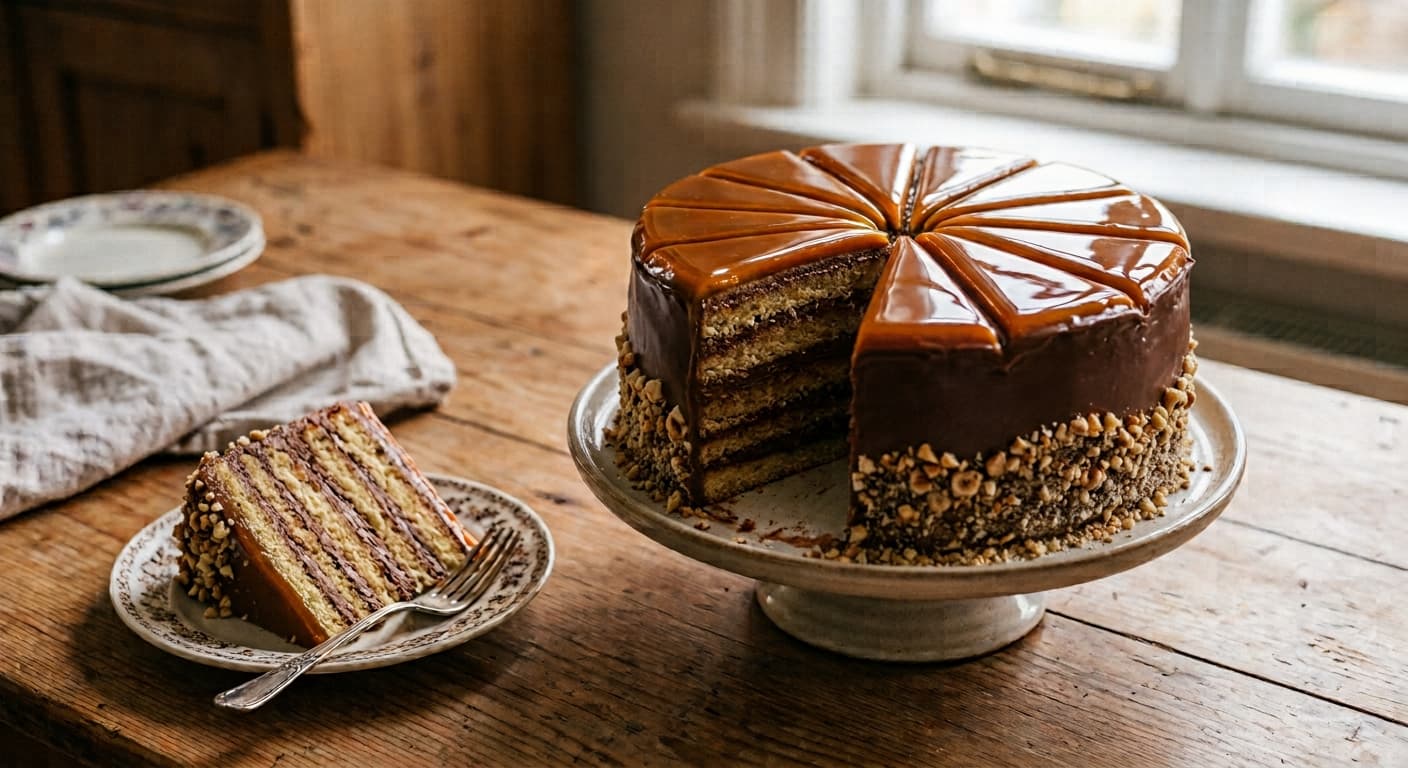
Use approximately 90 g buttercream between each of the five plain sponge layers, making four internal layers of filling. Use the remainder to coat the top and sides.
- 32
Fill and coat the cake:
- 33
Secure the first plain sponge to a serving plate with a small dab of buttercream. Spread approximately 90 g filling over it, then place another sponge on top. Continue until all five plain sponges are stacked, with buttercream between them.
- 34
Spread the remaining buttercream over the top and sides, smoothing it with an offset spatula. If using hazelnuts, gently press them onto the sides. Refrigerate for at least 2 hours, until the filling is firm.
- 35
Make the Caramel Topping:
- 36
Place the reserved sixth sponge layer on baking parchment on a heatproof work surface. Lightly butter a large sharp knife and an offset spatula, keeping a little extra butter nearby.
- 37
Put 150 g caster sugar and 45 ml water in a small, heavy-based saucepan. Heat gently, stirring until the sugar dissolves. Bring to the boil, then stop stirring. Continue cooking until the syrup turns golden amber, gently swirling the pan if it colours unevenly.
- 38
Immediately pour the caramel over the reserved sponge and spread it thinly across the surface with the prepared spatula. Take care: hot caramel can cause serious burns.
- 39
As soon as the caramel begins to firm up but is still pliable, cut through both the caramel and sponge into 12 equal wedges. Lightly butter the knife again as needed to prevent sticking. Do not wait until the caramel has hardened.
- 40
Leave the wedges to cool completely, then separate them carefully.
- 41
Finish and serve:
- 42
Shortly before serving, arrange the caramel-coated wedges flat over the chilled cake, fitting them together to form a circle.
- 43
Let the cake stand at room temperature for approximately 20–30 minutes before slicing between the wedges.